The family bicycle has a familiar problem. It is lovely for the part of the day when you are one person going one place. Then comes a child, a bag of groceries, a hill and the rather awkward question of where to put everything. Chris Yu, now ALSO’s co-founder and chief executive, has written about taking his child to school by bike. The pleasure of that routine helped animate a project that began inside Rivian and became its own company in 2025. The question behind it is disarmingly ordinary: what would make a small vehicle useful often enough to leave the car at home?
The quick ride
- ALSO sells a modular electric bike, the TM-B, starting at $3,500; a $4,500 Performance model offers a larger battery.
- Its DreamRide drive turns pedaling into electricity. Software, rather than a chain from crank to wheel, controls propulsion.
- The same small-EV thinking runs through its four-wheel TM-Q delivery quad and planned autonomous vehicles.
- The venture has disclosed $655 million in financing, while the first TM-B Launch Edition bikes only began shipping in August 2026.
That last pairing matters. For all the glamour of a venture-backed spinout, this is still a company learning to put vehicles reliably into customers’ hands. ALSO initially expected deliveries in spring 2026. Its August update said Launch Edition bikes had begun shipping across the United States. The delay is the most useful line in its story: designing a novel ride and making enough of them at automotive standards are separate accomplishments.
A bicycle with a car maker’s habits
Most electric bicycles add a motor to a recognizable chain-and-gear machine. ALSO took a less conventional route. On the TM-B, pedaling drives a generator. A motor drives the rear wheel. Software interprets what the rider wants between the two. The company calls the system DreamRide. In automatic mode, a rider can choose a preferred cadence and let the bike adjust assistance as the road changes; in manual mode, the gears are simulated in software.
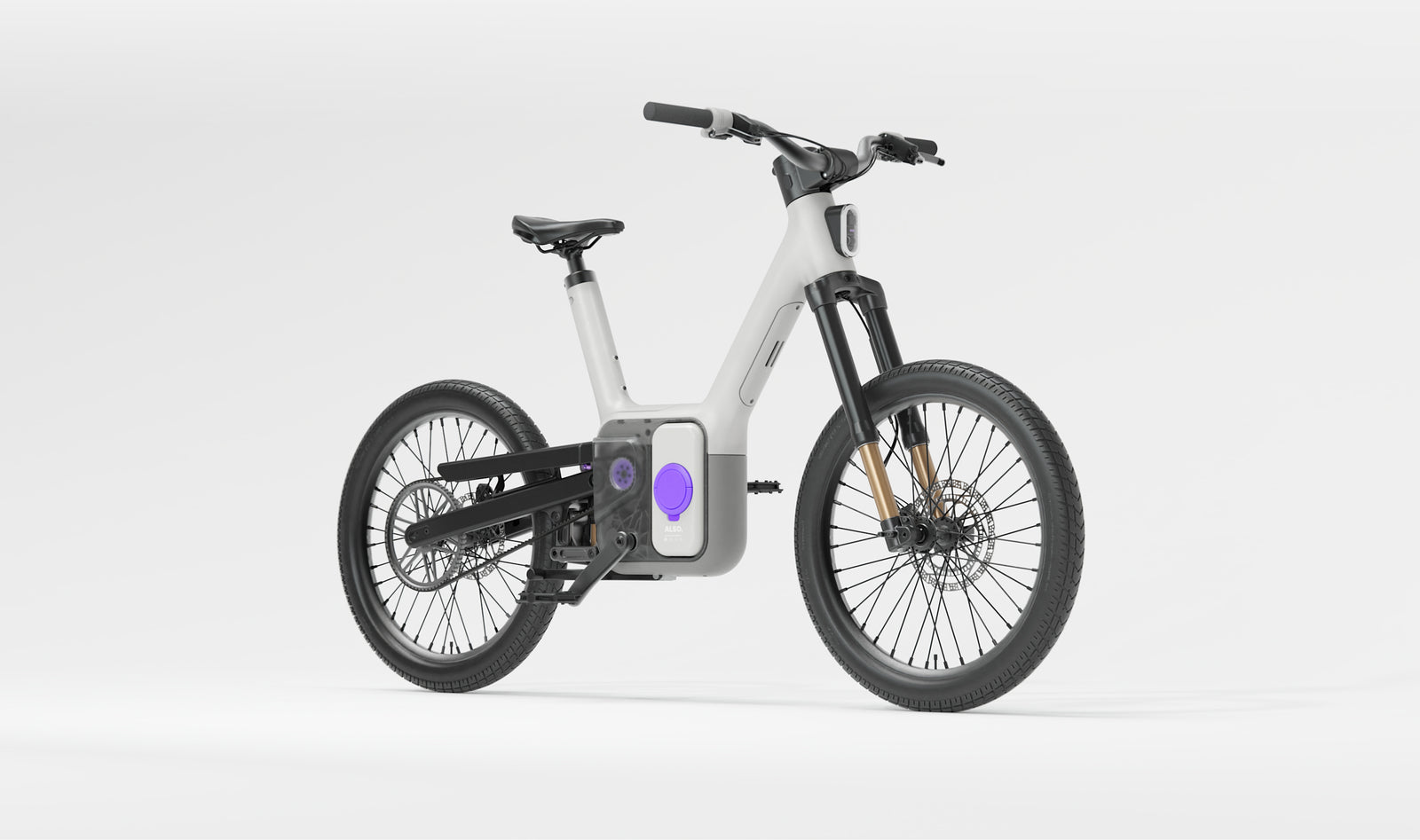
The result is a bike with a slightly different bargain. The rider gets control over effort without accepting every hill’s terms. They also accept a more integrated machine, where the manufacturer’s battery, motor, software and service network matter a great deal. The TM-B is a Class 3 e-bike, with assist up to 28 mph. ALSO quotes up to 60 miles for the Standard battery and 100 miles for the larger Performance battery, under ideal test conditions. Those are manufacturer estimates, not a promise about your route in rain, wind or stop-and-go traffic.
The other clever piece is wonderfully physical. The bike’s top frame can be exchanged without tools in under three seconds, according to ALSO. There is a Solo setup, a Utility configuration for carrying things, and a Bench for a passenger. A parent might use one layout for the school run and another for errands. This is the sort of modularity that matters more at the supermarket than in a pitch deck.
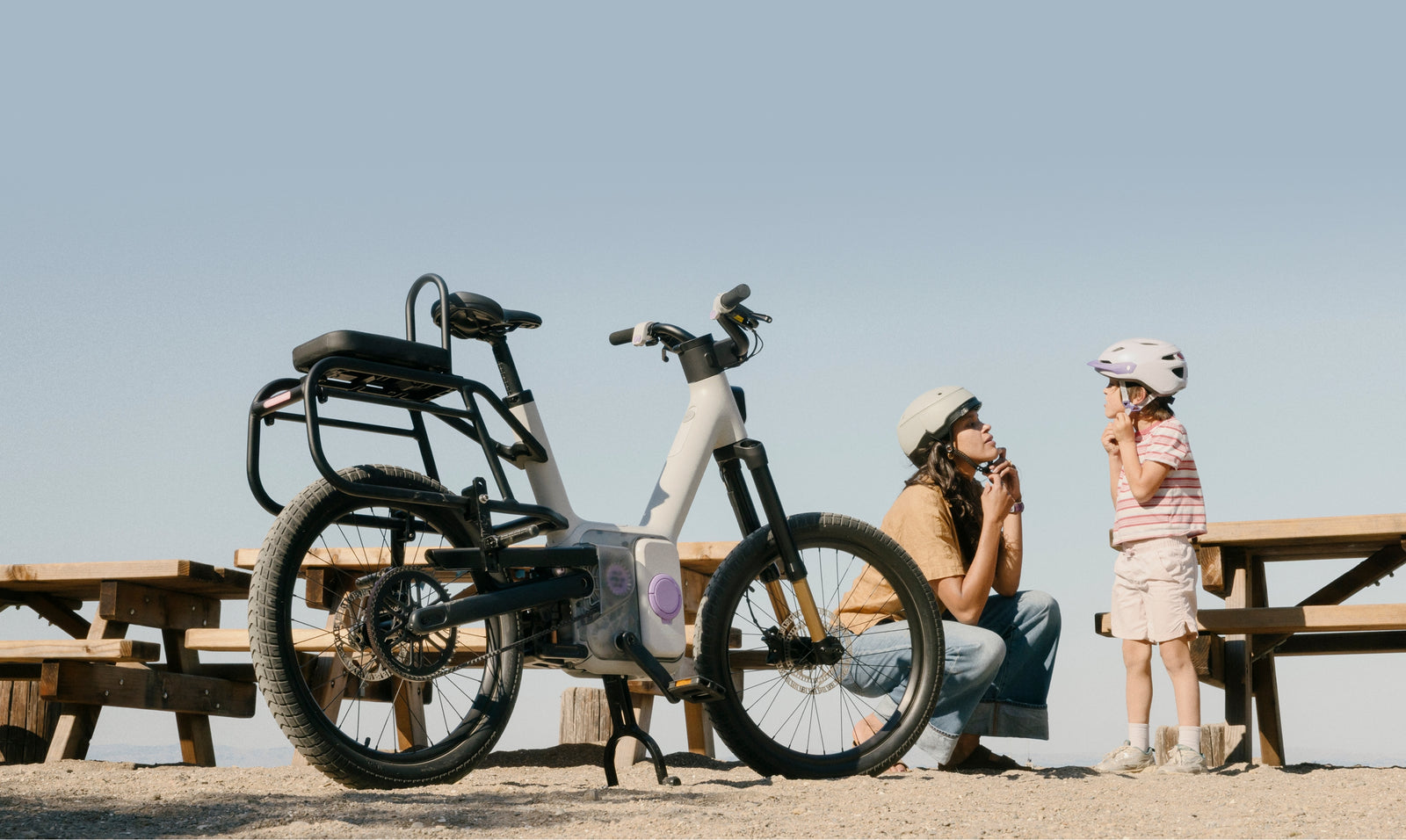
The removable battery charges over USB-C at up to 240 watts and can also charge other devices. A small display shows ride information; the planned app connects route planning, security alerts, charging and updates. There is even a $250 Alpha Wave helmet with audio, lights and a safety system called Release Layer System. These are the features of a connected consumer product wrapped around a vehicle. Each adds convenience; each adds another thing the company has to support.
“Whether a vehicle is driven or autonomous, the need to solve for congestion and cost per trip doesn’t change.”Chris Yu, August 2026
The delivery van shrinks
ALSO’s more unusual customer may be a courier. The TM-Q is a four-wheel pedal-assist quad built on the same platform and design language as the TM-B. One version carries a delivery box; another is shown for personal use, with seating or a cargo bed. Amazon was involved in the commercial debut. The pitch is plain: a van is expensive and awkward when a route consists of short hops, crowded curbs and narrow access. A smaller vehicle can be closer to the size of the actual errand.
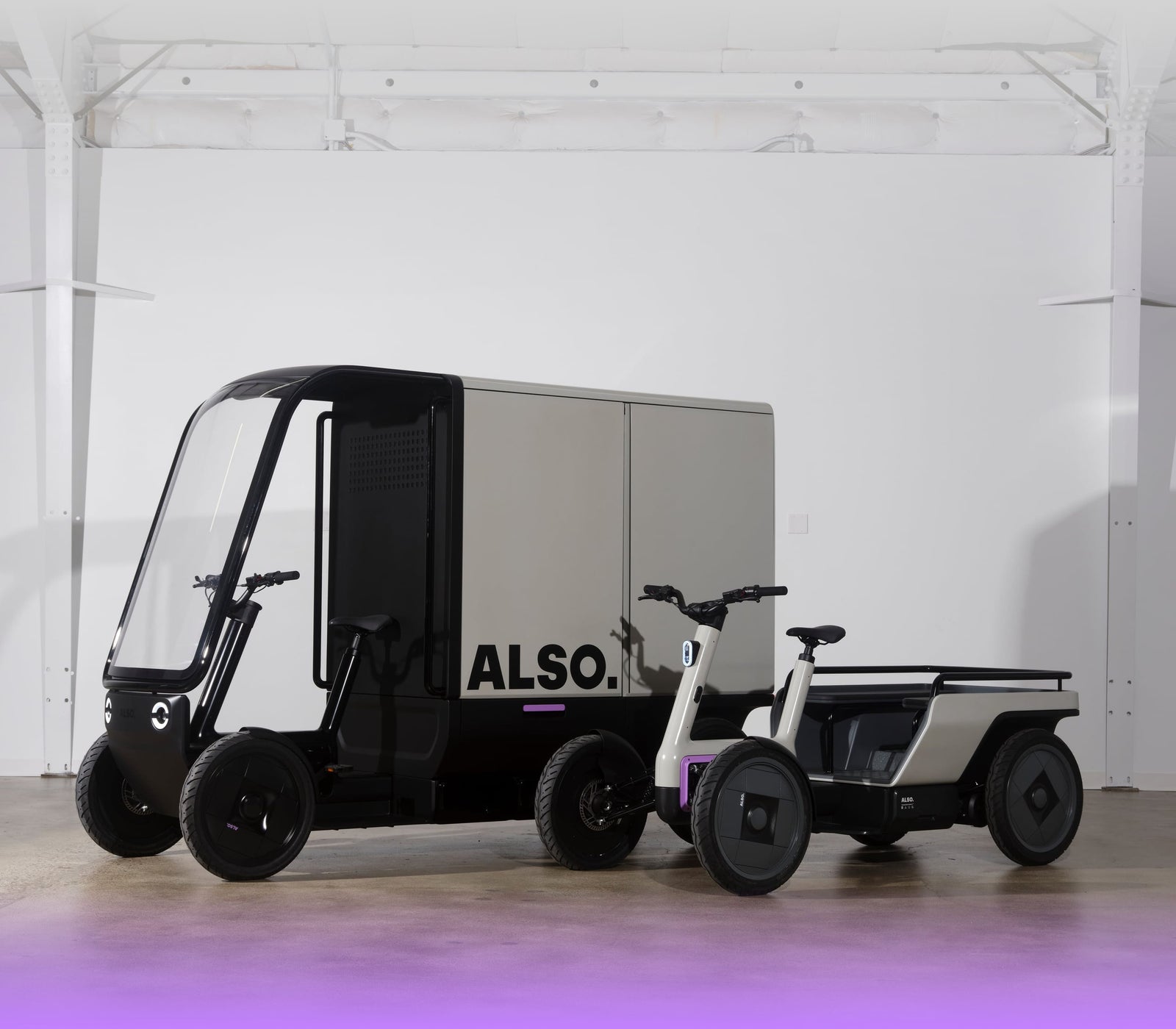
Then came DoorDash. In March 2026 it joined a $200 million Series C and signed a multi-year agreement with ALSO to develop and deploy purpose-built autonomous delivery vehicles. The companies are targeting the awkward geography between roads and sidewalks: bike lanes, shoulders and curbside spaces where a conventional car is often too large. Autonomy remains a development program here, not a claim that a fleet is already operating. The TM-B and TM-Q give ALSO a base of motors, batteries, controls and manufacturing knowledge from which to attempt it.
The competitive set changes with each job. A rider can choose a conventional e-bike, a Tern cargo bike or a Specialized commuter. A delivery operator can choose a van, cargo bike or robot. ALSO’s difference is that it has designed the electrical drive, software and form factors together and hopes to reuse that engineering across them. That is a coherent technical strategy. It is also capital intensive, and its practical advantage will depend on price, uptime, repair access and whether the smaller vehicle fits local rules.
A large bet on small things
The money arrived before the bikes. ALSO emerged from Rivian with $105 million from Eclipse Ventures in March 2025. Greenoaks put in a reported $200 million that July, valuing the company at $1 billion. A separate $200 million Series C followed in March 2026, then a $150 million Series D led by Prysm Capital in August. Add the publicly reported rounds and the total is $655 million. That scale says investors see more than a premium bicycle company. It does not yet tell us the economics of selling or servicing one.
Small-vehicle work takes shape inside Rivian.
ALSO spins out, raises launch capital and unveils the TM-B, TM-Q and helmet.
DoorDash joins a financing round and an autonomous delivery agreement.
First Launch Edition TM-B bikes ship; a $150 million Series D closes.
The company is now putting bikes where people can try them. It lists test-spin events around the United States, a pop-up with outdoor retailer evo in Seattle, and displays in some Rivian spaces. Its partnership with the Seattle Sounders and Reign is particularly canny: free staffed bike valet at matches for any brand of bicycle, plus selected TM-B test rides. It removes one reason to drive before asking anyone to buy a bike. That is a small, copyable lesson for anyone selling a new way to travel: solve the awkward part of the trip first.
A prospective customer can test-ride a TM-B, choose a frame for the errands they actually do, and decide whether $3,500 to $4,500 beats the alternatives. A fleet buyer can ask a sharper question: can a quad save enough time and curb space to justify its purchase and upkeep? ALSO’s plan works best where trips are short, loads are modest, roads are crowded and safe routes exist. Long-distance travel, heavy freight and places without useful bike infrastructure still favor other machines.
The company’s name is a useful final clue. ALSO is an addition, a suggestion that the answer to every journey need not be the same vehicle. The bike is real, the quad is visible, and the autonomous ambition is still being built. The interesting test is whether one platform can make all three ordinary enough to use on a Tuesday.