Before Justin Kosmides built a company around factories, freight and the small catastrophes hiding inside a bill of materials, he found freedom on the way to work. His route ran from Brooklyn to Midtown Manhattan. The train offered the daily romance of being pressed against strangers; an electric bicycle offered open air and options. Kosmides began plotting his commute around espresso shops, taking a different street simply because he could. He could arrive in a suit, without the ceremonial change of clothes familiar to ordinary cyclists. The city, he later said, seemed to shrink.
At the time, Kosmides was years into investment banking. His work at Barclays included debt financing in commercial real estate, property technology and construction technology, with weeks that could stretch past 100 hours. The bike was a slim battery, two wheels and a daily veto over routine. Living near VanMoof's early Brooklyn shop gave him a close view of a product category that still felt faintly European and vaguely exotic in the United States. His enthusiasm was less about machinery than movement: the ability to choose a route instead of accepting one.
That distinction would shape what followed. Kosmides had always cycled, but the e-bike opened the pastime to errands, work clothes and mornings when heroism was neither available nor required. He saw a practical consumer object with room for personality. Many e-bikes advertised power with the bedside manner of a cordless drill. He preferred something warmer.
A wedding, a bicycle and an inconvenient amount of shop talk
Around 2016 or 2017, Kosmides met Victor Hugo Cruz at a wedding in Italy. There were boats, music and Aperol spritzes. There was also, fatally for anyone hoping to enjoy a quiet reception, a great deal of bike talk. Cruz had founded Vela in São Paulo and had been making electric bicycles since 2012. His designs hid a removable battery inside a slender seat tube and tucked the electronics behind leather. They recalled a 1970s French city bike more than a gadget wearing wheels.
Kosmides first came in as an investor, then helped bring the company to the American market, and eventually became its US co-founder and chief executive. The timing was indecently lucky. Vela's first shipment arrived as the pandemic emptied bicycle shops, and it sold quickly. The buyers carried a surprise: more than two-thirds were women, in a category whose customers had been overwhelmingly men. Vela's approachable design seemed to invite riders whom the industry's usual speed-and-muscle language ignored.
The entrepreneurial impulse was older than the bike. At the University of Vermont, where he rowed crew and supported himself largely with student loans, Kosmides bought, sold and traded sneakers. His dorm room held as many as 160 pairs. He developed contacts in Japan, Brazil, South America and Europe at the dawn of e-commerce. It was a miniature international supply network disguised as a footwear problem.
His parents had provided a vivid, unsentimental education in entrepreneurship. His mother built a yoga practice. His father started several computer companies. Kosmides has joked that most failed, one did all right and one went very badly. The lesson came without the lacquer usually applied to founder mythology: starting a business could alter a family's circumstances in either direction.
“I have no shame in letting this be known. It was a scary jump. It brings up a lot of insecurities.”Justin Kosmides on leaving banking for Vela
He ran Vela beside his banking job until his investors insisted that everyone leap together. In late 2021, Kosmides left Barclays. He missed the expense account, including first-class flights longer than four hours, and the useful fiction that tomorrow's calendar might resemble today's. The factory business offered neither.
The day Walmart bought the factory's attention
Vela's overseas manufacturing had already produced an expensive catalogue of irritations. Brake pads arrived backward. Wrong components appeared on finished bikes. Units traveled to Brooklyn, were reworked, then shipped again. Calls with China invaded the middle of the night. Small brands often survive this stage by treating preventable chaos as evidence of character.
Then the supplier dropped Vela after Walmart secured the factory's capacity. A giant order had made the tiny one expendable. Kosmides did not pretend to have anticipated it. Yet the rejection forced a question that spreadsheets had politely deferred: if making bikes abroad was cheap only before shipping, tariffs, delays, mistakes and rework, how cheap was it really?
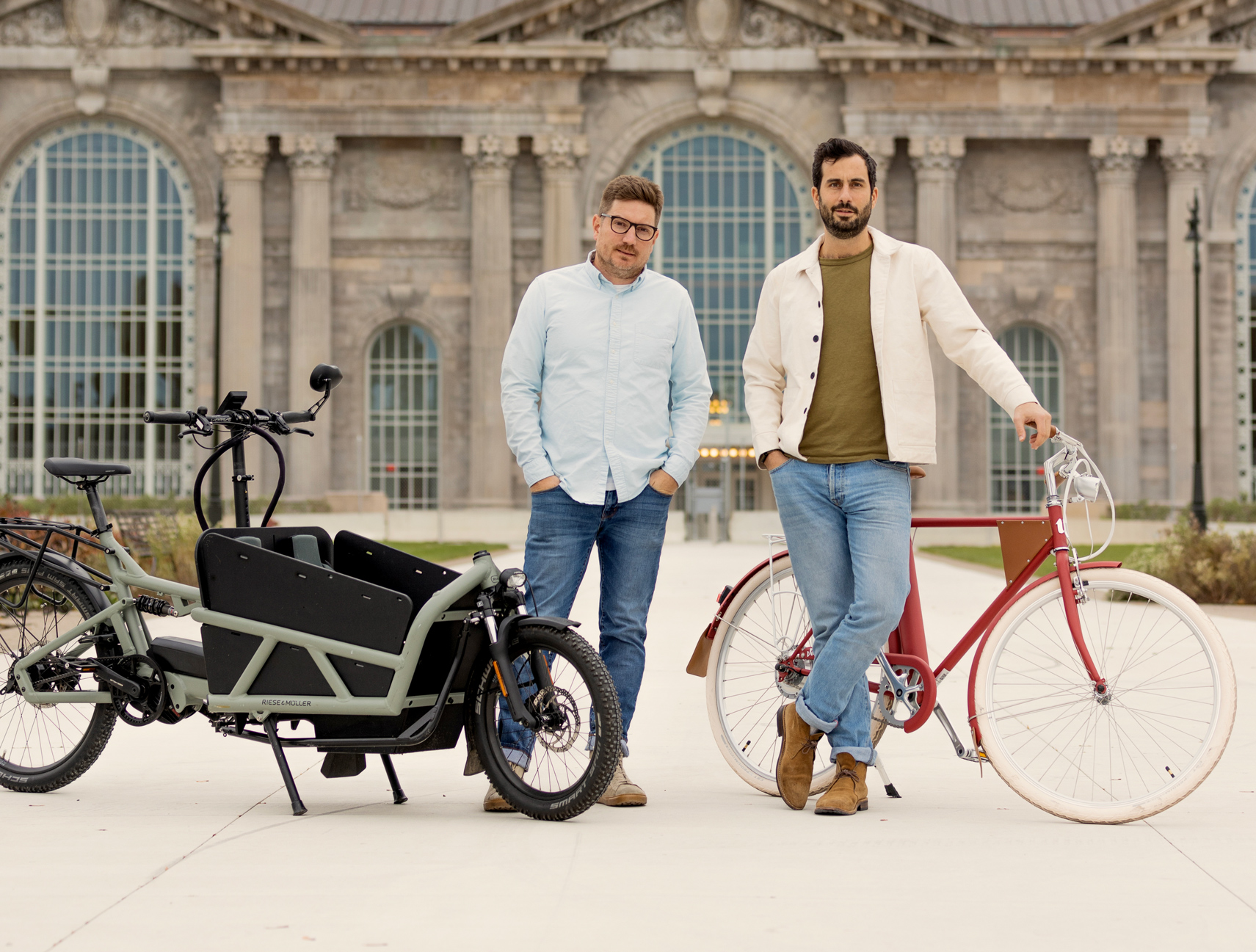
The answer led to Detroit. In 2022, Vela announced that it would move assembly to a Detroit Bikes facility, a few miles from Ford's River Rouge complex. Labor added roughly $300 to $325 to each bike. In exchange, Vela gained closer quality control, shorter lead times, easier corrections and relief from midnight production calls. Kosmides and the company shared part of the extra cost with customers. The point was not patriotic theatre. As he put it plainly, “It needed to make economic sense for us to do it. And it did.”
Detroit also supplied a historical rhyme Kosmides enjoyed. Henry Ford made bicycles before cars. The modern city held automotive expertise, available industrial space and a growing mobility community around Michigan Central and Newlab. New York had been useful for prototypes. Detroit could make thousands of things.
A battery lesson in scale
Kosmides once compared the pack in an electric Ford F-150 with roughly 400 Vela battery packs. The visual is approximate; the point is the enormous difference between vehicle classes.
Relative pack count described by Kosmides: about 400 to 1
The back office becomes the front door
Moving one bicycle brand exposed a broader absurdity. Every hardware startup seemed to be rebuilding the same hidden company. A founder could design a brilliant scooter, drone, robot or charger, then spend years finding an assembler, negotiating warehouse space, organizing delivery and inventing a repair network. Capital meant for the product disappeared into plumbing. The prototype received applause; the returns desk received invoices.
Chris Nolte had watched the same pattern from another angle. An Army veteran who had driven fuel trucks in Iraq, he later built Propel Bikes and helped European e-bike brands enter the United States. Kosmides approached him with what he called a crazy idea. Nolte had been thinking about it for years. They founded Bloom in 2023 with a team shaped by the first wave of micromobility, including operators who had learned which parts of that boom were genuine and which had been financed optimism.
Bloom's early pitch bundled the operational chores: contract manufacturing, assembly, warehousing, logistics and service. The ambition was to let a hardware brand plug into capabilities instead of owning every building and payroll. By spring 2024, roughly 30 companies were preparing to work with the young business and more than 100 sat in its pipeline. Kosmides and Nolte had moved to Detroit to build it; Kosmides brought Artie, his dog and an experienced citizen of Newlab's Brooklyn and Detroit campuses.
The route into Bloom
- Investment banking at Barclays, including real-estate and technology financing
- A wedding conversation begins his relationship with Vela Bikes
- Leaves banking to operate Vela full time
- Moves Vela assembly from China to Detroit
- Co-founds Bloom with Chris Nolte
- Bloom develops into a broader software-enabled operations marketplace
The model has since shifted toward a marketplace. Bloom matches brands with vetted providers across manufacturing, engineering, delivery, warehousing and after-sales service. Kosmides calls the work “digital trade representation.” If a company wants to move production closer to home, Bloom can run a request across qualified partners. Ratings alone cannot describe whether a factory can build a particular motor controller or assemble a medium-volume vehicle. The team studies capabilities and past projects, handles much of the matchmaking manually, and gathers the data that could make later matches faster.
Aggregation supplies the economic argument. A small brand brings a small order and limited negotiating power. A network can combine demand, standardize requests and make payment more predictable for suppliers. Bloom's platform now advertises consolidated vendor payments and extended terms for qualified members. The founders began by imagining that Bloom would provide much of the backend itself. The marketplace version lets existing specialists do the work while Bloom qualifies, connects and coordinates them.
“We're essentially acting as digital trade representatives.”Justin Kosmides on Bloom's role between brands and suppliers
Warm machines and deliberately boring competence
Kosmides's taste in products offers a clue to his taste in companies. He has argued that technology should feel warm, inviting and even nostalgic. At Vela, that meant a classic frame, Brazilian leather and electronics hidden without becoming unreachable. During the pandemic, the company once paused production rather than substitute the handlebar grips that gave the bicycle a particular feel. The decision was commercially painful and aesthetically stubborn.
Bloom applies that concern for experience to work usually described with acronyms. A physical product travels through a long chain of human handoffs. Someone receives the pallet. Someone notices the crooked brake pad. Someone answers a customer who needs a replacement part. Software can make those exchanges visible and financing can make them survivable, but the network remains a collection of people making promises to one another.
This explains Kosmides's fondness for the tiny community that forms when cyclists gather at a red light: a delivery rider, a commuter in a suit, a parent on a cargo bike, a tourist wrestling with a rental. For a few seconds, different motives share the same patch of asphalt. Bloom enlarges that picture for industry. The brands and factories remain distinct. Their advantage may come from recognizing the route they already share.
The banker who sought espresso on his commute now spends his time on the unromantic systems behind manufactured objects. There is a neatness to the transition, though none of it was tidy. A supplier's rejection led to a local production line. The production line exposed a common operating problem. The common problem became a company. Careers, like cities, become smaller and more navigable once somebody draws a better route.