There is a peculiar moment in the life of a technical company when the machine works but the sentence does not. The engineers can explain the microbial monitor, the filtration system or the municipal consent order. Sales can explain the prospect. The customer, meanwhile, is quietly wondering what any of this has to do with Tuesday morning. Boeh Agency built a business in that pause.
The Pittsburgh firm, which pronounces its name “Bay” and often writes it as Bā, is a full-service marketing and public-relations agency for water and wastewater organizations. Only water and wastewater. Its clients include public utilities, nonprofits, software companies, equipment manufacturers and global brands. The output looks familiar - websites, brand systems, campaigns, press coverage, videos, trade-show exhibits, search programs - but the premise is unusually strict. The agency already knows why a regulator, an operator, an engineer and a procurement team can read the same paragraph four different ways.
The accident that became a moat
Beth Boeh did not set out to become the marketing person for water. In 1996, she took a temporary job at a Philadelphia-area instrumentation company. The assignment became a career. By 2000 she was focused on marketing communications, and in 2012 she created BB Communications Group, the firm that became Boeh Agency.
Her first insight was not about branding. It was about timing. Large water companies had marketing departments but still needed specialized content. Smaller firms needed sales before they could afford an internal team, yet needed marketing to make those sales possible. An outside group that understood the technology and the market could step into both situations without spending the first month learning the vocabulary.
“Every tactic should tie directly back to business goals. That’s how you get momentum and measure success.”Beth Boeh
For years, the agency itself ran mostly on referrals and a simple website. Then 2020 forced water businesses toward digital communication, video and social media. Boeh’s growing team began following its own advice and investing in the company’s marketing. This is the charmingly awkward origin of many good professional-services firms: expertise arrives first; packaging catches up later.
A strategy is not a banner with better posture
Boeh’s published method starts by backing away from the urgent deliverable. A client may arrive needing a trade-show banner in three weeks. The agency instead asks about the climate of the business, the commercial goals and the people involved. Interviews can reach across sales, product, marketing, executives and investors. The point is to find internal disagreement before it becomes external mush.
The result might be integrated marketing, digital work, public relations, utility communications, creative production or consulting. In 2025, the agency formalized strategy sessions and fractional CMO support, introduced service tiers and packaged pricing, and refreshed its identity in-house. The logo barely changed. The operation did. One-off assignments gave way to more integrated engagements in which the agency joins the decision earlier.
That is also the business model. Boeh sells scoped projects, ongoing agency relationships, maintenance retainers and senior consulting. Most fees remain proposal-based. One municipal case supplies a rare public number: a complete website build for $24,675, followed by a $370 monthly maintenance contract.
The first thing that failed was visibility
The cleanest example is the Washington-East Washington Joint Authority, a Pennsylvania wastewater utility serving roughly 45,000 customers across seven communities. The organization faced a pending consent order, major capital work and future rate increases. Its communication apparatus was not ready. In a three-month audit window, the old website drew 12,896 page views from 5,416 users, but every page lacked a meta description and only eight of 59 pages were indexable.
Boeh rebuilt the information architecture around ratepayers, new residents, developers and regulators; rewrote technical material in plain language; fixed search visibility; and launched the new site in three months. Staff supplied facts, forms and images while the agency handled strategy, writing, design and development. After launch, the entire site was indexable. Average session duration moved from 51 seconds to one minute 50 seconds, and the number of keywords in the top ten rose from seven to twelve.
What changed the utility’s mind was not a fashion for prettier websites. It was an approaching communications problem with regulatory, financial and civic consequences. The website became phase one of a continuing program that includes newsletters, bill inserts and rate communications. Marketing, in this setting, is less about persuasion than making public facts findable before rumor fills the pipe.
From a campaign to an operating system
For The Water Tower, the problem was national rather than local. Utilities need new workers as experienced operators retire. An EPA-funded training initiative needed to recruit in Greenville, Jackson, Richmond and Atlanta, reaching audiences that included young people, women returning to work, Latinx communities and justice-impacted people.
Boeh created “Water Needs You,” a platform that framed water careers as stable, essential and accessible. Then it built the machinery around the line: segmented messages, a landing page, flyers, digital assets, a career-pathway map, press templates, talking points and a guide for utility partners. The useful product was not one advertisement. It was a kit that many local organizations could use without turning a national message into soup.
Choose a market narrow enough to learn deeply. Interview the departments that disagree. Tie each deliverable to one business goal. Build reusable tools for partners, and publish outcomes specific enough to survive a skeptical buyer.
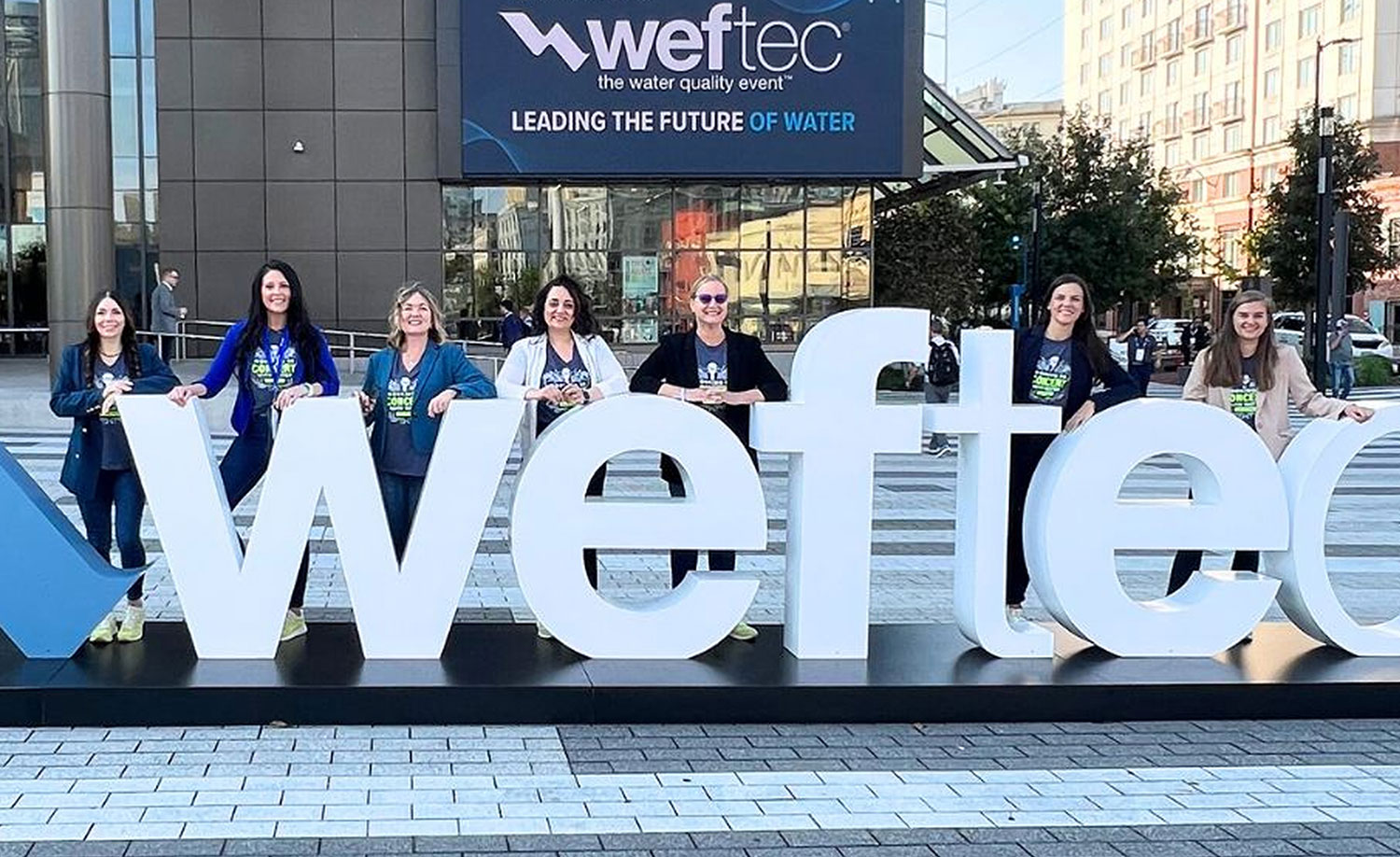
Luminultra shows the same pattern at a different scale. Acquisitions had carried the microbial-monitoring company beyond the story its old brand could tell. Over three quarters, Boeh helped reposition it across water, energy and food, then connected the messaging to a refreshed identity, portfolio architecture, new website, video and WEFTEC launch campaign. The distinction is important: the website was an expression of the strategy, not a substitute for it.
The price of being narrow
Specialization is useful under particular conditions. The market must be large enough to support repeat work. Knowledge must shorten discovery or improve decisions. Clients must value fluency enough to hire outside help. Water checks those boxes: sales cycles are long, claims are technical, buyers are cautious and public trust matters.
The model is less useful for a company seeking a broad consumer-culture campaign, a one-off commodity design job, or a founder unwilling to bring sales, product and leadership into the room. It also asks something difficult of the agency: keep learning. Regulations shift. Utilities face new contaminants, aging infrastructure and workforce pressure. The niche stops being a moat the moment its expertise becomes a costume.
Boeh’s published culture is built around four phrases: make waves together, champion with care, lead the curve and deliver clarity. The team is remote, women-led and nationally certified as a Women’s Business Enterprise. Its client list runs from municipal authorities and nonprofits to firms such as Luminultra, MentorAPM, De Nora, Syrinix and 120Water. The range of organizations is broad because the range of water problems is broad.
This is where Boeh fits in the market: between the generalist agency that must learn the category, the freelancer who owns one tactic, and the internal team that needs more hands or senior direction. Its advantage is not that it can design a better banner. It is that, before anybody designs the banner, someone is willing to ask whether the banner is the point.