At 15, Bob Morrell had a programming job and a transportation problem. He took the school bus to work. At the company, he was the first employee without a college degree. The arrangement placed two systems side by side: the timetable of a schoolchild and the expectations of a professional programmer. Before there was a founding CEO, there was a teenager getting himself to the keyboard.
That early work became the beginning of a career spent making complicated information useful. While a sophomore at Georgia Tech, Morrell co-founded Risk Laboratories, his first risk management software business. He had found a field in which software could change how people worked, and he would return to it for his second company. The subject might sound dry. The consequences of getting it wrong rarely are.
Riskonnect began in 2007. Its founding proposition concerned an awkward division: traditional risk management and enterprise risk management were developing separately. Morrell thought the industry had its priorities inverted. A company could catalogue its risks and still struggle to understand the relationships between them. He wanted a system that made those relationships easier to communicate and see.
- 15Professional programmer
- CollegeRisk Laboratories
- 2007Riskonnect begins
A shortcut worth taking
For Riskonnect, an early decision was to build on Salesforce’s Force.com platform. The attraction was practical: existing infrastructure supplied security and reliability, allowing the young company to concentrate on its application. Its initial enterprise risk management application took three months to build. For a founder who had already built a business in the sector, there was little romance in manufacturing every component from scratch.
Riskonnect was among the early independent software businesses to build on the Salesforce platform. The choice shaped how it presented itself to customers: a configurable work platform that could fit existing business processes. Morrell wanted executives to understand the risks facing their organizations well enough to make decisions about growth. The software’s purpose extended beyond producing a more handsome register of things that might go wrong.
By September 2008, Riskonnect had introduced a web-based risk management information system covering policies, claims, litigation and related information. Users could create their own workflows, business rules, reports and screens. That detail matters. It placed some of the power to adapt the software in the hands of the people using it, rather than reserving every adjustment for the vendor.
The keyboard was becoming optional
Morrell was also thinking about where those users would be. In 2011, he argued that the tether to a desktop or laptop would weaken. Risk managers buying software, he said, were considering how people would access information years into the future. A system that merely opened on a mobile device would be insufficient if it remained awkward to use there.
His distinction was between compatibility and usefulness. A touchscreen has no traditional keyboard; a report that technically appears on the screen may still be a nuisance to read. Morrell’s point was specific to enterprise buying decisions, but recognizable to anyone who has tried to complete a desktop-sized task on a phone. The small screen has a talent for exposing a large assumption.
In his own writing in 2014, he described a profession gaining influence inside organizations. Risk managers were increasingly connecting departments, examining loss information and contributing to decisions before problems occurred. Email and spreadsheets, he argued, were poor tools for that wider responsibility. His ambition for the profession was tied to collaboration: people needed consistent ways to exchange information across the business.
“I’m a computer geek, and proud of it.”
Bob Morrell · 2014
A decade, then a different chair
By 2015, Riskonnect described offices in Kennesaw, Chicago, London and Mangalore. Its proposition had grown around an enterprise-wide approach to organizational risk. Geography and departmental boundaries both complicated the work. Putting information on a shared platform offered a way to address those boundaries, while keeping the everyday business of managing risk in view.
In 2017, the company introduced Insights, a product intended to help customers understand how one risk could affect another. Morrell stressed that information had to be accessible and current enough to inform decisions quickly. The emphasis was consistent with the original idea: a useful system had to help people interpret connections, alongside collecting the underlying records.
That June, Thoma Bravo announced an agreement to acquire Riskonnect. The company had more than 250 enterprise customers. The three founders would retain a significant minority stake, and Morrell would move from CEO to an advisory role with the board. Jim Foster, then president and chief operating officer, would become chief executive. The announcement described a change in responsibilities as well as ownership.
Morrell’s stated founding goal was “understanding risk holistically,” across the business. His next task would be to support Foster and the new investment partner as they continued that work. Ten years after the company began, its founding CEO was preparing to help from a different seat. The financial terms were undisclosed; the change in his role was explicit.
Riskonnect at the June 2017 acquisition announcement.
Experience becomes something to share
In September 2019, Morrell took the president and CEO position at FortifyData, a cybersecurity software company founded by Victor Gamra. The appointment gave him responsibility for strategy, global sales growth and the development of its cyber risk platform. It was his third turn leading an Atlanta software company. His earlier businesses, Risk Laboratories and Riskonnect, had both attracted private equity acquisitions.
The FortifyData role carried a familiar interest into another setting: helping businesses see their exposure in a more integrated way. By February 2020, the company announced a move to larger headquarters in Kennesaw and a presence in Amsterdam. Morrell described the additional space as a way to accommodate staff and support further hiring, with the Netherlands location serving European customers.
Alongside executive work, he developed a set of advisory and investment relationships. In 2019, those included Citiri, Parmonic and W9Manager, as well as mentoring companies through Georgia Tech’s ATDC. Parmonic still lists him among its key investors. Findevor lists him as an executive advisor and identifies him as managing partner of Funding Force. These are different ways of staying involved after building companies himself.
Funding Force describes its approach as capital accompanied by operating experience, including help with strategy, technology, finance and growth. Its stated focus includes businesses built around artificial intelligence and the emerging space economy. The language of investing can become rather airborne. The operating tasks it names are grounded ones: choosing a market, reaching customers, managing money and making the organization work.
Another kind of network
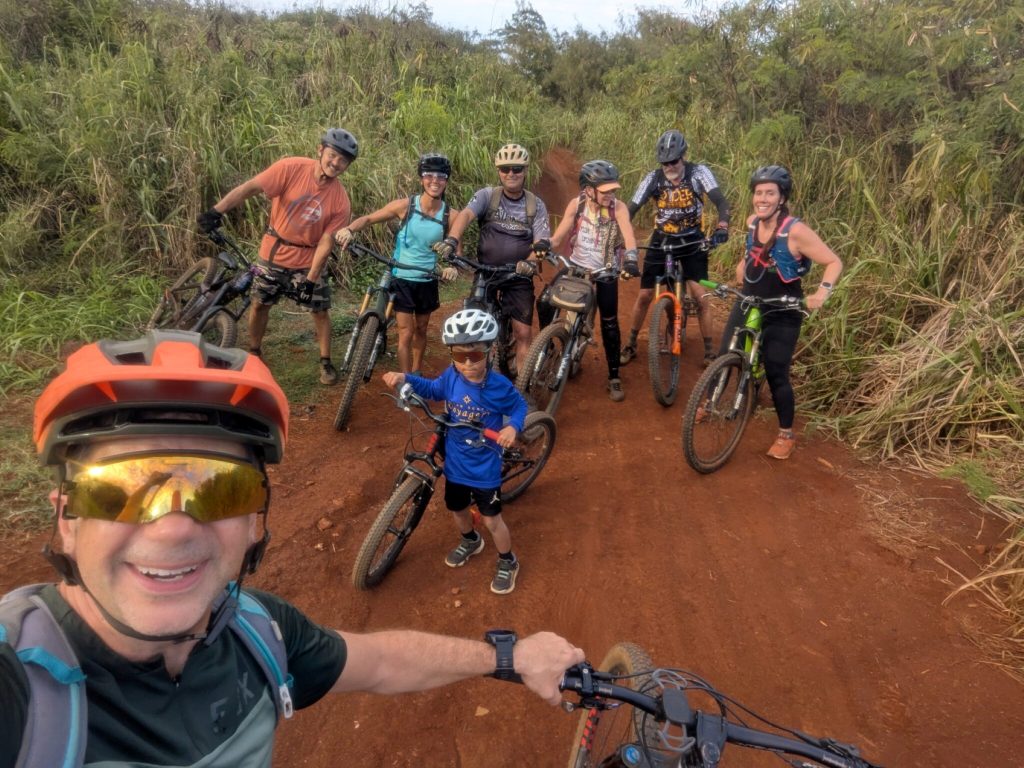
On Kauai, Morrell’s work has acquired a more literal relationship with the ground. In October 2025, MTB Kauai announced its launch as a nonprofit association, with Morrell as chair. The organization grew from residents who had maintained island trails over many years. It planned to work with landowners on formal trail networks, mapping and signage, while introducing younger riders to the sport.
The club’s plans included removing invasive vegetation, replanting native Hawaiian plants, organizing rides and supporting volunteer maintenance. Membership fees would help pay for tools, materials and professional trail work. Participating bike shops would offer members a parts discount and priority repairs. It was a practical collection of incentives and responsibilities, arranged around a shared place.
“Every member and volunteer directly contributes,” Morrell said at the launch. The club invited people to sign up at a community workday in Lydgate Park, with that first cohort recognized as founding members. There is a pleasing economy to the invitation: a founding membership available at a morning spent helping a park. A title, with some work attached.
His public profile places him in Anahola, Hawaii, a long way from the Georgia software companies that made his name in enterprise risk. Yet the change of setting need not be forced into a story of reinvention. Building a company and preserving trails are different undertakings, with different obligations. The connection is visible in the work each requires people to do together.
The person at the connection
There are smaller clues to Morrell’s working life. He has written about technology under his own name, rather than leaving every argument to a company product page. He has also practiced mixed martial arts with his family. His LinkedIn record includes volunteer employment counseling at MUST Ministries in 2018 and 2019, helping people with skills assessments, résumés, job searches and interviews.
The employment counseling was a regular commitment at the Elizabeth Inn location, a few days each week. His description concentrated on helping people return to the workforce. It gives the advisory side of his biography another dimension: experience could be useful to someone preparing a job application as well as someone starting a company. The immediate task was different, but the help still had to be practical.
Those details give the career a human scale. A professional biography can turn into a procession of organizations and transactions. Morrell’s includes a school bus, a software platform borrowed rather than rebuilt, practical help for other founders, and a club trying to keep shared trails usable. The settings change; the tasks remain specific enough to picture.
The teenage programmer’s commute is still a useful place to leave him. It captures an early accommodation between ambition and the means available to pursue it. Years later, the work includes investment advice and mountain bike access, alongside the company he helped found. There are more people in the picture now, and more routes to keep open.