The useful thing about BLU Products is not that it makes cheap phones. Plenty of companies can bolt an Android screen to a battery and shave a digit off the price. BLU’s sharper idea was to identify the expensive assumptions hiding inside the American smartphone purchase: the carrier relationship, the contract, the approved shelf, the flagship mythology. Then it sold around them.
Founded in 2009 by Samuel Ohev-Zion and based in Doral, outside Miami, the privately held company designs unlocked smartphones and feature phones for people who would rather choose a compatible network than have a network choose their device. BLU says it has sold more than 70 million units. Its distribution reaches thousands of dealers and mobile virtual network operators, plus familiar retailers such as Amazon and Best Buy, across the United States, the Caribbean, Latin America and farther abroad.
A phone for people who read the receipt
BLU’s customer is less a demographic than a mood: I need a phone, but I do not need a ceremony. That includes prepaid subscribers, families buying several devices, travelers who value dual SIM, workers separating business and personal numbers, and buyers in markets where paying a flagship price upfront is absurd. A basic Tank or Zoey feature phone can cover calls and messages. A current BOLD model can offer 5G, a 120Hz AMOLED screen, 256GB of storage and fast charging. The catalog is broad because “affordable” describes many different jobs.
The problem BLU solves is not raw invention. It is specification triage. Buyers see the ingredients they have been trained to notice - camera megapixels, screen size, storage, battery capacity, finish - at a price that forces a second look. The BOLD N3, launched in 2023, carried a $299.99 list price and an early $199.99 promotion. That discount was more than a sale. It placed a premium-looking object next to a grocery-sized decision.
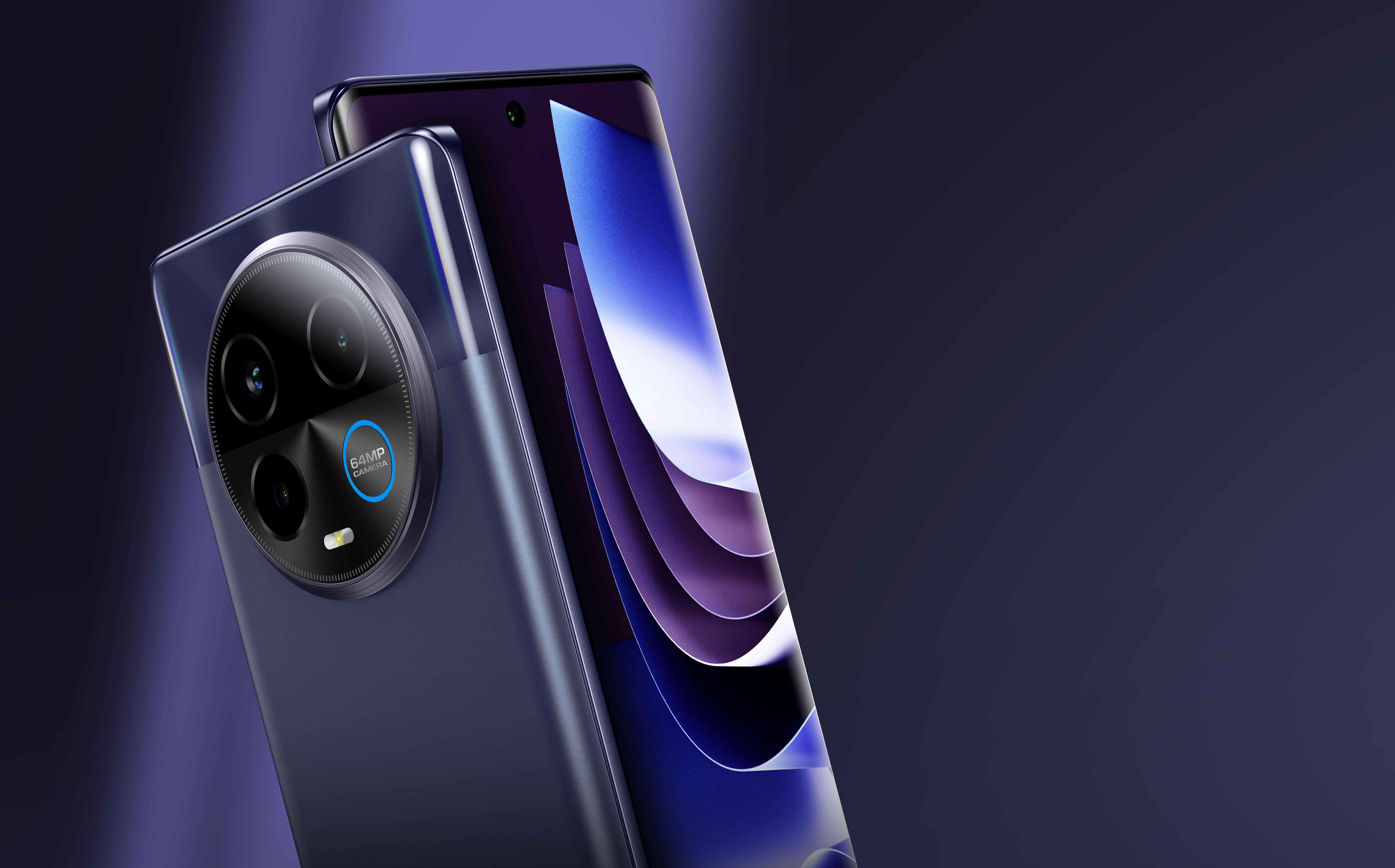
Its newest storefront stars continue the pattern. The BOLD K20 lists a 6.7-inch 90Hz display, 256GB of storage, a 50-megapixel main camera and a 5,000mAh battery. The BOLD K50 steps up to a curved 120Hz AMOLED display, 5G, a MediaTek Dimensity 6300 chip and a 64-megapixel camera. BLU is not building an app empire around them. It is assembling a persuasive hardware checklist, wrapping it in Miami color and selling the object.
“Smartphone owners want premium experiences at more affordable prices - and the flexibility to choose the network.”Samuel Ohev-Zion, announcing a MediaTek collaboration in 2017
The shelf without the carrier
The business model is classic asset-light consumer hardware. BLU specifies and markets devices, outsources production, and earns money when hardware moves through online marketplaces, national retailers, dealers, distributors and MVNOs. That arrangement helps a relatively small organization field a remarkably long catalog. Public company data supplied for this profile estimates about 87 employees and roughly $72 million in annual revenue, though BLU does not publish audited financial statements.
This is also why the company’s expertise is easy to underestimate. BLU is not trying to invent a new operating system or fabricate its own silicon. Its craft is selection: which chipset can clear a price target, which screen will photograph well on an Amazon listing, which radio bands a market needs, and which compromise a buyer will forgive. Product management becomes a kind of ruthless packing problem. Every extra dollar must either show up in the sales image or prevent a return.
The BLU machine
Borrow the factory. Borrow the shelf. Own the reason to buy.
This is where BLU differs from Samsung, Apple and even the better-resourced value brands. It does not need to win the entire relationship. There is no sprawling cloud-service bundle, watch ecosystem or prestige campaign to defend. Against Motorola’s Moto G, Samsung’s Galaxy A, HMD/Nokia, TCL and inexpensive imports, BLU competes with price, variety and flamboyance. Against a used iPhone or a subsidized carrier phone, it sells newness and independence.
The approach works best when the customer knows the carrier and bands they need, buys through a trusted retailer and values upfront savings more than long software support or a dense service ecosystem. It works especially well in fragmented distribution markets, where local dealers and dual-SIM behavior matter. It is weaker when a buyer expects years of major Android upgrades, universal U.S. carrier support, flagship cameras, waterproofing or frictionless warranty service.
Where the proposition leans
Editorial positioning, not a laboratory benchmark. Compatibility remains model- and network-specific.
What failed first was invisible
The risk in an outsourced hardware machine is that customers experience every supplier as the brand. In 2016, researchers found that software from Chinese firmware provider ADUPS, preinstalled on some BLU phones, transmitted personal information far beyond what was necessary for updates. The Federal Trade Commission later alleged that this included text contents, real-time location information, call and text logs, contacts and app lists. The cheapest component in the story was not a camera sensor. It was insufficient supervision.
BLU had contracted ADUPS to provide firmware-over-the-air updates. According to the FTC, the company did not adequately oversee the provider or represent the resulting data practices accurately to consumers. The final 2018 settlement prohibited misleading privacy and security claims, required a comprehensive security program and imposed independent assessments every two years for 20 years. There was no monetary fine in the settlement, but the compliance cost, retail disruption and reputational damage supplied a harsher kind of invoice.
What changed the company’s mind was not a gentle strategic off-site. It was outside scrutiny - first from security researchers, then retailers, press and regulators. The lesson is uncomfortable because it travels well: a contractor can be off the org chart and still be inside the customer’s pocket. Firmware, telemetry and update systems are not back-office procurement. They are the product after it ships.
A supplier can be off the org chart and still be inside the customer’s pocket.
The network always gets a vote
Unlocked does not mean universal. When AT&T retired its 3G network, some legacy BLU phones lost service because calls moved to the carrier’s LTE voice system and uncertified devices could not simply follow. BLU published a compatibility list, apologized to customers and said it was working with AT&T to certify newer models. Current guidance identifies selected compatible phones and says other devices remain usable on T-Mobile, Metro and various MVNOs.
That episode exposes the boundary of the pitch. A handset maker can remove the contract, but it cannot remove radio bands, carrier approval or network sunsets. The practical version of freedom comes with homework: check the exact model, supported bands, voice-over-LTE status and carrier policy before paying. BLU is most useful when its buyers understand that distinction. A bargain that cannot connect is modern sculpture.
What a smaller company can steal
BLU’s most portable insight is to hunt for a hated bundle. The incumbents sold phones, financing, contracts, services and status as one polished package. BLU isolated the hardware and made the absence of the rest feel liberating. It then borrowed distribution instead of building temples: Amazon for intent, Best Buy for familiarity, local dealers for reach, MVNOs for the prepaid edge.
The five-line copybook
- Find the assumption customers resent - in this case, carrier lock-in and flagship pricing.
- Make the benefit visible on the box: unlocked, dual SIM, big storage, big battery.
- Use existing channels where comparison shopping already happens.
- Spend on the details buyers can feel, but publish the tradeoffs they cannot.
- Treat firmware, data flows and contractors as first-party product decisions.
The conditions matter. This playbook fails when low price is the only distinction, when returns erase thin margins, when the product needs expensive education, or when a platform owner can revoke compatibility. It also fails when outsourced complexity outruns internal oversight. Cheap can be a strategy. Cheap supervision cannot.
BLU’s culture pitch is “From Miami, with Love”: multicultural influence, fashion-forward details, a certified minority-owned identity and an EcoVadis Bronze sustainability rating. The language can sound sunnier than the supply chain, but the visual instinct is real. Purple, teal, curved glass and giant camera circles help a budget device escape the beige penalty. In a category where the internals are hard to inspect, color does useful commercial work.
Where does BLU fit now? Below the prestige fight, above anonymous commodity hardware, and slightly to the side of the carrier. It is a practical option, not a universal recommendation. The company’s achievement is making 70 million purchases from that in-between position. Its cautionary chapter explains what the sticker price leaves out. Together, they make BLU more interesting than a simple bargain - and much more useful as a business case.
The durable payoff is not permission to launch another low-price gadget. It is a better question: what part of the incumbent’s offer is the customer paying to escape? BLU answered with lock-in, excess price and a shortage of choice. Any founder can copy the question. Only the careful ones will copy the controls that its hardest chapter eventually required.
Keep exploring