Motorola’s best new product feature is visible from the other side of a café. A Razr folds. That sounds almost insultingly obvious until you remember the modern smartphone aisle: dozens of competent black rectangles, each pleading that its camera bump is a personality. The Razr has a silhouette. Folded shut, its external screen handles messages, maps, photos and quick AI prompts. Half-open, the hinge becomes a tripod. Open, it is a normal Android phone. The trick is not technical novelty alone. It is legibility.
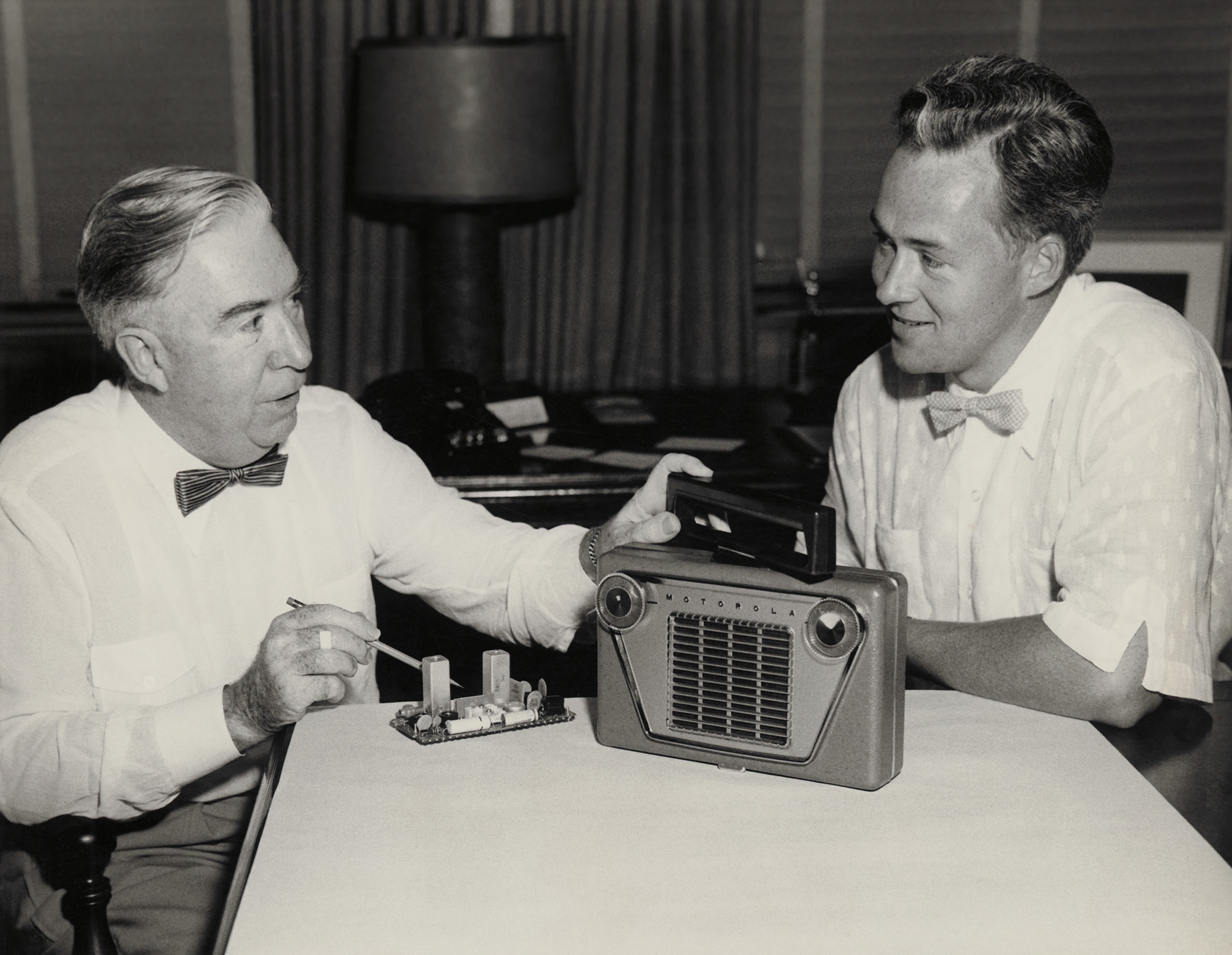
That legibility matters because Motorola Mobility is living a peculiar second - or fourth - life. The legal company was formed in 2011 when the original Motorola split into a consumer-device business and the public-safety company now called Motorola Solutions. But its family memory begins in Chicago in 1928, when Paul and Joseph Galvin started Galvin Manufacturing. The Motorola name first appeared on a car radio. Later came lunar communications equipment, the first public handheld cellular-phone call and the impossibly thin Razr V3. Few brands can produce that scrapbook. Fewer can turn it into current sales.
01 / The first thing that brokeThe expensive romance of Moto X
The cleanest way to understand today’s Motorola is to look at the experiment that failed first. Under Google ownership, the 2013 Moto X promised a phone assembled in Fort Worth, Texas, with colors and accents chosen online. Local assembly shortened the path between a customer clicking “buy” and a customized device arriving. It was clever, tactile and unusually human for a phone launch.
It was also a scale problem wearing a patriotic T-shirt. The $600 flagship met weak demand in an unforgiving North American market. Domestic labor and shipping costs were higher, and the factory could not reach the volume needed to make its economics work. At its peak the site employed more than 3,800 people; by the time closure was announced in 2014, roughly 700 remained. The experiment lasted about a year.
What changed Motorola’s mind was not a brainstorm; it was arithmetic. The company shifted its energy toward the $179 Moto G and $129 Moto E, products whose appeal traveled better than “assembled in America.” Customization had identified a real desire - people wanted phones that felt less anonymous - but Motorola had attached that desire to the costliest part of the system. The lesson was not to stop being distinctive. It was to move distinction into industrial design, color, material and form, where a global supply chain could reproduce it.
“A phone can be personal without making its factory personal.”The Motorola lesson, in one line
02 / What the company actually sellsOne portfolio, two jobs
Motorola is a consumer-hardware company with an increasingly software-shaped pitch. Moto G and Moto E cover value-minded buyers. Edge occupies the slim, camera-conscious middle and upper tiers. Razr supplies the premium halo. Tablets, earbuds, watches, trackers and chargers attempt to keep the customer inside a small connected orbit. For businesses, Moto Secure, Lenovo’s ThinkShield umbrella and fleet tools add privacy and management. Device repair, warranties and support extend the relationship after checkout.
The business model is familiar but broad: sell hardware through carriers, retailers, distributors and Motorola’s own store; add accessories and protection; use Lenovo’s procurement, manufacturing and enterprise reach behind the scenes. Carriers matter because they finance phones and place them in front of buyers. Direct ecommerce matters because it preserves merchandising control. Some home, nursery and accessory products use the Motorola brand through licensing partners, a reminder that the batwing travels farther than the corporate org chart.
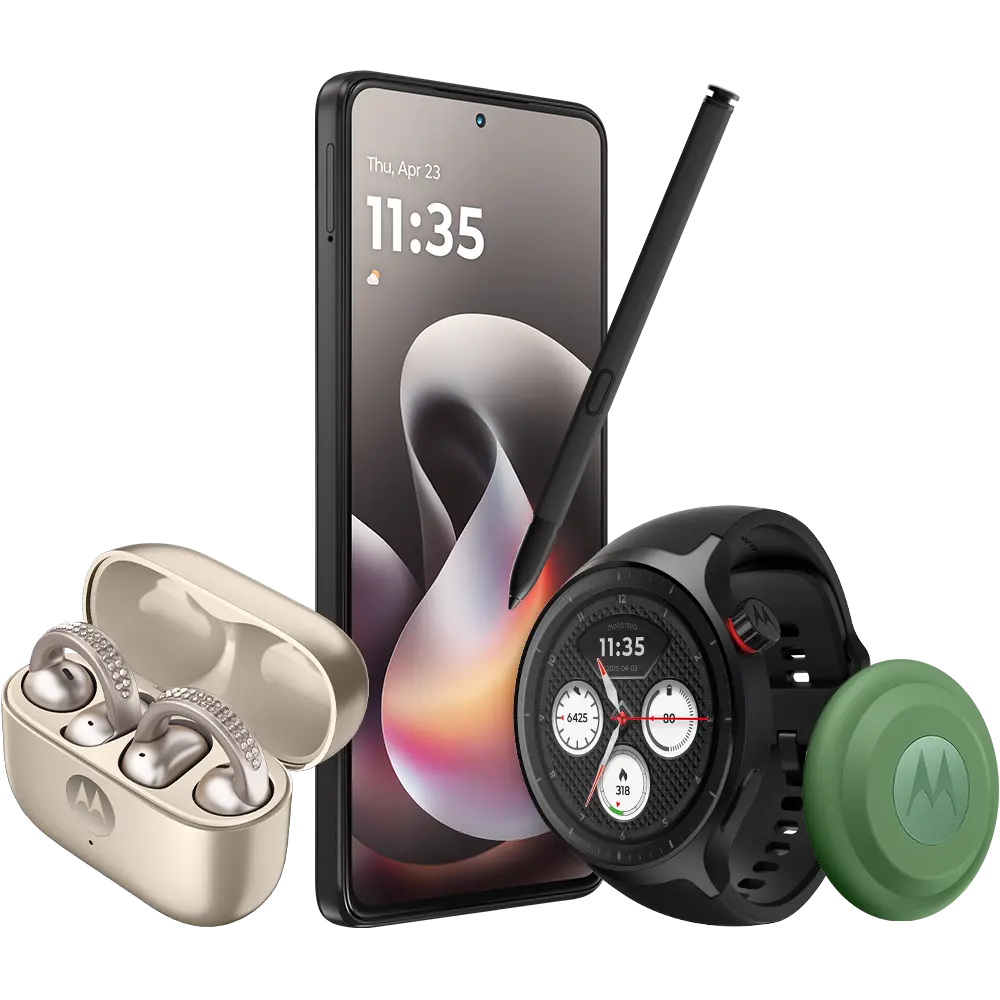
Editorial model: value phones build reach; Edge fills the range; Razr builds recognition; accessories deepen the relationship. Bars show strategic role, not reported revenue.
03 / The new source of differenceA fashion strategy with a hinge
Samsung remains the direct foldable rival, while Apple and Google define much of the premium conversation. Xiaomi, Oppo, Vivo, Honor, OnePlus and Nothing crowd Android shelves elsewhere. Motorola cannot reliably win a specifications auction against all of them. It can make the auction less relevant.
That is why its partnerships sound more like a mood board than a component list. Pantone consults on colors and validates some cameras and displays. Bose tunes selected earbuds. Alcantara supplies tactile finishes. Swarovski crystals appear on jewelry-like open-ear buds and limited devices. This is easy to mock - until one notices that processors, screens and camera sensors are widely available while a coherent visual identity is not.
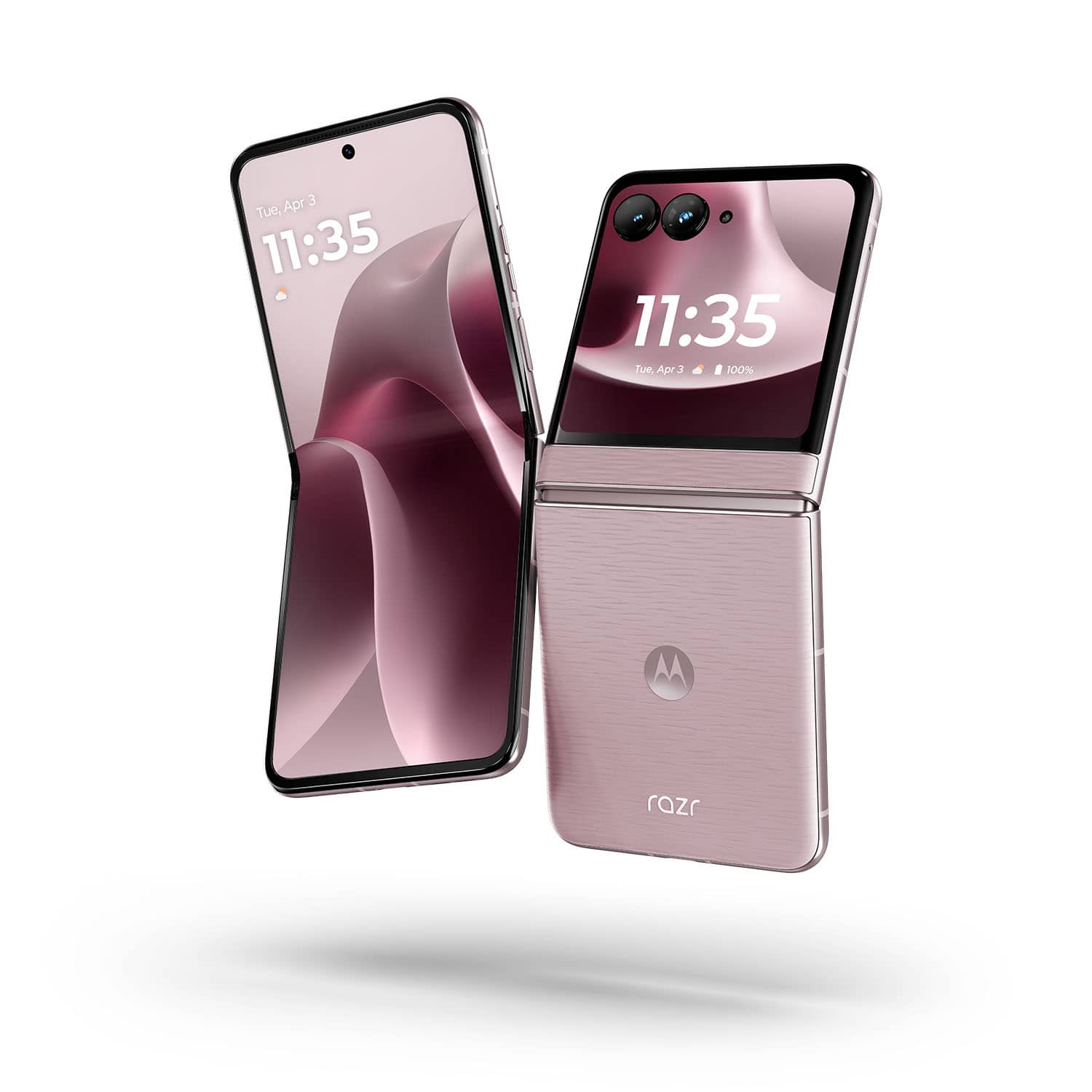
The 2026 U.S. Razr range makes the ladder explicit: $799.99 for Razr, $1,099.99 for Razr+ and $1,499.99 for Razr Ultra at launch. The customer can buy the recognizable form without buying the top processor. Lenovo said Motorola’s foldable share outside China exceeded 50 percent in its fiscal 2025/26 first quarter, and later reported record Motorola smartphone volume and activations. That is not global smartphone dominance. It is a valuable beachhead in the one premium category Motorola helped make culturally intelligible.
The market, minus the keynote fog
04 / AI without monogamyLet the assistants fight inside the phone
Moto ai is Motorola’s attempt to make software feel as distinctive as the hinge. It can summarize missed notifications, transcribe and label a conversation, suggest a next action based on the screen, create images or playlists, and support hands-free prompts when a Razr sits half-open. A dedicated AI key appears on selected devices.
The unusual choice is pluralism. Google’s Gemini, Microsoft Copilot, Meta’s Llama and Perplexity all appear in the experience. Users get choice and Motorola avoids betting the product on one model provider. The danger is cognitive clutter: if a person must remember which assistant owns which trick, the interface has outsourced its org chart to the customer. This works when the software routes tasks quietly. It fails when “choice” becomes a submenu.
05 / The stealable playbookKeep the memory; remove the museum glass
Founders cannot copy Motorola’s carrier relationships or Lenovo’s supply chain. They can copy its better decisions. First, separate the product that creates reach from the product that creates identity. Moto G does not need to be a fashion statement; Razr does. Second, spend borrowed brand memory on a visible behavior. The flip is not a logo printed on a generic slab. Third, collaborate where outsiders possess real authority - color, audio, material - instead of manufacturing a fake in-house mythology.
Give each SKU one job
Volume, margin, attention or retention. A portfolio becomes mush when every product is assigned all four.
Move taste upstream
Color and material choices belong in the product brief, not in a campaign added three weeks before launch.
Test economics before theater
The Moto X factory made a wonderful story. Demand and unit costs still got the final edit.
Make heritage perform
A remembered name earns the first glance. A useful modern behavior earns the second purchase.
There are conditions under which this playbook will not work. A foldable costs more to engineer and support than a slab. Distinct materials can complicate inventory. Fashion collaborations turn silly when the core product is unreliable. A broad AI partnership strategy depends on privacy, availability and consistent software updates. And nostalgia has geographic limits: many young buyers have no emotional memory of the original Razr.
Motorola also carries the ordinary liabilities of Android hardware - relentless comparison, carrier dependence, uneven update expectations and rivals with larger marketing budgets. The company’s current position is therefore more interesting than a triumphal comeback. It is a disciplined escape from forgettability. Lenovo supplies the machine. Moto G supplies the floor. Razr supplies the shape.

For customers, the practical proposition is straightforward. Buy Moto G when price and daily competence matter most. Consider Edge for a thin conventional flagship alternative. Buy Razr if compactness, the external screen and hands-free folding modes solve something real - not merely because the old commercial made you feel seventeen. For companies, evaluate the security and fleet stack against update terms and regional support before being seduced by the hinge.
Motorola once helped invent mobile communication. It no longer owns the category, and pretending otherwise would flatten the useful story. The company has learned to operate inside constraints: use a parent’s scale, compete across price bands, and reserve its loudest design ideas for the products that carry the brand. After years of trying to recover the past, it found a smaller and sturdier ambition - make the next Motorola easy to spot.