The machine had not been built. This is normally a problem when someone asks for a product demonstration. At Blass Marketing, it became a file-format question. The agency took the CAD data for a new Branson Ultrasonics vibration-welding system, assembled the machine digitally, and animated the operation in time for a major trade show. The physical object was late; the explanation arrived on schedule.
That episode is the cleanest way to understand a firm whose service menu can otherwise feel impossibly broad. Blass does research and brand strategy. It writes technical articles, buys media, builds WordPress sites, handles public relations, photographs executives, designs trade-show booths and turns pencil sketches into 3D models. These are not random departments collected under one roof. They are different instruments for the same job: helping somebody grasp a complicated thing.
The strange geography of expertise
Blass is headquartered at 17 Drowne Road in Old Chatham, a Columbia County hamlet outside Albany. This is not Madison Avenue. That is part of the charm, but also part of the argument. The agency says it serves clients regionally, nationally and internationally, with particular fluency in plastics, specialty chemicals, performance materials, industrial equipment, energy, instrumentation and technology. Its LinkedIn roster puts the team at roughly 20 people.
The founder is listed as Ronald Blass; Kenneth Blass now leads the company as president and CEO. The legal entity appears as R.T. Blass, Inc., and the business has moved through names including Blass Communications before arriving at Blass Marketing. The medium changed from print and broadcast to search, social and interactive product systems. The central problem barely moved at all: a seller knows too much, a buyer has too little time, and the message between them is usually a mess.

“It is the single best product demo we have.”Dave Kwajewski, Pion Inc.
Start with the objection, not the advertisement
The usual caricature of an advertising agency begins with a brainstorm. Blass's better work begins with an interview. When IntegraOptics wanted a rebrand, a new website and a national campaign, the agency first spoke with customers. It studied the competition and clarified what buyers actually valued. Only then did it write, design and program the system.
The resulting website handled quote requests across more than 5,500 products. That number matters because it exposes the limit of surface-level branding. A handsome homepage cannot rescue a user who cannot find the right fiber-optic component. Positioning, taxonomy, interface and sales workflow must agree. The brand is not a coat of paint; it is the logic beneath the catalog.
This is the most copyable part of the Blass method. Do not begin by asking what to post. Ask what the customer does not yet understand. If the confusion is spatial, build a 3D model. If the positioning is vague, conduct interviews. If buyers need proof, turn engineers' knowledge into articles and case histories. If the sales team is improvising, give it a coherent set of technical sheets, presentations and demonstrations.
Creative work for people who know when you are bluffing
B2B buyers are an awkward audience for advertising. Sales cycles are long. Decisions may involve engineers, executives and purchasing teams, each carrying a different test. The product can be highly engineered and expensive. A clever line that outruns the evidence does not merely fail - it makes the seller look unserious.
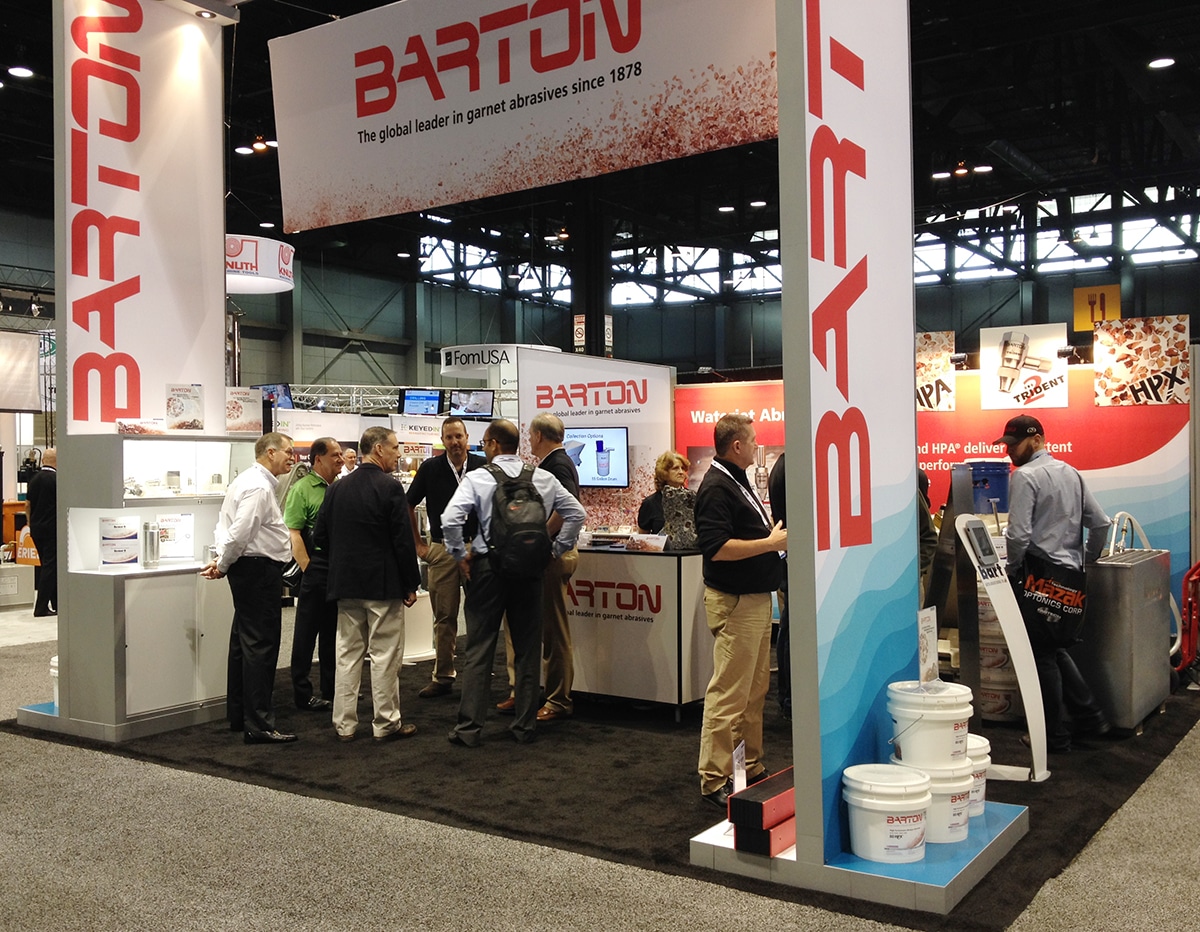
Blass positions itself in that narrow territory between a general creative agency and a technical consultancy. It can make the campaign, but it is also willing to learn the mechanism. For Branson Ultrasonics, the agency supported technical articles as well as visualization. For Barton International, it carried a consistent identity into a trade-show environment. Barton said the relationship had lasted more than a decade, a useful clue about the business model: project work can become an ongoing external marketing department.
When the weather becomes the media plan
One NYSERDA campaign shows the agency at its most practical. The program concerned peak electricity demand, a subject that becomes urgent when cooling loads rise. Blass began with market research, shaped the identity and messages, then coordinated print and electronic media, landing pages, speaking engagements, case studies and partner materials. A kickoff with Con Edison filled a room of more than 250 people. The reported campaign result was twice the original goal.
The memorable piece was radio. Spots on Bloomberg were scheduled to run only when the temperature passed a set threshold. The context did half the explaining. On an ordinary mild day, peak load is an abstraction. During a heat event, every humming air conditioner becomes part of the demonstration. This is media planning as stagecraft: wait until the audience can feel the premise.
It also reveals the conditions under which the firm's approach is less useful. The full research-to-production apparatus makes most sense when the purchase is considered, the product is difficult, the buying group is mixed or the cost of misunderstanding is high. A simple commodity chasing a brief viral moment may not need customer interviews, technical animation and a 5,500-item quoting system. The Blass toolkit earns its keep when explanation itself is part of the sale.
The durable idea
The offering ranges from a focused assignment - a website, research study, animation or media campaign - to an integrated relationship across brand, PR, digital and sales support. That breadth puts Blass against regional agencies, specialist research firms, web shops, production studios and in-house teams all at once.
Its defense is not that it can do everything. Many firms say that. The defense is continuity: the interview that uncovers the customer's worry can inform the position, the diagram, the article, the booth and the website without five vendors relearning the product. In a technical market, continuity is not administrative tidiness. It is how fewer facts get lost.
The enduring lesson from Old Chatham is modest. Complicated companies often ask marketing to make them look simpler. Blass's better answer is to make them easier to understand. Simplicity can be cosmetic. Understanding survives the next question.