The revealing moment in Steel Advertising’s history is not an award ceremony or a pitch-room triumph. It is a line buried inside a case study: “not all campaigns go as planned.” The client was the Texas A&M Corps of Cadets. The assignment was to generate 1,450 leads. Steel had built the brand work, picked the media and launched the campaign. Then the first few weeks of data arrived and suggested a discouraging fact. The plan, as designed, would miss.
Many agencies make a living by defending the plan. Steel rebuilt it. Search and search retargeting were performing, but simply pouring the remaining budget into those channels would push up the cost per lead. So the team changed the media mix, targeting, keywords and flight window, and revised the creative. The campaign finished with 1,592 leads - almost 10 percent above goal. The class that followed was 20 percent larger than the previous fall and the largest in five years.
That episode is a compact explanation of this Austin agency. Steel makes brands, ads, websites, videos, media plans and outreach programs. But its actual product is a loop: understand a decision, create a reason to act, put it in the right place, measure the action and correct quickly. The creative matters. So does the willingness to let evidence insult the creative.
The family is the medium
Bill Cutshall founded the business in 2000 as Steel Digital Studios. The original customers were mostly other advertising agencies that needed help incorporating digital marketing. By 2002, Steel says Adweek had recognized it among the country’s top 20 interactive agencies. Kirsten Cutshall joined in 2004 as president, and the shop became Steel Advertising and Interactive. In 2007 came the consequential choice: a streamlined “Brandraising for Nonprofits” offer aimed at higher education, healthcare and government.
That sounds like vertical specialization, but the more interesting connection is domestic. A teenager chooses a college with parents hovering nearby. A health plan is evaluated across a household. A public-safety message enters a home carrying politics, fear and habit. Steel’s claim is that it understands how American families make these decisions. Kirsten, now CEO and head of account planning, studied anthropology. Samantha Dettmer, the president, leads media and analytics. Bill remains head of technology. The org chart resembles the work: social observation, distribution and systems sitting beside creative.
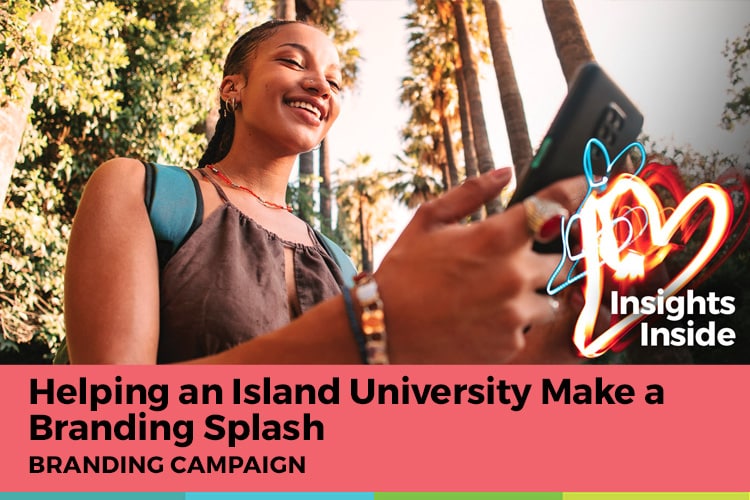
For Texas A&M University-Corpus Christi, the problem was a beach-school stereotype. Steel conducted stakeholder interviews, audited the brand, developed competing creative platforms and tested them with prospective students. The chosen direction connected Gulf Coast economic and conservation problems to Gen Z’s desire to do meaningful work. Steel reports year-over-year growth of 8.7 percent among freshmen and 19.5 percent among graduate students.
A full-service agency with one narrow obsession
Steel sells the familiar agency menu: research, positioning, naming, identity, campaign concepts, television, radio, paid social, search, outdoor, PR, direct mail, media buying, analytics, UX and web development. It works through projects and ongoing accounts, including public-sector and education contracts. The distinction is less about a proprietary product than about how the pieces are sequenced.
The Texas STAAR parent website is a tidy example. The Texas Education Agency already had an administrative site for educators. Parents needed something else: a place to understand scores, prepare a child and log in without learning the bureaucracy first. Steel reduced the architecture to six areas, built explainer videos around the questions parents actually had and designed the site and videos in parallel to meet a deadline of less than two months. In its first month, the site drew more than 775,000 unique users, with a reported 62 percent conversion rate for parent logins and average time on site above four minutes.
The move is copyable. Do not begin with channels. Begin by naming the human decision and the one behavior that would prove movement. For Austin Community College, Steel optimized around calls to action and cut cost per conversion in 17 of 21 campaigns. For US Family Health Plan, it targeted regions where military families were about to lose TRICARE Prime coverage and repeated three blunt ideas: coverage was changing, comparable care was available, act now. Applications rose 700 percent, according to the agency.
The door hanger was part of the strategy
The Alief Independent School District assignment shows what happens when advertising discovers that the problem is partly operational. After pandemic-era enrollment losses, the district wanted 3,200 incremental students. Research pointed toward families with children in pre-K, early childhood and kindergarten, where childcare pressures were acute. The response was not merely a nicer ad. Flexible class and after-school options were part of the offer. Eligibility areas broadened. EdVantage Strategy Group helped identify households, and canvassers carried the message door to door in a community where more than 90 languages are spoken.
Steel reports 9,562 conversions, 8,772 new students and more than $57 million in recovered state funding. The lesson is not that everyone should hire canvassers. It is that media cannot repair an offer people cannot use. The campaign worked because product, audience and distribution changed together.
The reverse condition matters. This approach becomes less useful when nobody can agree on the action, when a client withholds conversion data, when procurement fixes the media mix so tightly that learning cannot alter it, or when the underlying service disappoints. Research can locate an audience. Creative can make a promise legible. Neither can make a bad experience good after the click.
What one million public dollars buys
Public work also makes costs unusually visible. Texas appropriated $500,000 in fiscal 2020 and another $500,000 in fiscal 2021 to establish and promote a statewide safe gun storage campaign. The Texas Department of Public Safety awarded the campaign to Steel. That million dollars was campaign funding, not a disclosed agency fee, and it came with a delicate constraint: encourage safe storage without implying that Texas law prohibited a loaded firearm kept readily accessible for self-defense.
Texas appropriations for fiscal 2020 and 2021 to establish and promote the statewide safe gun storage campaign awarded to Steel.
With eight weeks to launch, Steel avoided a sermon and built “Keep ’em safe, Texas” around pride, responsibility and care for fellow Texans. The work included a microsite, radio, paid social, display, PR, partner materials, educational collateral and explainer videos. Within two months, Steel reported more than 21 million paid and earned impressions, 11 media hits contributing seven million of those impressions, and 31,000 visits to the microsite.
This is where Steel sits in the market. It is not the sprawling global network for a multinational consumer launch, nor the one-discipline boutique hired for a logo and goodbye. It is an independent integrated shop for organizations with complicated constituencies, accountable budgets and outcomes more serious than awareness alone. Colleges need enrollments. Health plans need applications. Government agencies need people to understand and do something.
In September 2025, Steel marked its 25th year. In May 2026, its Tarrant County College work won gold for magazine and television advertising, while a Texas A&M University-Central Texas website refresh took silver in the Educational Advertising Awards. Awards are pleasant, but the more durable achievement may be the operating habit behind them. Watch early. Admit when the trajectory is wrong. Protect enough flexibility to change it.
There is nothing mystical in that habit. That is precisely why it travels. Pick the real decision. Learn whose decision it is. Make the offer usable. Choose a metric that can argue back. Then listen when it does.
Continue exploring