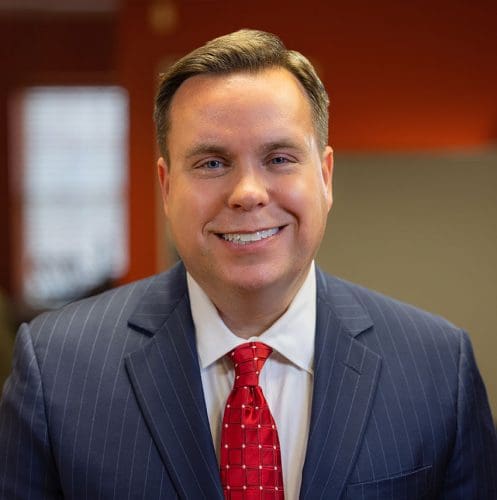
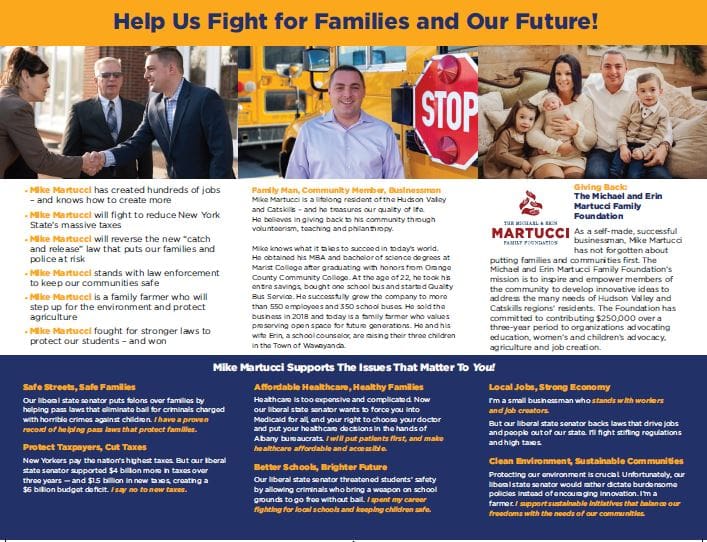
In March 2020, eight months before New York voters would choose a state senator, a first-time candidate named Mike Martucci went on television. This was peculiar. State senate campaigns usually save their expensive television for autumn, when people are paying attention. Martucci was running against a popular incumbent with more money. Focus Media, the agency advising him, looked at those facts and reached a cheerful conclusion: the normal calendar was useless.
So it changed the calendar. The campaign bought television early, while the air was quiet, and used the time to introduce its candidate before the better-funded opponent could define him. Martucci later won. His case study is political, but it explains the commercial proposition of Focus Media better than a list of services ever could. The firm does not begin by asking whether the client needs a website, an ad or a press release. It asks where the contest is, who must be persuaded and when the opening appears.
The calendar is a medium
Josh Sommers founded Focus Media in 2002 after working in radio. He saw a regional mismatch: Hudson Valley and Catskills organizations faced sophisticated problems, but the polished, integrated agency model seemed to live an hour south in Manhattan. Focus would bring that model to Goshen, then add something less metropolitan and more valuable - knowledge of the people, institutions, editors and anxieties along Route 17.
The agency calls its method a political-campaign approach. Strip away the yard signs and it looks like a compact operating system: research the audience, choose an issue, sharpen a message, find credible messengers, buy attention and prepare for trouble. Focus keeps the pieces together in-house across public relations, advertising, design, video, media placement, social, search and web development. The point is not convenience alone. It is message control. Every handoff is a chance for a strategy to become a slogan and then, two vendors later, a different slogan.
- Find the audience
- Name the issue
- Choose the message
- Own the calendar
- Measure response
When a website becomes a tax receipt
Consider Orange County Tourism. Focus Media served as agency of record and rebuilt the destination's marketing around a modern website with online booking. The agency reports that traffic tripled and county occupancy-tax receipts rose 9 percent. Those figures do not prove that every additional hotel dollar came from the site. They do show the virtue of choosing a measurement outside the marketing department. Page views are pleasant. Tax receipts require somebody to book a room.
The relationship kept evolving. In 2025, Orange County Tourism & Film won two New York State Tourism Excellence Awards for work created with Focus: an accessibility campaign featuring Our Huddy Buddy, and a four-season digital campaign. One sold a broader definition of who gets to travel. The other fought the old tourism enemy - the empty calendar between peaks. Both used the same machinery to solve different persuasion problems.
The product is coalition
Focus Media's client list looks less like a niche than a town meeting. There are banks, hospitals, colleges, manufacturers, tourism offices, auto dealers, nonprofits, utilities and developers. At SUNY Westchester Community College, it advises senior leadership, manages reputation and trains executives for the news media. At Healey Brothers, it overhauled consumer messaging with video, direct mail and digital display. For Aurochemicals, a flavors-and-fragrances manufacturer, it handles publicity, advertising and web work; the client's chief executive credited the relationship with helping triple business volume over ten years.
The common object is not an industry. It is a coalition. A college president must speak to students, faculty, neighbors and reporters. A developer needs planners, elected officials and residents to see the same project without pretending their interests are identical. A car dealer needs price-conscious buyers to remember one name in a noisy market. Focus sells the coordination of those audiences.
The first thing to fail is usually the old message
At Healey Brothers, the initial problem was not a missing channel; it was consumer messaging that needed to stand apart. Focus changed the creative, then spread it through higher-end video, direct mail and digital display. At Rolling V Bus, the change was more literal. Company president Phil Vallone said that after meeting Sommers, he tore up a contract with another agency. What changed his mind was not a cheaper commodity. It was confidence that timing and local trust would be managed as carefully as the advertising.
That distinction matters in economic development, where Focus has worked around Resorts World Catskills, Woodbury Common Premium Outlets, Monticello Motor Club and a $500 million destination theme park in Goshen. The public number is the cost of the theme park, not the agency fee, which is not disclosed. Still, it reveals the stakes. When government approvals and community support control whether hundreds of millions of dollars can move, communications stops being decoration. It becomes part of the project plan.
A playbook worth stealing carefully
The most copyable part of Focus Media is not its service menu. Nearly every full-service agency can draw a circle around PR, digital and creative. Copy the sequence instead. Decide which audience can change the outcome. Find the calendar advantage. Make one message survive every channel. Give the team permission to respond quickly. Then measure something the finance department recognizes.
Five moves to borrow on Monday
- Write the decision you need in one sentence before choosing media.
- Map supporters, skeptics and gatekeepers separately.
- Look for an uncrowded moment, not merely a larger budget.
- Make every channel repeat the same strategic idea in its own form.
- Track a business or civic result alongside attention metrics.
There is a condition attached. Campaign tactics are powerful when there is a real decision, a defined audience and enough local knowledge to understand both. They are clumsy when the product is weak, the stakeholders are imaginary or urgency becomes aggression for its own sake. An early television buy works because the field is quiet and the message is ready. Without those conditions, early is merely early.
Focus Media's durable advantage is therefore not that it behaves like every day is election day. It is that the firm notices when election day truly is - the planning vote, the booking season, the crisis hour, the first quiet month when nobody else is on television. In a business full of people selling louder messages, the agency from Goshen has built its case around something subtler: knowing when the room can finally hear you.