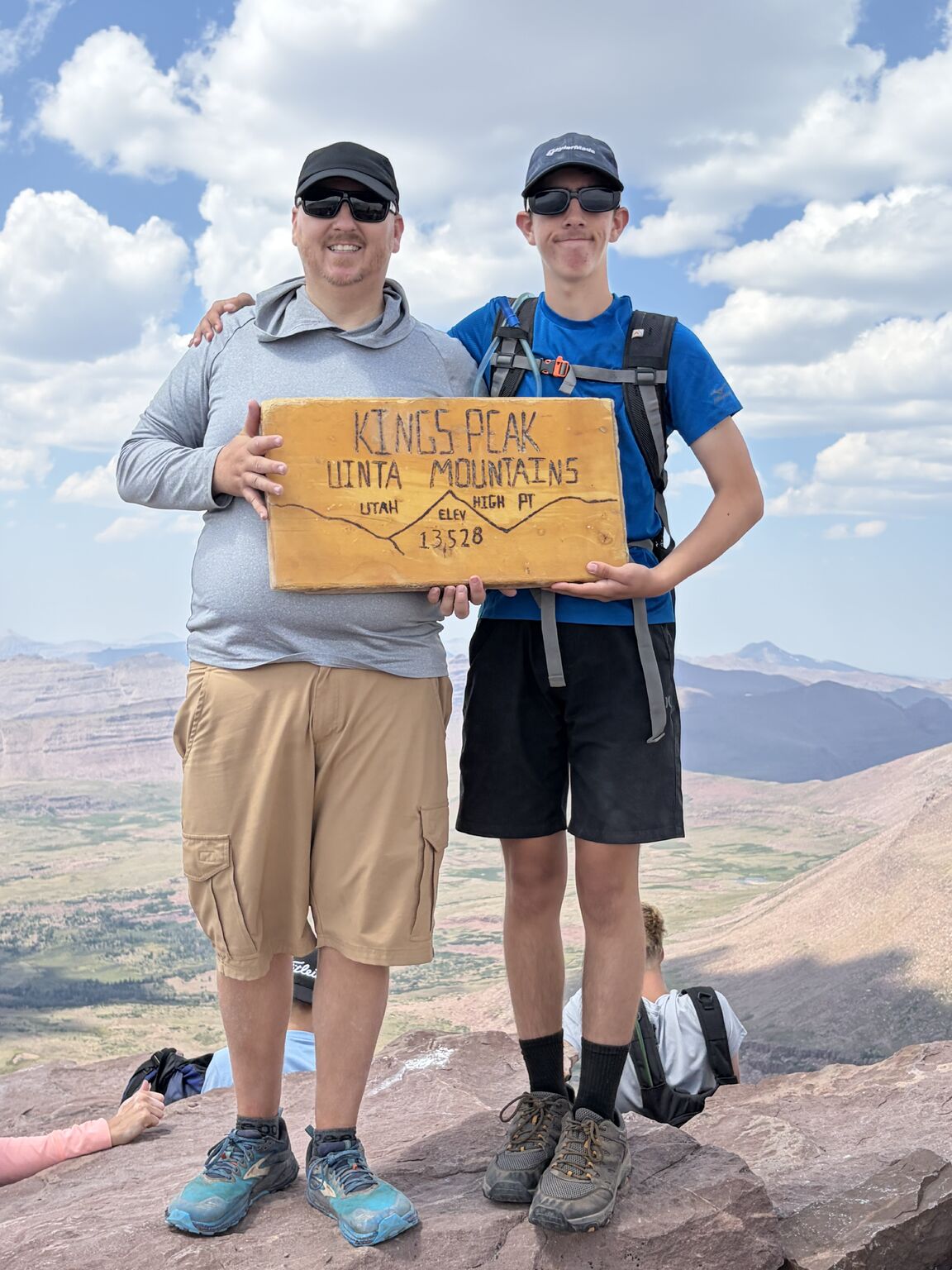
The trail changed before the view did. In August 2026, BJ Dodenbier stood at 13,528 feet on Kings Peak, the highest point in Utah, with his son beside him and an unexpected career transition behind him. A summit can make a neat metaphor, suspiciously neat if a marketing executive gets hold of it. Dodenbier resisted polishing the moment into certainty. He did not claim to know the route ahead. He chose the smaller, harder promise: keep moving.
That posture fits a career spent working on the parts of a journey most people notice only when they break. In healthcare staffing, where Dodenbier served as chief marketing officer at Aequor, a candidate can meet a brand through an ad and abandon it during a delayed callback. A recruiter can own seven useful tools and still lose an afternoon moving between them. A campaign can look excellent in the report while the human being inside the funnel waits for news.
His subject is marketing, but his obsession is continuity. Does the next scene follow? Does the next person know what happened? Does the technology create time for judgment, or merely create more places to click? These are operating questions wearing marketing clothes. They also sound oddly cinematic, which is where his story began.
Before the dashboard, there was a clapperboard
Dodenbier studied digital communication and media at Utah Valley University, graduating cum laude in 2012. His student work traveled farther than the usual campus reel. For a UVU cultural envoy project in Beijing, he managed video production and produced promotional pieces used in recruiting. Another project took him to Cuenca, Ecuador, where his credits included directing, editing, and cinematography.
The titles matter because they reveal an appetite for the whole production. Camera work teaches attention. Editing teaches subtraction. Directing teaches that a good idea has to survive other people, bad weather, time pressure, and the alarming discovery that the prop is not where anyone left it.
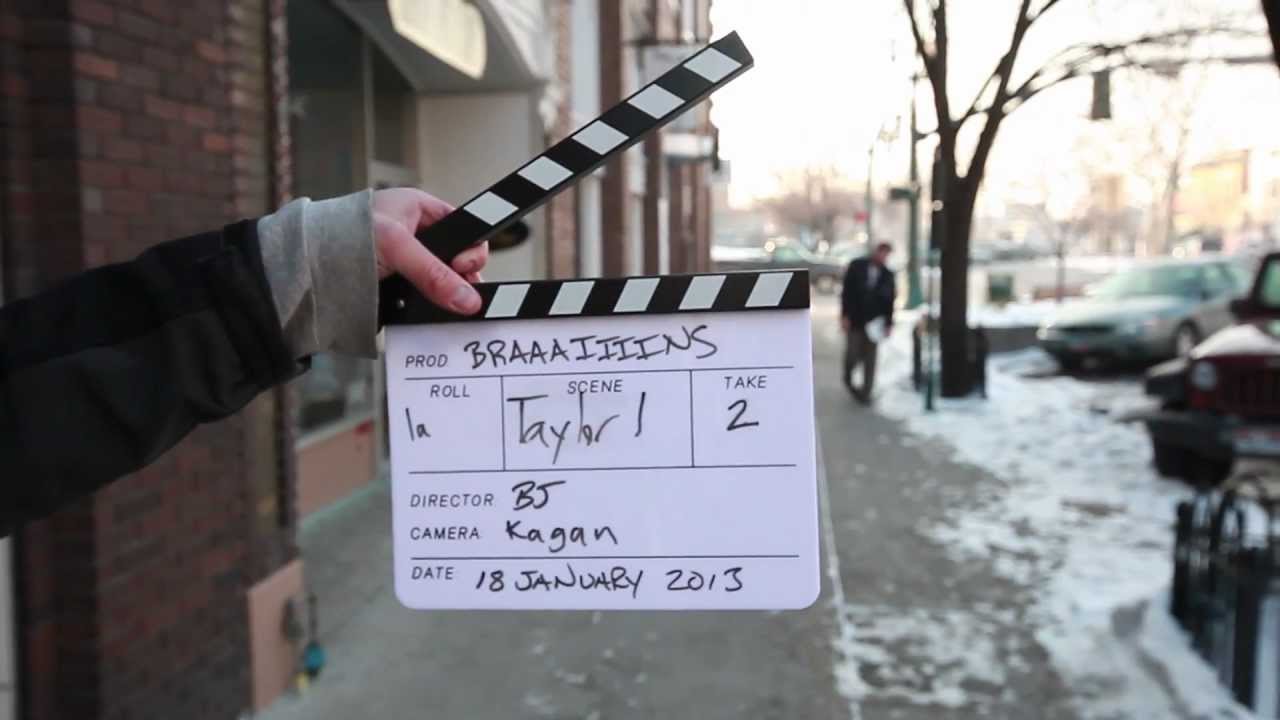
In January 2013, a small crew made Brains for a 24-hour film festival. Dan Ellsworth wrote it. Dodenbier directed. Nicholas Brady became the zombie. Kagan Eden handled cinematography, while Chris Fox kept the boom microphone and, one hopes, the living cast out of danger. The short received an honorable mention.
Years later, Dodenbier remembered the project less as a laurel than as a compressed lesson in making. Friends gathered around a ridiculous deadline and converted an idea into a finished story. The premise was a zombie looking for brains. The production required the crew to use theirs.
“Film is my passion.”BJ Dodenbier’s early podcast description
The edit moved from film to systems
The professional camera gradually gave way to the marketing stack. By his Workfront period, Dodenbier was speaking publicly about connecting video, forms, nurture data, and reporting. His career widened across B2B strategy, demand generation, marketing operations, automation, and the unromantic machinery that turns interest into measurable action.
The certifications trace the change in tools without changing the underlying craft: Avid Media Composer in 2012, advanced analytics in 2014, Marketo in 2019, HubSpot in 2023, and Bullhorn Automation in 2026. One timeline begins with editing video. The other ends, for now, with editing recruiter workflows.
Video projects connected to UVU in China and service work in Ecuador.
A zombie short planned, shot, and finished against a 24-hour clock.
Forms, reporting tools, and marketing automation enter the frame.
Candidate and client experience, process, technology strategy, and growth execution.
An open search for the next marketing leadership role.
At FlexCare, Dodenbier listed an honorable mention in the 2021 ParDreamin’ Personalization Perfection category. The recognition sits naturally in his arc. Personalization is storytelling with a database attached. Done well, it gives someone the right next scene. Done poorly, it addresses them by first name while sending them somewhere they never meant to go.
A brand lives in the callback
At Aequor, Dodenbier’s remit stretched beyond campaigns into candidate and client experience, process, technology strategy, and execution. Healthcare staffing made the abstract funnel unusually human. A lead is a professional considering an assignment. A conversion has a schedule, a credential, a move, a family calculation, and a recruiter whose silence can suddenly become the loudest message from the company.
This produced his clearest operational idea: candidates do not separate marketing from operations. The organization may have departments, budgets, and software permissions. The candidate has one experience. Every handoff either preserves the promise or edits it into something less convincing.
Where a staffing brand becomes real
The middle is his favorite place to look. Most marketing celebrates the first touch or the close. Dodenbier points to the stretch between submission and placement: updates, transparency, expectation setting. It is not glamorous territory. It is also where trust either compounds or develops a leak.
His thinking about reviews follows the same logic. A review is not a decorative row of stars to be admired after the real work. It is the public residue of the work. If nobody asks at the right moment, nobody owns follow-up, and feedback disappears into an inbox, reputation never becomes a system. Consistency beats volume because consistency is what candidates can feel.
The junk drawer with a login screen
Dodenbier is comfortable with technology. He is considerably less sentimental about it. Staffing stacks, in his description, tend to be accumulated rather than designed: sourcing, engagement, texting, CRM, ATS, reporting, an AI layer, and perhaps one more product bought to explain why the others are not talking.
Each tool may solve a legitimate problem. Together they can make recruiters serve the stack instead of candidates. The trap is familiar. A team automates the visible repetition while leaving the broken intake, unclear ownership, or awkward handoff untouched. Bad process starts moving faster and everyone receives more notifications about it.
1. Find the friction. 2. Fix the workflow. 3. Automate the useful part. 4. Give the saved time back to people.
“Sometimes operational maturity looks less like innovation and more like simplification.”BJ Dodenbier on staffing technology
That final exchange is essential. The point of automation is not the pleasing velocity of an automated thing. It is what people can now do with the recovered time: hold a better conversation, make a faster decision, notice an exception, or explain what happens next. His view of AI is similar. The technology is useful as amplification, especially when it clears routine work away from judgment and creativity.
More applications, less signal
By 2026, Dodenbier was watching AI change the candidate side of the market too. Applications had become easier to generate, which meant recruiting teams could receive more activity without more fit. The older advantage was access to a large pool. The emerging advantage, he argued, is identifying meaningful signal before everybody else.
Kings Peak, Utah
A personal summit during a professional reset
Filtering is an editorial skill. It asks what belongs, what repeats, and what is merely loud. Dodenbier’s film background returns here almost too conveniently. The good editor does not worship footage because it exists. The good operator does not worship volume because it arrived. Both decide what the audience needs next.
This is also why his public voice works best when it stays close to observed friction. He writes about delayed callbacks, one-off job fairs without follow-up sequences, platforms multiplying across a recruiter’s day, and the peculiar habit of buying more activity before understanding the activity already purchased. His best arguments are not declarations from a mountaintop. They are notes from the handoff.
A cookie, a high five, and the honest unknown
In June 2026, Dodenbier announced that he was available for a new role. The post offered the expected executive package: strategy, execution, automation, AI workflows, revenue focus, funnel problem-solving. Then it offered anyone who helped with the search a Crumbl cookie, a high five, and a shoulder rub pending HR approval and general social norms.
The joke worked because the evidence arrived first. It also revealed an instinct that dashboards struggle to measure. Personality can carry proof farther than polish. A person who can make a staffing executive smile without losing the point understands attention at least as well as the person who bought another retargeting campaign.
Two months later came Kings Peak. The climb was difficult and exhausting. His son was there. The job transition was still unresolved. He wrote about resilience without pretending resilience is a tidy feeling. A trail can change. The next step can remain available.
Dodenbier recently turned 40, another milestone he marked with gratitude and a desire to live with more purpose and intention. It is easy to make 40 sound like halftime, an age at which a profile should deliver a verdict. His story suggests a rough cut instead. The media student became a marketer. The marketer became an operator. The operator became an executive. Now the executive is looking for the next crew and the next problem worth editing.
Kings Peak did not answer what comes next. It gave him a better posture for asking. At the summit, the job title was behind him, the route down was still real, and his son was beside him. For a career built around journeys, that may be the most honest frame yet.