There is a peculiar logic to Berkley Egenes's career. Start with a box of cereal. Add a race car, a headset, a Fortnite player, a roomful of game developers and several hundred ways to pay. The result is not a fever dream from a marketing off-site. It is a reasonably accurate route to his present job as Chief Marketing & Growth Officer at Xsolla, the Los Angeles company that handles the business machinery behind games.
Egenes has spent more than two decades close to the point where an audience becomes a customer, a fan or a participant. At CSE in Atlanta, that point could be a Kellogg's promotion attached to a major sporting moment. At NextVR, it could be a basketball fan putting on a headset. At Ghost Gaming, it was an esports follower discovering a player through social video. At Xsolla, it may be a player in Brazil seeing a familiar payment option instead of abandoning a purchase.
The surfaces changed dramatically. The question underneath them did not: what makes it easier for people to get closer to something they already care about?
The connective tissue is access: put the right experience in front of the right person, then remove the obstacle between them.
A marketer trained where the shelf met the grandstand
Egenes studied marketing and international business at Texas A&M, then earned an MBA from Notre Dame in 2005. His professional apprenticeship came in the sprawling overlap of consumer brands and sports. He rose from account executive to director at CSE, working with organizations and properties that included Kellogg's, NASCAR and major American sports leagues.
Shopper marketing is less glamorous than a championship podium, but it is unusually honest. The product is there. The customer is there. The decision happens in public. A campaign either changes behavior or decorates the aisle. Sports sponsorship adds another difficulty: affection cannot be ordered by purchase order. A brand has to enter a culture without barging into it.
That education followed Egenes west. After marketing leadership at Envoy, he joined NextVR in 2017. The company was trying to make live sports and entertainment feel present inside a headset, working around properties such as the NBA and NFL. Technology supplied the novelty; marketing still had to answer the oldest fan question: why is this worth my time?
The list is revealing because its two most useful words sit at opposite ends: data and story. Measurement can tell a marketer where people arrived, paused and left. Story can give them a reason to stay. Egenes's work repeatedly places the pair in the same room.
Esports compressed the lesson
In 2019, Egenes became Chief Marketing Officer and Head of Marketing at Ghost Gaming. Esports moved at internet speed and came with its own volatile mix of teams, games, creators, platforms and sponsors. During his stint, Ghost built campaigns around competitors in titles including Fortnite, PUBG, CS:GO, Rocket League and Apex Legends. The first Fortnite World Cup offered the kind of cultural instant marketers chase and rarely catch: a new sport, young stars and enormous curiosity arriving at once.
His remit included sponsorship sales, media relations, social growth, e-commerce and partner activation. In other words, there was no tidy border between brand and business. Attention had to become content, a partnership, a piece of merchandise or an enduring relationship before the timeline moved on. Ghost Gaming was later acquired by Skillshot Media. Egenes had already absorbed the industry's tempo.
He joined Xsolla as vice president of marketing in early 2020. The timing was remarkable. Games became gathering places while much of ordinary gathering disappeared. Yet Xsolla was not selling a game people could picture. It was selling the systems beneath thousands of them: payments, web shops, distribution, funding connections, fraud prevention and other functions that become visible mainly when they fail.
Making the invisible legible
Marketing infrastructure requires a different trick from marketing entertainment. A trailer can show a dragon. A commerce company must explain why a local wallet, a compliant checkout or a direct-to-consumer store changes a studio's future. Egenes translates that machinery into the scale of a developer's problem.
Consider a small team launching beyond its home market. It must navigate unfamiliar rules, currencies, taxes, payment habits and disputes. A player may want the game and still be unable or unwilling to use the checkout on offer. Each point of friction is tiny on a diagram and decisive in practice. As Egenes has argued, opportunity lies far beyond the continental United States - across Latin America, Europe, Africa, Southeast Asia, China, Japan and the regions between them.
Direct-to-consumer commerce is central to his current argument. Rising acquisition costs, store economics and dependence on platform rules have pushed studios to consider web shops and other direct channels. Egenes frames the attraction in relational terms as much as financial ones. A studio can shape its own storefront, learn more about its players and adjust its live operations with greater independence. The checkout becomes part of the game's design language.
His point is not that every studio should rush toward the same arrangement. The useful route depends on the game, its audience and the markets it hopes to enter. The larger shift is one of optionality. A developer with more than one path to a player can test an offer, learn from the response and keep more authority over the relationship. For a marketer raised on campaigns that crossed shelves, screens and stadiums, that variety is familiar territory. Channels matter because people behave differently inside them.
Xsolla promoted Egenes to Chief Marketing Officer in December 2022. A year later, growth was added to the title. The progression formalized something his earlier roles had already taught him: brand, product and revenue are unruly roommates, but separating them does not make the house work better.
The room is part of the product
Egenes has an expansive phrase for Xsolla's role: “All the Things.” It appears often in his social posts, sometimes with the buoyancy of a man who has spotted another item for the whiteboard. Behind the shorthand sits a coherent view. A developer needs more than code. Funding, discovery, payments, distribution, policy, community and useful introductions all affect whether a game reaches an audience.
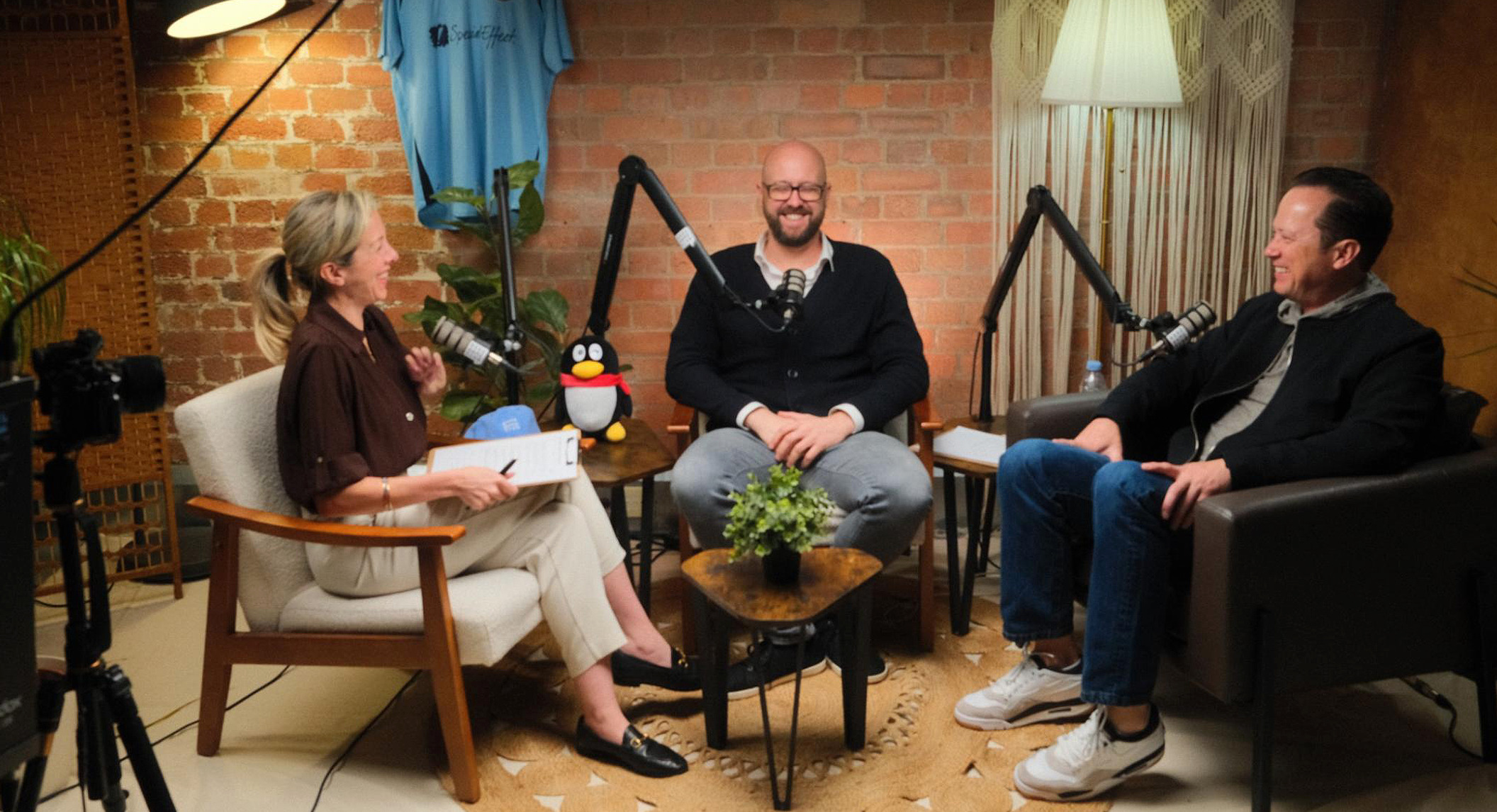
That view explains why his marketing often looks like convening. Xsolla's Clubhouse spaces sit near large industry conferences and offer coffee, panels, podcast recordings, product demonstrations and meetings. In a trade-show world of bright booths and hurried scans, the wager is almost domestic: give people a room where they can stay long enough to have a proper conversation.
It also explains the partnerships. Xsolla became the flagship sponsor of Day of the Devs for 2025, supporting free events where independent developers could put unreleased work directly in front of players and industry peers. In 2026, a scholarship program brought 45 emerging developers to GDC from a pool of more than 500 applicants. Egenes later shared plans to increase the cohort to 75 for 2027.
The numbers are modest beside an industry measured in billions, which is precisely why they have texture. Forty-five people can meet one another. Seventy-five can fill a room. A developer who was previously outside the conference can show a build, find a collaborator or have the conversation that changes the next year of work. Infrastructure is sometimes a payment rail. Sometimes it is a badge and a hotel room.
Growth as a permission slip
Egenes's public philosophy has widened from access to commerce toward access to the industry itself. In interviews, he talks about a future that is more global, more local in its execution and more open to studios outside established centers. He treats emerging markets as communities with their own behaviors, not empty squares on a sales map.
His favorite examples tend to connect the commercial and the communal. He has spoken about Mario Kart and Minecraft through family, creativity and learning. He talks about partnerships less as logo swaps than as chances to make participation easier. Even his fondness for “All the Things” carries an operator's suspicion of single-cause stories. Games travel because many details line up at once.
This is the useful tension in his career. He is a marketer of scale who keeps returning to individual moments: the fan choosing to click, the player recognizing a payment method, the developer entering a conference, the conversation allowed to run past its scheduled slot. Growth becomes credible when someone can point to the door it opened.
The cereal aisle is a long way from global game commerce. Still, both reward attention to the last few feet. A grand strategy may bring the audience close. The result depends on whether the final step feels natural, trustworthy and worth taking. Berkley Egenes has changed industries several times. He has kept following that step.