Brad Manuel thought he knew video games. He had grown up playing them with his brothers, with friends, and alone, fitting them around AFL and cricket. Then the Adelaide Football Club bought Legacy Esports, and his hobby arrived at work. Familiarity with a controller turned out to be rather different from knowing how an industry worked. Manuel’s first useful discovery was how much he still had to learn.
In 2017, he had joined the club as a business development manager. The job involved finding partners for football and esports teams, preparing commercial proposals, and hosting events. Legacy gave him a new assignment: work out what the team could offer sponsors, then explain it to people who were often encountering competitive gaming for the first time. Before he could teach, he listened to players, volunteers, fans, and industry professionals.
That small reversal is a useful place to begin his story. Today, Manuel is a Los Angeles-based co-founder of Livewire, the gaming media business he launched with Indy Khabra in March 2021. His work connects brands with games, publishers, and creators. The route there began with a sports executive admitting that playing a game and understanding its community were separate qualifications.
A football education, with extra screens
Manuel had wanted to work inside a sports organisation. At Adelaide, the appeal came with a broad commercial brief: football, esports, and eventually baseball appeared in the reflections he wrote about the job. There were audiences to understand, partnerships to build, and numbers to check. A sponsorship proposal has little use for a magnificent statistic that collapses under the first sensible question.
His education included psychology and an MBA at the University of South Australia. His working interests were already unusually compatible with sports commerce. He had served as president of the UniSA Eagles Gridiron Club from 2009 to 2015, working on partnerships, governance, university affiliation, and a flag football competition. The administrative side of enthusiasm had occupied him well before Livewire.
American football remains part of his public record: American Football SA lists him among its Eagles Hall of Fame names. It is a pleasing detail in a career now associated with screens. He had spent years helping organise people who wanted to play together. The equipment changed; the need to understand the participants survived.
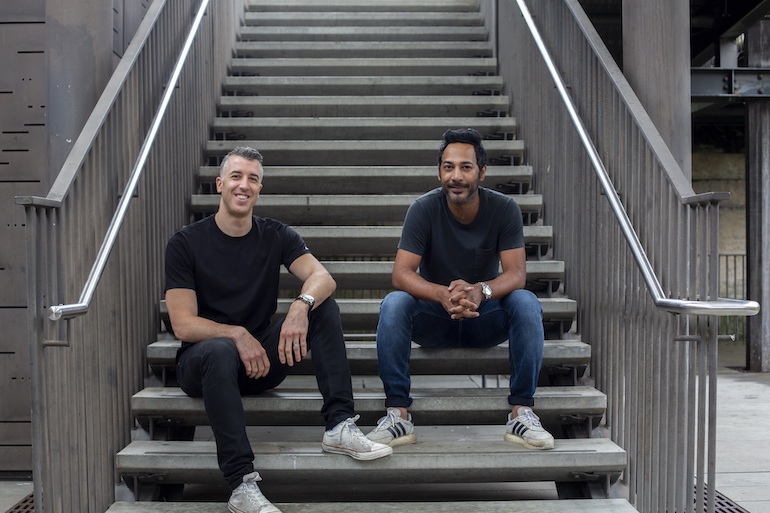
Two careers meet at the same opening
After Adelaide, Manuel’s work moved further into gaming talent. He held commercial and chief executive responsibilities at Misfits Management Group, and established Livewire Sports. These experiences put him close to the practical business of creators: partnerships, audiences, publishers, and the agreements that make a collaboration possible. Being familiar with a game was only one part of the job.
Khabra brought a different background. He had led data, technology, and programmatic advertising work at Dentsu before developing his own businesses. The pair had first met at a sports marketing conference years earlier. A collaboration in late 2020, involving gaming talent management, made a business opportunity clearer. Brands could buy pieces of gaming marketing, but assembling those pieces into a coherent plan remained difficult.
Livewire launched in March 2021 with Manuel and Khabra as co-founders and co-CEOs. Their offer covered a wide territory: streaming platforms, creators, publishers, consoles, mobile games, and advertising technology. That breadth reflected the problem they wanted to solve. A company could commission a creator post without knowing where it belonged in a longer relationship with players.
For Manuel, the opportunity extended beyond companies already selling gaming equipment or software. Food, fashion, entertainment, and other everyday brands had reasons to meet these audiences. His task was partly translation: explain the commercial possibilities to marketers while respecting the habits of people who had come to play. An advertiser’s excitement about a placement does not automatically make it interesting to anybody else.
The audience has a reply button
One advantage of this market is also a useful hazard. Players can tell advertisers what they think. Manuel has described communities taking to Reddit and Twitter when a brand misunderstands them. The feedback can be public, immediate, and inconveniently articulate. A marketing department may approve its own joke; the audience retains an independent vote.
“They know good marketing and they know bad marketing,” he said in 2021. His argument was about learning the culture, language, and conventions around a game. That knowledge affects which creator belongs in a campaign, how a message appears, and whether the activity fits what people are already doing. It also requires accepting that a creator may decline a partnership.
His early examples included a Fortnite event bringing together gaming personalities and professional athletes, with a $100,000 charity prize. The competition lasted about four hours; the surrounding promotion and engagement ran for roughly three months. The contrast mattered to his commercial argument. An event has a start and a finish, while the work of attracting an audience begins earlier and can travel further.
Manuel’s sports background made that connection particularly legible. Athletes, teams, and gaming creators each brought a relationship with fans. Putting them together created a reason to watch that went beyond a logo appearing on a screen. For a partnership business, the question becomes how to organise those relationships without making the entertainment feel like an extended invoice.
The cheque, and the work after it
In September 2022, Livewire raised A$4.7 million in a Series A led by RealVC. Other participants included Perennial Private Ventures, Alua, and individual investors. Matt Berriman joined the board. The funding gave a young company money to hire, develop technology, and support expansion. It also made the founders responsible for turning an argument about audiences into a business that could operate across markets.
The client work was already specific. Uber Eats had commissioned research and insights to shape its gaming strategy; Binge and Warner Music Australia were also among the names attached to the business. By January 2023, Livewire was recruiting senior people from backgrounds including Snap and Zip. A founder’s calendar begins to look different when building the organisation becomes as urgent as winning the next campaign.
- 2017Adelaide Football Club: sports partnerships meet esports.
- 2021Livewire launches with Manuel and Indy Khabra.
- 2022A$4.7m Series A backs the next stage.
Recognition arrived, too. Manuel joined InDaily’s 40 Under 40 cohort in 2022. The award marked a South Australian connection in a career becoming increasingly international. In 2025, he announced plans to move his family to Los Angeles in March to support Livewire’s growth. His LinkedIn profile now places him there. The market expansion had become a household move.
A film character needs something to do
Consider Livewire’s work for the film Red One. Inside Roblox’s Anime Defenders, the company helped create a raid level inspired by the movie, a collectable character, virtual items, and a trailer placement in the lobby. Amazon MGM Studios, Small World Games, and Barrier Four were involved. The campaign gave the film a role in an existing game, complete with activities for the people already there.
The distinction is practical. A film trailer asks someone to watch. A new level asks someone to participate. Both can belong in the same campaign, but they require different work. Assets need to fit the game, developers need to build them, and the experience needs to make sense to its players. The brand enters a place with its own rules.
By 2025, Manuel was describing integrations that could take between three and eighteen months to develop. He also described an internal test grounded in the team’s own experience as players: would they enjoy what they were making? It is a refreshingly awkward question for a sales meeting. A well-funded idea can still be dull.
“Each game is very different, and the people that play the games are different,” he said. His examples ranged from rewarded video to custom worlds. The implication for his own business is demanding: understanding one community does not settle the next brief. Expertise has to be renewed as games, audiences, and formats change.
Back to football, on another field
By its fifth anniversary in March 2026, Livewire described a global team of 60 and work spanning hundreds of campaigns. Manuel’s title in the anniversary feature was co-founder; Khabra and Fiona Mellor were identified as co-CEOs. The business had grown beyond the original division of executive responsibilities. Its projects now crossed sports, music, film, and games.
The NFL’s Race to the End Zone offers a satisfying return to Manuel’s sporting interests. Livewire and the league developed a series connecting NFL players with gaming creators. A live Fortnite tournament was scheduled during Super Bowl LX week in February 2026, streaming on NFL YouTube with Verizon as presenting partner. Football personalities could meet fans in a setting where their usual professional advantages were no guarantee of victory.
Alongside those productions, Livewire has developed Gamer.ID, intended to help advertisers understand and reach players across devices and formats. The technology addresses another part of the original problem: people move between screens, while a marketer’s buying process can remain fragmented. The company’s ambitions now include the machinery behind campaigns as well as the entertainment in them.
“Any campaign in gaming must add value to the player so it feels like an exchange.”
Brad Manuel, on Livewire’s fifth anniversary
That is a compact statement of the bargain Manuel keeps returning to. A brand wants attention. A player wants a worthwhile experience. His career has carried him from club partnerships in Adelaide to a gaming business in Los Angeles, but the work still begins with finding a reason for people to take part. The controller was the easy bit. Learning who else was holding one became the business.