A parked electric car is a peculiar kind of asset. It may contain enough stored energy to keep parts of a house running, yet for most of the day it sits in a driveway doing nothing. Benjamin Tuff's current job begins with that mismatch. As chief marketing officer at Montreal clean-energy company dcbel, he has to help homeowners look at a familiar object and see a second identity: transportation when moving, power supply when still.
The hardware is called Ara, a home energy station that connects an EV, solar panels, a home battery and the grid. It can direct electricity in both directions, allowing a compatible vehicle to receive a charge or send energy back to the house. Behind it is software that decides when those flows make sense. In engineering terms, this is power conversion, distributed energy management and bidirectional charging. In a kitchen-table conversation, it is simpler: your car can help keep the lights on.
That gap between technical truth and useful language is where Tuff has built his career. He is not an electrical engineer. He is an operator who specializes in giving unfamiliar products a place in ordinary life. Before energy, there were villas. Before grid resilience, there was the question of whether a traveller who knew hotels might trust a house discovered online.
generation
orchestrates
+ grid
The three-person beginning
In 2000, while finishing commerce studies at Concordia University, Tuff joined Luxury Retreats. His own account describes a startup of three people and less than $100,000 in revenue. The original business, Caribbean Way, was modest enough to sound like a useful internet experiment: a web page that listed villa and beach-house sites the team had built for clients.
The experiment found demand. Luxury Retreats grew into a marketplace for high-end vacation homes, and Tuff stayed for 16 years. He ran marketing and sales teams, worked across digital marketing and customer relationship management, and took responsibility for an acquisition in Buenos Aires. Period coverage from 2010 identifies him as director of sales and marketing, speaking about the practical rhythms of holiday villa bookings and a partnership with Aeroplan.
There is a tempting way to tell a startup story: a clean line from small insight to enormous outcome. Tuff's version contains detours. Luxury Retreats tried extending its offer into private jets and yachts. Those tests did not become the core business. The company returned its attention to villas, where repeated transactions were creating a deep property data set and a clearer customer proposition.
“Back in 2000, I joined Luxury Retreats, a scrappy startup consisting of 3 team members and less than 100K in revenues.”
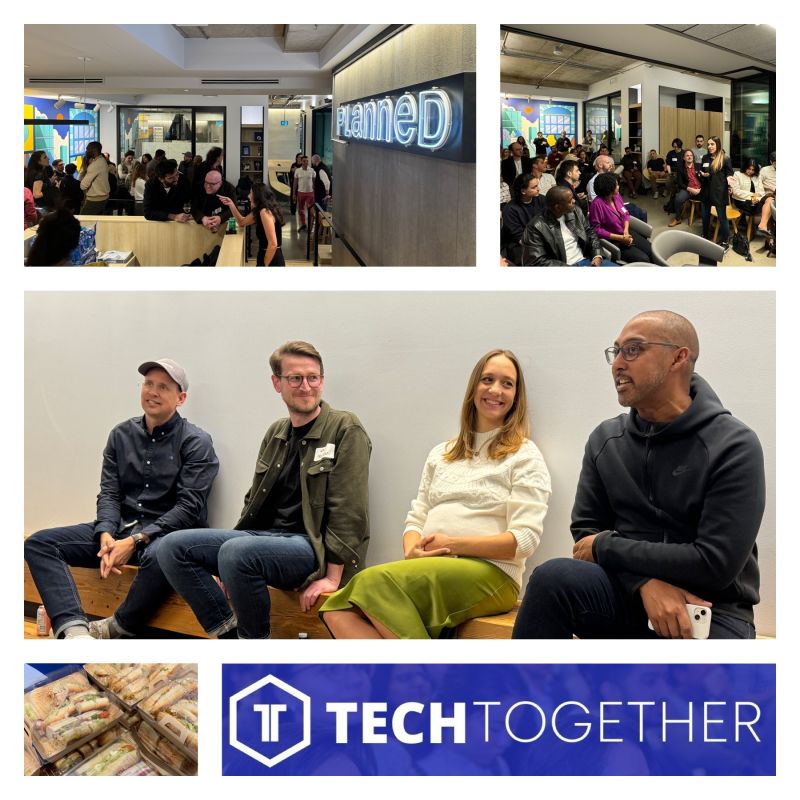
He revisited that lesson at a TechTOgether gathering in Montreal in 2024. The important move was not merely trying new things. It was having the discipline to stop treating every experiment as destiny. Refocusing helped Luxury Retreats build the concentrated knowledge that later mattered in the sale to Airbnb.
By Tuff's account, the company grew past $125 million in annual recurring revenue. Airbnb acquired Luxury Retreats in 2017. The ending made the early choices look obvious. They were not. A villa marketplace had to persuade owners, travellers and a growing operating team at the same time. Marketing was inseparable from inventory quality, service and trust.
After the exit, a portfolio
A long company tenure creates its own gravity. Leaving it can produce a slightly unnerving question: was the skill inside the person, or inside the machine they knew so well? Tuff answered by moving across several kinds of work. He consulted from Montreal to California. He saw a gap between traditional consulting firms, which could diagnose, and agencies, which could execute. He wanted a partner that combined strategic judgment with urgency.
In 2016 he called Caren Carrasco, a former Luxury Retreats colleague, and the two built Benjamin David Group. Its work sits around growth strategy, brand positioning, customer acquisition and new product introductions. Tuff also widened his view of the Montreal startup system: advising GoMaterials, mentoring with FounderFuel, HOLT XCHANGE and Next AI, partnering with Hesper.io, and later working as studio head at CRÉA Venture Studio.
The titles vary - consultant, general partner, investor, mentor, studio head - but the task repeats. A founder has built something. The organization needs to decide whom it is for, what promise it can keep and which activity produces useful evidence. Tuff's public writing follows the same practical line, covering first-party data, search automation, paid media and the risk of becoming a “zombie startup” that makes things without building attention.
Selling a system, not a gadget
At dcbel, the translation problem is unusually dense. The company does not sell a simple charger. Ara combines hardware, cloud software and relationships with cars, homes, utilities and energy markets. A homeowner may care about several outcomes: charging with solar, reducing electricity costs, keeping power during an outage or eventually earning money by helping the wider grid. Each benefit is real, but piling them together can make the product harder to understand.
Tuff's marketing therefore has to establish a category while the surrounding rules and hardware keep moving. His team uses the phrase “private grid” to describe a home that can produce, store, manage and exchange energy without pretending it has disconnected from society. The home remains connected to the larger grid. It simply gains more agency inside that relationship.
The language matters because energy has traditionally arrived as an invisible service. People flip a switch and receive a bill. Solar panels made generation visible. Home batteries made storage visible. Electric vehicles add a much larger battery that happens to move. dcbel's proposition is to make those pieces act as one system.
The product is complicated. The behavior is not: use the energy you already have more intelligently.
Commercial scale raises the stakes. In March 2025, dcbel announced a financing round of up to US$55 million, including US$40 million from Canada Growth Fund and as much as US$15 million from Idealist and other investors. The money was designated for commercialization in North America and Europe. For a CMO, that converts a conceptual story into operational pressure: installations, partnerships, customer education and a market that must develop quickly enough to meet the factory.
The company subsequently worked with Volvo and Polestar around bidirectional charging. In one field demonstration, a Polestar 3 and Ara powered an event, making the abstract idea of vehicle-to-everything visible in folding chairs, lights and a working gathering. In April 2026, dcbel announced its entry into Quebec, bringing the proposition home to a province whose relationship with hydroelectricity is both economic and cultural. Tuff marked the moment with a telling phrase: building the future of home energy “in a place that's always understood power.”
The endurance habit
Outside work, Tuff is a competitive endurance athlete. His biography lists three 70.3 Ironman races, four marathons and a 250-kilometre, multi-day ultramarathon through the Gobi Desert. It would be tidy to claim those races created his operating style. The public record does not establish that. Still, the pairing is hard to ignore.
Startup life and stage racing are both distorted by highlights. The start has adrenaline. The finish has photographs. Most of the experience is the long middle, when excitement has thinned and the next useful action is small. Tuff's career has unusually long stretches of that middle: 16 years at one startup, years of mentoring other founders, and now the slow work of turning power electronics into a household category.
His other public details resist the caricature of the single-minded executive. He volunteered for a month at a wildlife foundation in Namibia. He works in English and French. He is a father of two daughters. These facts do not complete a personality, but they suggest a life with more than one clock running.
The category arrives one sentence at a time
The central observation in Tuff's work is that technology adoption often begins as vocabulary. Villa marketplace. Private grid. Home energy station. Vehicle-to-home. A new phrase creates a handle; repeated experience gives it weight. The marketer's responsibility is to keep the phrase honest enough that the product can eventually inhabit it.
Luxury Retreats taught him the value of focus after experimentation. Advisory work taught him to separate motion from evidence. dcbel adds a harder constraint: the narrative must coordinate with electrical standards, vehicle compatibility, installation and utilities. No campaign can wish those dependencies away. The story works only when the system does.
That may explain why the parked car is such an effective starting point. It is concrete. It is already expensive. It already contains a battery. Asking what else it could do is less grandiose than promising to reinvent the grid, yet it opens the same door. In Tuff's telling, the future of home energy does not begin at a distant power station. It begins in the driveway, waiting for someone to notice that stillness is not the same as idleness.