When Miovision announced a new board chair in October 2021, its co-founder Kurtis McBride paused to acknowledge the person leaving the chair. Ken MacKinnon had been the company's longest-serving board member, working with McBride for nearly a decade. A change of seat could have been dispatched in a sentence. McBride made room for gratitude. He said he had learned a great deal from Ken, who would remain an active director.
The incoming chair, Jon Newhard, brought experience running Trafficware and knowledge of the traffic industry. That made the announcement a practical piece of corporate housekeeping: a growing company was adding relevant expertise, while keeping an established relationship. For anyone curious about MacKinnon's career, it is also a useful place to begin. The work continued after the title changed.
Three years later, a similar distinction appeared at MKB, the Montreal investment firm MacKinnon co-founded. His tenure as CEO ended in March 2024. As Co-Founder & Senior Partner, he remains involved in strategy, fundraising and investment management. The office door did not close behind the job title. In a business fond of announcing arrivals, his story rewards attention to who stays.
“I have learned an incredible amount from Ken”
Kurtis McBride, Miovision co-founder, 2021
Before the climate portfolio, the banker
MacKinnon's route into investing began at McLeod, Young, Weir Limited. He later became a managing director at Merrill Lynch, where he led the firm's Canadian technology investment banking practice for several years. He also served as chief financial officer of a publicly traded merchant bank and, before MKB, as a managing partner at the private equity firm Miralta Capital.
His education brought him through McGill, where he earned a BA, and Ivey Business School, where he completed an MBA. He is a Dobson Fellow at McGill's centre for entrepreneurial studies and holds the Institute of Corporate Directors' director certification. Taken together, those roles put corporate finance, entrepreneurship and governance in the same career. Each would have a place in the firm he helped establish in late 2007.
MKB built its investment outlook around changes to energy and transportation: systems becoming more digital, more electrified and less carbon intensive. The firm describes an early market in which that thesis met considerable doubt. Large incumbent industries, physical infrastructure and the sheer size of the undertaking gave sceptics plenty to point at. An investment case had to survive those objections before it could attract capital.
That starting point gives MacKinnon's banking background a particular relevance. The energy transition needs businesses that can finance expansion, work with customers and organise the machinery of growth. An elegant idea still has to pass through a balance sheet. MKB's stated focus on growth-stage companies places it where a product's promise meets the demands of a larger operation. The spreadsheet, in this story, gets a respectable supporting role.
A traffic light is an investment thesis
The first MKB Partners Fund offers a revealing collection of practical problems. By its final close in April 2018, it had exceeded a $50 million fundraising target and invested approximately $20 million in four companies. Miovision worked on traffic systems and data analytics. BBOXX supplied off-grid solar energy services. Communauto operated car sharing. Meteo Protect developed weather risk management solutions.
These businesses approached energy and transportation from different directions. A shared vehicle concerns how a city uses an asset. Off-grid solar concerns access to electricity. Traffic technology concerns the movement already happening on roads. The variety matters: MKB's approach made room for business models and services alongside equipment. Climate investing could turn up at an intersection as readily as on a solar roof.
MacKinnon credited BDC Capital, the fund's first institutional investor, with helping MKB pass its fundraising target and draw other institutions into the fund. Bennett Church Hill Capital, Fonds de solidarité FTQ and the McConnell Foundation were among its backers. His account emphasised a sequence of relationships. One commitment helped make others possible.
The same practical interest appeared in MKB's backing of Sense, the home energy technology company. MacKinnon explained the appeal through what consumers could do: understand household energy use, reduce consumption and make better decisions. The subject was familiar enough to belong in a kitchen conversation. The technology and financing behind it were considerably more involved. His public explanation stayed close to the person paying the electricity bill.
Four companies. Four practical problems.
Early investments reported at the first fund’s final close.
The people on the other side of the cheque
Founders have supplied some of the more personal details in MacKinnon's public record. Ben McCabe, founder of Bloom Finance, recalled that Ken gave him an entry into the industry through a summer internship. In an interview, McCabe named him among the former bosses and mentors who had helped him along. An internship is a modest item beside a fund close. To the person receiving it, the scale can feel rather different.
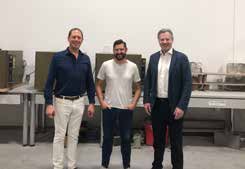
There is also a Montreal connection that reaches beyond a cap table. In 2022, CarbiCrete's Chris Stern and Yuri Mytko hosted MacKinnon at the company's head office and research facilities in Lachine. All three were Loyola alumni, from different classes. MKB had become an investor in CarbiCrete that April. The visit brought an old school connection into a business developing cement-free, carbon-negative concrete.
The detail is pleasingly ordinary: people with a shared school, meeting at a workplace to look at what a company is doing. It gives a physical location to a financial relationship. The technology concerns a material used throughout the built environment; the meeting concerns the people trying to commercialise it. Concrete has rarely needed help sounding substantial.
Within MKB, MacKinnon publicly recognised Geetanjali Kanwar and Saul Muskin when they were promoted from analyst to associate in 2020. He credited their contributions to the portfolio and to relationships with new investors. Two years later, he welcomed US-based partner Jesse Teichman, pointing to the energy investor's sector experience and the relationships he could help build in the United States. The firm was growing through people as well as funds.
Raising $175 million, then putting it to work
In September 2021, MKB announced the final close of its second fund at $175 million. It was oversubscribed and had been raised during the pandemic. MacKinnon expressed appreciation for investors' confidence while describing the energy transition as an immediate investment opportunity. The fund was led by a team including him, Antonio Occhionero and Chanel Damphousse.
Its first four investments showed how the strategy was developing. AddEnergie supplied electric vehicle charging infrastructure. Ample worked on battery swapping. Bird Canada offered shared electric scooters. Palmetto provided a residential solar and energy fulfilment platform. The portfolio concerned several of the systems needed to make electrification useful in daily life, from charging a vehicle to installing solar at home.
Those investments were company bets, with management teams and distinct approaches to adoption. Putting them under one fund did not make their execution challenges identical. A charging network, a fleet service and a household installation business each have to make their own economics work. Their common theme gave MKB a field of expertise; their differences gave its investors several sets of operational questions.
The firm's partnership approach includes strategic advice, corporate finance, governance and introductions to an expanded network of investors. Sense co-founder Michael Phillips has described the team as responsive and helpful, crediting it with a follow-on investment round and connections in Canada. FLO's Louis Tremblay has described partners willing to challenge management while supporting its ambitions. Those accounts concern MKB collectively. They provide context for the firm MacKinnon helped build and led for more than sixteen years.
Final close of the second fund, raised during the pandemic.
The energy transition needs factory space
XNRGY brought the investment story squarely onto the factory floor. In March 2023, the climate systems manufacturer announced growth financing co-led by MKB and Idealist Capital. Its plans called for 100,000 square feet of additional production capacity in Montreal and a new 250,000-square-foot facility in Mesa, Arizona. The business designed and manufactured energy-efficient commercial heating, ventilation and air conditioning systems.
MacKinnon's explanation centred on reducing buildings' energy consumption and introducing technology into an industry he described as slow to innovate. The expansion plans made that argument tangible. A financing round would support manufacturing capacity. Capacity would help the company meet customer demand. Behind the vocabulary of climate technology sat the familiar questions of producing more equipment and getting it to customers.
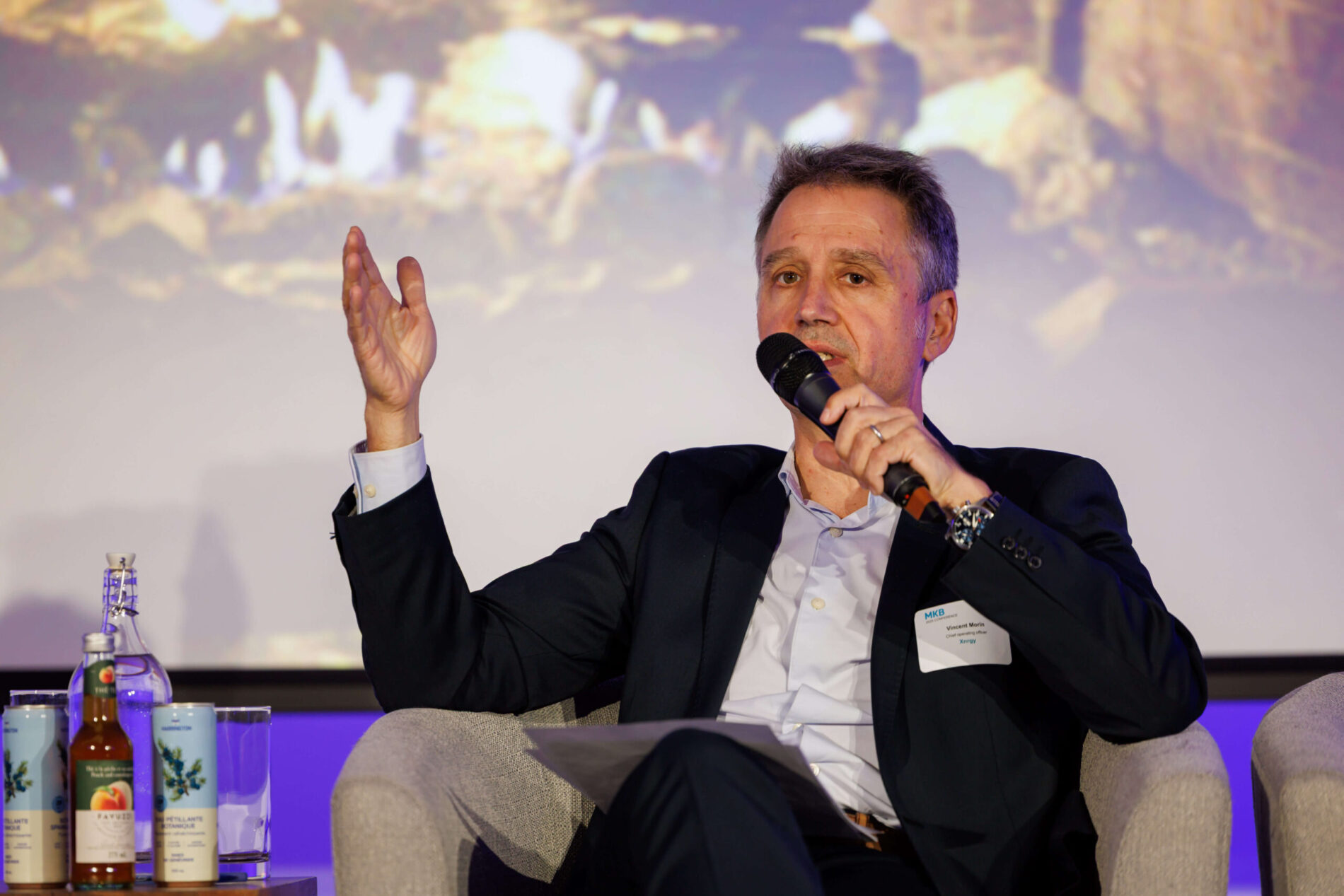
At MKB's October 2025 annual meeting in Montreal, MacKinnon returned to XNRGY in a conversation with chief operating officer Vincent Morin. They discussed manufacturing expansion, the demands of rapid growth and operations at scale. XNRGY had recently completed another growth equity raise to expand its production footprint and deploy cooling solutions for data centres and other critical infrastructure.
The meeting also brought together portfolio leaders, advisers and investors. Former Bank of Canada governor Stephen Poloz gave the keynote; other sessions examined electrification and building innovation. MacKinnon's place in the programme was a conversation about execution. The progression from a 2023 investment announcement to a 2025 operating discussion is a useful illustration of what staying involved can look like: returning to the business as its problems change.
A different title, a continuing assignment
MKB announced the final close of its third energy transition fund in December 2025, describing it as the firm's largest to date. Early investments included Circuit's electric shuttle services, Cascadia's high-performance windows and doors, and IEC Holden's electric motors, generators and related components. Power, mobility, buildings and industrial efficiency remained the organising themes.
Antonio Occhionero, MKB's managing partner, spoke for the strategy in that announcement. MacKinnon's current assignment remains strategy, fundraising and managing investments. There is continuity in the subject matter and a change in who carries which responsibility. For a firm approaching two decades since its founding, that division of labour is part of the story of building an institution.
Return, then, to McBride's acknowledgment at Miovision. The incoming chair had a particular set of skills the company wanted. The outgoing chair had years of accumulated knowledge and a relationship worth retaining. Both could belong around the same table. Read alongside MacKinnon's continuing work at MKB, the episode suggests a useful way to judge an investment career: examine what remains available to a company after an announcement has passed.
In MacKinnon's case, the public record offers board service, introductions, an internship, a research-facility visit and conversations about expanding production. These are different forms of participation, spread across different stages of a business. They make a career in finance easier to picture. There are cheques in the story, certainly. There are also people who remember what happened after they were written.