He spent a decade financing solar and wind on five continents. Then he bought a three-truck compost hauler and pointed all that ambition at the ground beneath our feet.
Ben Parry runs Compost Crew, a Rockville, Maryland company that drives around the Washington, D.C. region collecting the things most people would rather not think about: coffee grounds, eggshells, wilted lettuce, the crust the kids left behind. It hauls them to farms and processing hubs and hands them back as something useful. Soil. The company tagline is two words, and they double as a mission statement - good to grow.
Parry did not start Compost Crew. It was founded in 2011 by Ryan Walter and Brian Flores as a self-funded, curbside food-scrap route in Montgomery County. What Parry did was buy it in 2018, when it was three trucks, five employees, and a few hundred customers, and decide it could be much bigger than that.
Before compost, there was current. Parry spent more than a decade in clean energy, managing a portfolio of solar and wind assets spread across five continents and helping launch a leading solar company in India. He holds an MBA from Georgetown and a marketing degree from Temple. He knew how to finance infrastructure, manage fleets of physical assets, and scale an operation across borders. Around 2017 he decided food scraps were the next frontier worth that skill set.
The bet was that composting did not have to be a niche hobby for the very committed. It could be a service - reliable, priced, routed, and boring in the best way. As ordinary, as he likes to put it, as not littering on the highway.
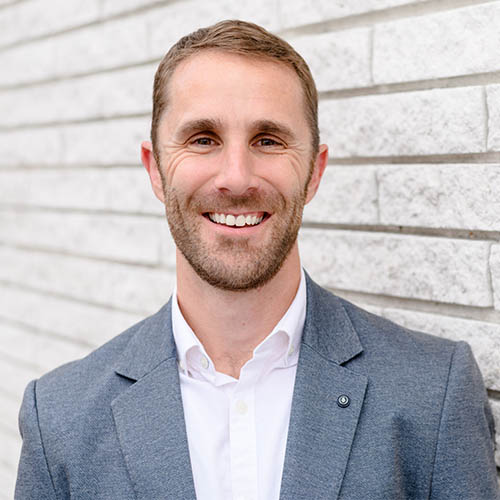
FIG. 1 — Compost Crew, before and after Ben Parry. Figures reported through 2025.
“I want a future where dropping food scraps into a compost bin is as ordinary as not littering.”
Bars scaled to the 2025 figure. Sources: BioCycle, Waste Dive, Compost Crew.
In April 2022, Parry closed an oversubscribed $5.5 million Series A led by New York sustainable-infrastructure fund Lattice Impact Capital, with the Tower Companies, K Street Capital, and a handful of local executives and long-time customers joining in. Total funding reported for the company sits around $11 million.
“With the rising customer demand we have witnessed over the past 18 months,” Parry said at the time, “the time was right to engage a group of investors who can make a meaningful contribution to our expansion.”
The money went where the trucks go: more routes, more capacity, and more Compost Outposts - the distributed processing hubs that keep scraps close to where they were dropped.
Instead of trucking scraps to one distant facility, Compost Crew runs distributed processing hubs in partnership with local farms and municipalities. One at EcoCity Farms in Bladensburg, Maryland runs on solar - a quiet nod to Parry's renewable past. Short loops, local soil.
Compost Crew is legally structured so the mission matters as much as the margin. That means good jobs, diverted food waste, and healthier soil sit on the books alongside growth - not as a marketing line, but as a chartered obligation.
In 2024 the company acquired Key City Compost, a like-minded food-scraps recycler in Frederick, Maryland - a sign Parry intends to consolidate the fragmented Mid-Atlantic organics map, one aligned operator at a time.
“This is the patient work of building better systems - one bucket, one alley, one farm at a time.”
“A journey from renewable energy to regenerative soil, from powering the grid to feeding the ground beneath our feet.”
“The time was right to engage investors who can make a meaningful contribution to our expansion.”
Parry lives in Maryland with his wife and three sons, and describes himself as an avid gardener. There is a tidy logic to that: the man selling soil actually grows things in it. He turns up on composting podcasts - The Good Dirt, Talk Green to Me, The Community Composting Podcast - not to pitch, but to argue that curbside organics can be normal, and that normal is the whole point.
His thesis is unglamorous and, if you listen closely, a little stubborn. Culture does not shift with a slogan. It shifts with infrastructure people can see, routes that show up on time, and enough alleys quietly doing the right thing that doing the right thing stops feeling like a statement. One bucket at a time is not a metaphor for him. It is roughly the unit of measure.
He aims for organics recycling in every community in America. He is starting, characteristically, with the ones next door.
WATCH
See how a Compost Outpost closes the loop from kitchen bucket to local farm.
▶ Compost Crew: The Compost OutpostSources: Compost Crew, BioCycle, Waste Dive, Waste360, Waste Advantage Magazine, Lady Farmer (The Good Dirt). Facts drawn from public reporting and company materials. Figures are as reported through 2025.