NEW CEO: MANIKA DOSHI TAKES THE HELM AT rePURPOSE GLOBAL 100 MILLION LBS OF PLASTIC RECOVERED 500+ BRANDS · 40+ REGIONS · 11 COUNTRIES FROM MATERIALS SCIENCE TO PLASTIC NEUTRALITY 2,000+ WASTE WORKERS, INCOME DOUBLED NEW CEO: MANIKA DOSHI TAKES THE HELM AT rePURPOSE GLOBAL 100 MILLION LBS OF PLASTIC RECOVERED 500+ BRANDS · 40+ REGIONS · 11 COUNTRIES FROM MATERIALS SCIENCE TO PLASTIC NEUTRALITY 2,000+ WASTE WORKERS, INCOME DOUBLED
The Operator's Operator

Manika Doshi

She trained to understand what things are made of. Now she runs the company that decides what happens after we throw them away.

CEO · rePurpose Global · New York
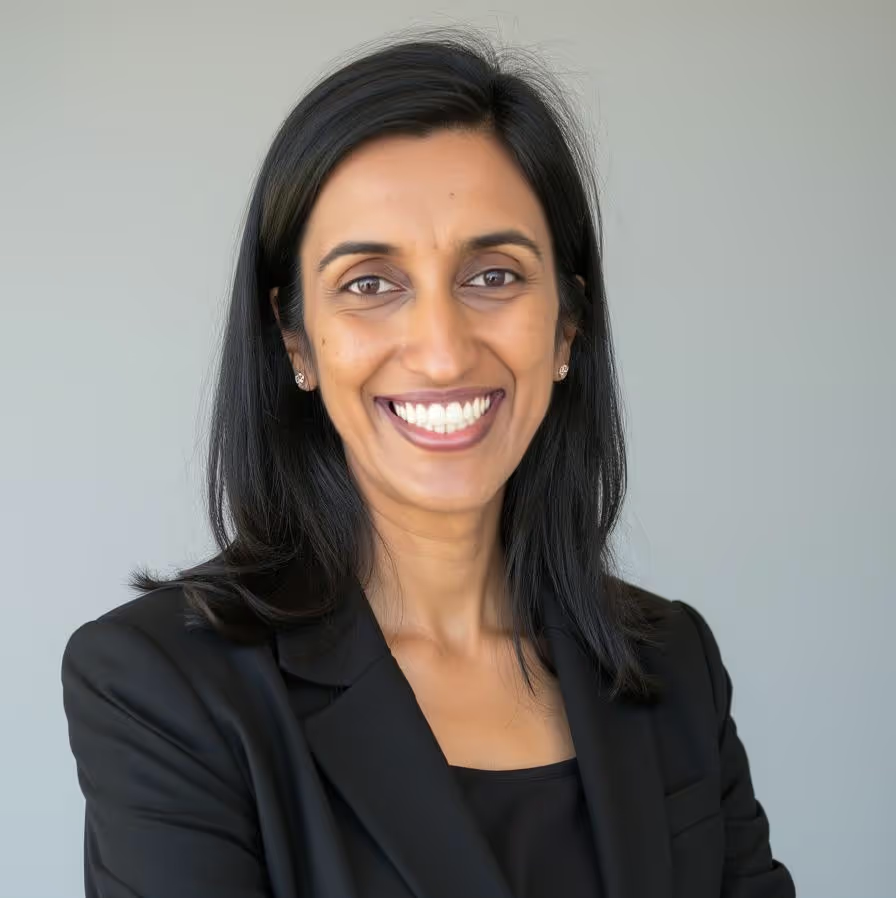
Manika Doshi, CEO of rePurpose Global
Manika Doshi - the engineer who reads a plastic wrapper like a balance sheet.
100M
Lbs Plastic Recovered
500+
Global Brands
11
Countries
2,000+
Workers, Income Doubled
The Headline

A materials scientist took over the plastic problem

On January 28, 2026, Manika Doshi became chief executive of rePurpose Global. The handoff was deliberate. Svanika Balasubramanian, who founded the company, did not leave - she stepped sideways into a new role called Chief Circularity Officer and handed Doshi the wheel. Founders rarely do that. They cling. This one looked at her COO of roughly two years and decided the next chapter needed an operator, not a visionary.

Doshi had spent those two years doing the unglamorous work: aligning teams, organizing efforts, shipping a software platform. In 2025 she oversaw the launch of rePurpose Global's Packaging Compliance product, the bet that the company's future is less about heroic plastic cleanups and more about helping brands survive a coming wall of regulation. When the founder described why Doshi got the job, she used a phrase that sounds modest until you try to do it: she "brings focus amidst complexity."

The complexity is real. rePurpose Global sits at the intersection of waste pickers in Indonesia, sustainability officers at consumer brands, and a thicket of new laws called Extended Producer Responsibility that make companies financially accountable for the packaging they put into the world. Doshi's job is to make that legible. Her own summary of the work is three verbs long: "making hard things simpler, aligning people around what matters most, and delivering results."

"The most trusted platform for packaging compliance and sustainability - helping companies move from intention to action, at scale."

Manika Doshi, on what rePurpose Global should become
The Material Question

She studied what things are made of

Before the title and the term sheets, there was an engineering problem. Doshi holds a B.S. in Materials Science Engineering from the University of Pennsylvania - the discipline that asks what a substance is, how it behaves, and why it does or doesn't break down. It is an oddly perfect background for a plastic crisis. Plastic is, after all, a triumph of materials science that became an environmental disaster precisely because it was engineered to last.

There's a quiet symmetry in a materials scientist running a company that exists because some materials never go away. She is not a politician moved by slogans or a marketer chasing a green halo. She reads a candy wrapper the way an accountant reads a ledger: this much polypropylene, this much weight, this is what it costs to recover it.

That literacy matters in a field crowded with vague promises. rePurpose Global's entire pitch - plastic neutrality - depends on measurement. A company's plastic footprint is calculated, then balanced by funding the recovery of an equal amount of plastic waste from nature, then ideally reduced over time. It is footprint accounting for the physical world, and it lives or dies on whether the numbers are real. An engineer is a useful person to have holding the calculator.

100,000,000
Pounds of plastic waste recovered from nature across South America, Asia and Africa, before Doshi ever held the CEO title.
The Detour

From consulting decks to a wedding marketplace

Doshi did not march in a straight line toward sustainability. She started in management consulting, working as a Senior Consultant at Strategy& - the firm formerly known as Booz & Company. Consulting is where a lot of operators learn to walk into chaos, find the load-bearing problem, and leave with a plan. It is also where many of them learn they would rather build than advise.

Her build years came at Zola, the wedding-planning and registry startup. She moved through an unusually wide range of seats there: Chief of Staff to the CEO, VP of Marketplace, Head of Strategy, General Manager of Core Experience. Chief of staff is the role that teaches you how a company actually works versus how the org chart says it works - you sit next to the founder, absorb the hard decisions, and own the things nobody else will. During her tenure, Zola raised $100 million. Wedding tech and ocean-bound plastic have nothing obvious in common, except the part that matters: scaling an operation without letting it collapse under its own ambition.

So the path reads strangely on paper. Materials science, then consulting, then weddings, then plastic. But each stop sharpened the same instrument - the ability to take something tangled and make it move.

The Quirks

Three things that don't fit the template

  • She is a CEO who didn't found the company. In mission-driven startups, the founder usually keeps the top seat for life. Doshi inherited it on merit, which is rarer than it sounds.
  • Her degree is in the problem itself. Most sustainability executives come from policy or business. Doshi comes from materials engineering - she understands plastic at the molecular level, not just the moral one.
  • Her resume includes a wedding startup. The path from Zola's registry marketplace to global plastic recovery is not a path most people could draw, let alone walk.
The Inflection

Why now is the hard part

Doshi takes over at a moment that is equal parts opportunity and pressure. Hundreds of brands have made public commitments about their packaging footprints, and many of them have no idea how to keep those promises. At the same time, Extended Producer Responsibility laws are rolling out region by region, turning what used to be a voluntary nice-to-have into a legal obligation with deadlines and penalties. That shift is exactly why rePurpose Global pivoted toward compliance software - and exactly why the board wanted an operator in charge.

The recovery numbers - 100 million pounds, 500 brands, 40-plus regions, thousands of waste workers earning double their previous income - are the foundation. The next chapter is harder and less photogenic. It is software, data, audits, and the slow work of turning corporate intention into verified action. There are no viral moments in compliance. There is just the question of whether the platform brands trust to handle their plastic obligations actually works. Doshi has spent her whole career being the person who makes sure it does.

She inherits a company that already proved the moral case. Her assignment is to prove the operational one - that doing the right thing about plastic can be measured, audited, scaled, and trusted. It is, fittingly, a materials problem. What is this thing made of, and what happens to it next?
Follow the Thread