A virtual-reality headset presents an awkward proposition: put a computer on your face, then ask it to behave as though weight, heat and time have ceased to exist. Behnam Bastani spent part of his career working on that proposition. His answer involved looking beyond the headset. A nearby computer could do some of the work. The difficult part was getting the whole arrangement to cooperate.
That question has followed him into OpenInfer, the company he co-founded with Reza Nourai. Bastani is its CEO. The product is inference infrastructure: software for coordinating the hardware that runs AI. In an industry fond of discussing what a model knows, he spends his time on where it runs, how long it takes and what resources it consumes. The verbs in his career are unusually practical: calibrate, render, transmit, schedule.
His route into this work crossed countries before it crossed computing disciplines. Originally from Tehran, he left Iran at 17 for Canada, completed graduate studies and later moved to California. Outside technology, he enjoys water activities and gardens, experimenting with trees, replanting and seeds. The garden offers a useful counterpoint to a career concerned with latency. A tree is quite indifferent to your deadline.
A different sort of color problem
In 2004, Bastani joined Hewlett-Packard. His work concerned automatic calibration models for high-end inkjet printers. A research biography from that period places him in retail photo printing, while also pursuing doctoral research. The subject sounds far removed from today’s AI discussion. Yet a printer is a demanding little negotiation between a digital instruction and a physical result. The picture on the screen and the picture on paper must somehow agree.
His master’s degree at Simon Fraser University, completed in 2005, focused on gamut mapping and characterizing digital color displays. A gamut is the range of colors a device can reproduce. Working with that range means confronting limits: a desired color may sit outside what the destination device can deliver. The research problem begins precisely where the wish list ends. There is a machine involved, and the machine gets a vote.
By 2009, he had completed his computing-science PhD. Its title, Spectral Analysis of Output Devices, from Printing to Predicting, supplies an unusually compact account of his early interests. The work investigated output devices and spectral reproduction. Before an AI model entered the story, there was already a concern with translating an intended experience into something a particular piece of hardware could produce.
His later career included Qualcomm, Samsung Silicon and Google. By 2021, he was described as director of engineering architecture at Facebook Reality Lab, with more than 35 granted patents in computational vision, sensor design and rendering. The range matters more than the tally. These are fields where software, devices and what a person experiences meet at close quarters. An elegant algorithm still has to survive the journey to the display.
Simon Fraser University
Spectral reproduction
Foveation pipeline
The headset and the rest of the room
At Google’s Daydream team, Bastani worked on rendering. In December 2017, he and Eric Turner explained a pipeline for virtual and mixed reality that took human visual perception into account. The central idea was foveation: preserve detail where vision is most exacting, and reduce unnecessary work elsewhere. Drawing every part of an image with equal effort can spend computing power on detail the viewer does not need.
Their discussion extended beyond drawing the image. It covered image processing and transmission to the display, too. Saving work in the renderer would leave other costs untouched if the rest of the pipeline continued doing things the old way. Consider the modest lesson inside that technical work: an optimization has an address. Move it through a system carelessly, and the savings may disappear before they reach the user.
At Meta, the challenge became a connected VR experience. Oculus Link let a compatible PC supply VR content to an Oculus Quest over a USB cable. The PC rendered and encoded images; the headset decoded and presented them. Information about the user’s position and the display’s timing traveled back. An ordinary cable was carrying a rather elaborate agreement about what should happen next.
That arrangement required end-to-end timing. A frame arriving late could fail to match the moment it was meant to represent. The system therefore used the capabilities of the PC and the headset together, with corrections and predictions built into the pipeline. For the person wearing it, the desired result was straightforward: the virtual world should keep up. The engineering underneath had no such luxury of simplicity.
A partnership, then a company
Bastani met Nourai at Meta, and their work together on Oculus Link became part of a longer partnership. They later moved to Roblox. In Bastani’s account, the 2023 challenge there involved voice moderation and multilingual AI inference on the company’s CPU-based infrastructure. The familiar question returned in a different setting: how much could the available system accomplish if the team reconsidered the entire path of execution?
By 2024, they were building OpenInfer. The company’s current description emphasizes heterogeneous hardware, meaning different kinds of processors working within the same infrastructure. The founders brought complementary experience: Bastani in AI and constrained computing platforms, Nourai in GPUs and large-scale memory architecture. It is a pairing fitted to a product where the boundaries between components are much of the problem.
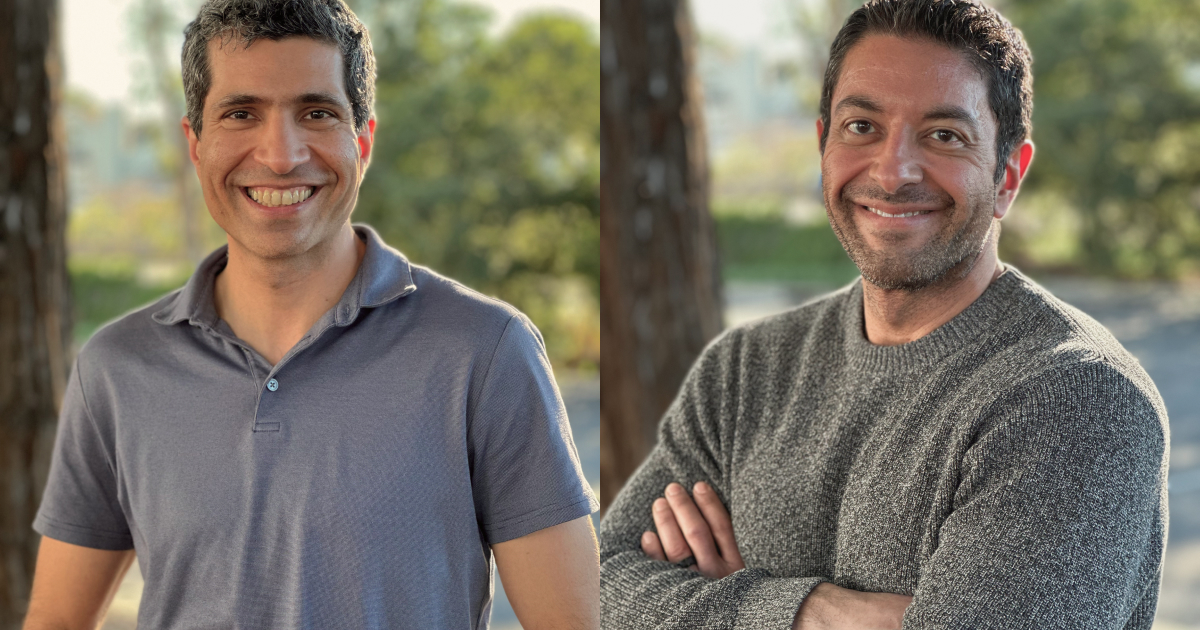
In February 2025, Bastani announced an oversubscribed seed round exceeding $8 million, led by Cota Capital and Essence VC. The announcement also named backers including Jeff Dean, Gokul Rajaram, Aparna Chennapragada and Brendan Iribe. Funding gave the work a company-sized runway. It also put Bastani in a new position: responsible for assembling an organization around a technical argument he had developed inside much larger employers.
The market helped redirect that argument. OpenInfer initially targeted portable edge devices, then encountered demand from smaller cloud providers seeking more than a business renting out GPUs. Those customers helped pull the company toward an inference operating system for varied hardware. Customer demand supplied a useful correction to the original plan. Even a founder devoted to understanding systems has to include buyers in the diagram.
Memory with an owner
The word “inference” can make this work sound remote from ordinary life. Bastani’s discussion of Mementos brings it closer. He shared a concept demonstration in which people decide what an AI assistant remembers, which details remain private and when an assistant can access them. Interoperability across assistants was part of the proposal. A conversation’s accumulated context would be something a user could control.
The attraction is easy to understand. Explaining a project to a new tool can feel like giving the same dinner-party introduction every evening. Memory promises continuity. It also raises questions about permission. Bastani’s Mementos posts put those choices into the product: remembering, withholding and sharing are distinct actions. The useful assistant should know enough to help without treating every previous conversation as an invitation to rummage.
His approach to finding customers is similarly concerned with the actual constraint. He has described prioritizing organizations whose product or competitiveness is directly obstructed by cloud dependence. Robotics and industrial systems figure in that discussion. The requirement might be response time, cost or keeping data within a particular environment. Each gives the infrastructure work a specific purpose, rather than an abstract promise of more AI.
Behnam Bastani
The work has to fit the machine
In April 2026, OpenInfer announced a beta with OpenClaw as its first application, powered by its Weave orchestration stack. The stated approach was to route workloads according to their service requirements. A session involving someone waiting for a response would receive a different execution strategy from a routine task running in the background. The cost of the job became part of deciding how to execute it.
That distinction gives a concrete shape to Bastani’s broader argument. An agent can run repeatedly, wait for another service and resume its work. The infrastructure has to account for those different moments. OpenInfer describes matching the workload to the computing arrangement that fits it. The practical objective is to make continuous operation affordable while preserving faster resources for work that needs them.
Another April announcement introduced Jean, an enterprise agentic AI system designed around cost and data control. Its proposed starting point was familiar: send a task by email. The underlying agents could run in a customer’s environment on hardware the customer owned. Bastani summed up that aim with a short sentence: “Your agents run on your hardware.” The interface was ordinary; the infrastructure beneath it remained the substantial engineering task.
A company takes root
Company building creates its own constraints. An April expansion report described OpenInfer as a 13-person team considering larger office space in San Mateo. Bastani discussed plans to more than triple the workforce over the following year, across engineering, revenue and sales. Those were plans, with the hiring still ahead. His stated preference was clear: “We want to build here, hire here and grow here.”
The description connects the technical ambition to a place and a group of people. Software that coordinates machines still requires humans to coordinate their work. A founder must choose which problems deserve attention, which customers can help clarify them and which colleagues can carry the decisions into a product. The larger system now includes the company itself.
Bastani’s advice to a hypothetical young entrepreneur begins before the demonstration. “Can you succinctly tell me the problem?” he asks. Then comes the question of readiness for the journey. It is a fitting final note for a career that has moved from printed color to virtual worlds to AI infrastructure. First identify the obstacle. Then look carefully at the resources around it. Somewhere nearby, a computer may already be waiting for a better assignment.