The old phone in the drawer has an excellent business model. It takes up almost no space, asks for nothing and quietly loses value while its owner promises to sell it next weekend. Bastian Lehmann built a company around that postponed errand. Having helped people bring more things into their homes through Postmates, he returned with Tiptop to help them send things out again. The direction had changed. The bet on convenience had survived intact.
It is a pleasingly untidy second act for someone whose first ambition was to direct films. There is a snowboard in the origin story, a rejected startup, an investor who changed his mind and an acquisition announced at $2.65 billion. There is also a founder who keeps finding work on the far side of an exit. By October 2026, his public description has moved on again: he is building a computer at Mother.
A camera before a company
As a boy in Germany, Lehmann wanted to make movies. Around twelve, he had a camera and made slow-motion videos with Lego. He later joked that directing appealed partly because he enjoyed telling people what to do. An early interest in management, then, with unusually cooperative actors.
The business attempts arrived before the business success. In 1999, he tried an online shop called Seven-a-Day, built around a small daily selection and prices that fell as customers bought. The customers proved less enthusiastic than the concept required. The venture closed. It belongs in his story because the subsequent delivery company can otherwise look like an idea that arrived fully formed, with its financing neatly attached.
London supplied a more conventional career. Lehmann worked in innovation at PA Consulting before leaving in September 2009. Sam Street became a collaborator. Thomas Korte, who was assembling AngelPad's first class, offered a route to the United States and introductions to people who might help. For Lehmann, who had wanted to work in America since childhood, those introductions mattered.
His explanation of that attraction was practical: America seemed a place where an unusual idea might get a hearing and failure might be easier to survive. Moving countries did not make his first idea there persuasive. It did put him near people willing to consider the next one.
The snowboard that needed a lift
That first project, Curated.by, organised online material into bundles around particular interests. Lehmann eventually found the work demanded of its users difficult to justify. The founders changed course. Sean Plaice joined the story, and in 2011 Lehmann, Street and Plaice co-founded Postmates.
One of the ideas behind it had come from a move between Munich and London. A snowboard had been left behind. Shipping quotes were unappealing. Then a friend, already making a suitable journey, offered to take it along. The useful discovery was spare capacity: somebody was going somewhere anyway, and the thing needing transport could go too.
A snowboard makes a memorable beginning. It makes a rather infrequent customer. That distinction became central to Postmates. A service for moving almost anything needed to discover what people wanted moved repeatedly. Prepared food supplied the answer. Dinner returns tomorrow with the same embarrassing regularity as yesterday's dinner.
The shift required a particular kind of flexibility. Keep the larger conviction about local commerce. Allow the daily use case to change. In an early account of Postmates' development, Lehmann described customers directing the company toward food. People using a service can be remarkably inconsiderate of the business plan. They also provide rather useful information.
Coffee between the lunch and dinner rush
Food brought repeat demand, but it brought a timetable too. Lunch and dinner could make couriers busy at the same hours and leave quieter stretches between. Lehmann explained that a broader mix of deliveries helped spread activity through the day. Coffee occupied different hours. Retail purchases added another reason to use the network.
That is the operating detail behind the attractive promise of pressing a button. A courier's time still has to be filled sensibly. A shop still has to prepare the order. A customer still has to receive it. The app presents one decision while the company coordinates several people, each perfectly capable of having a complicated afternoon.
Lehmann also framed Postmates as a way for neighbourhood merchants to compete with centralised online retail. The city already contained inventory. Stores already stocked it. A delivery network could make that local stock accessible without requiring every independent business to build its own logistics operation. His ambition extended beyond the restaurant menu.
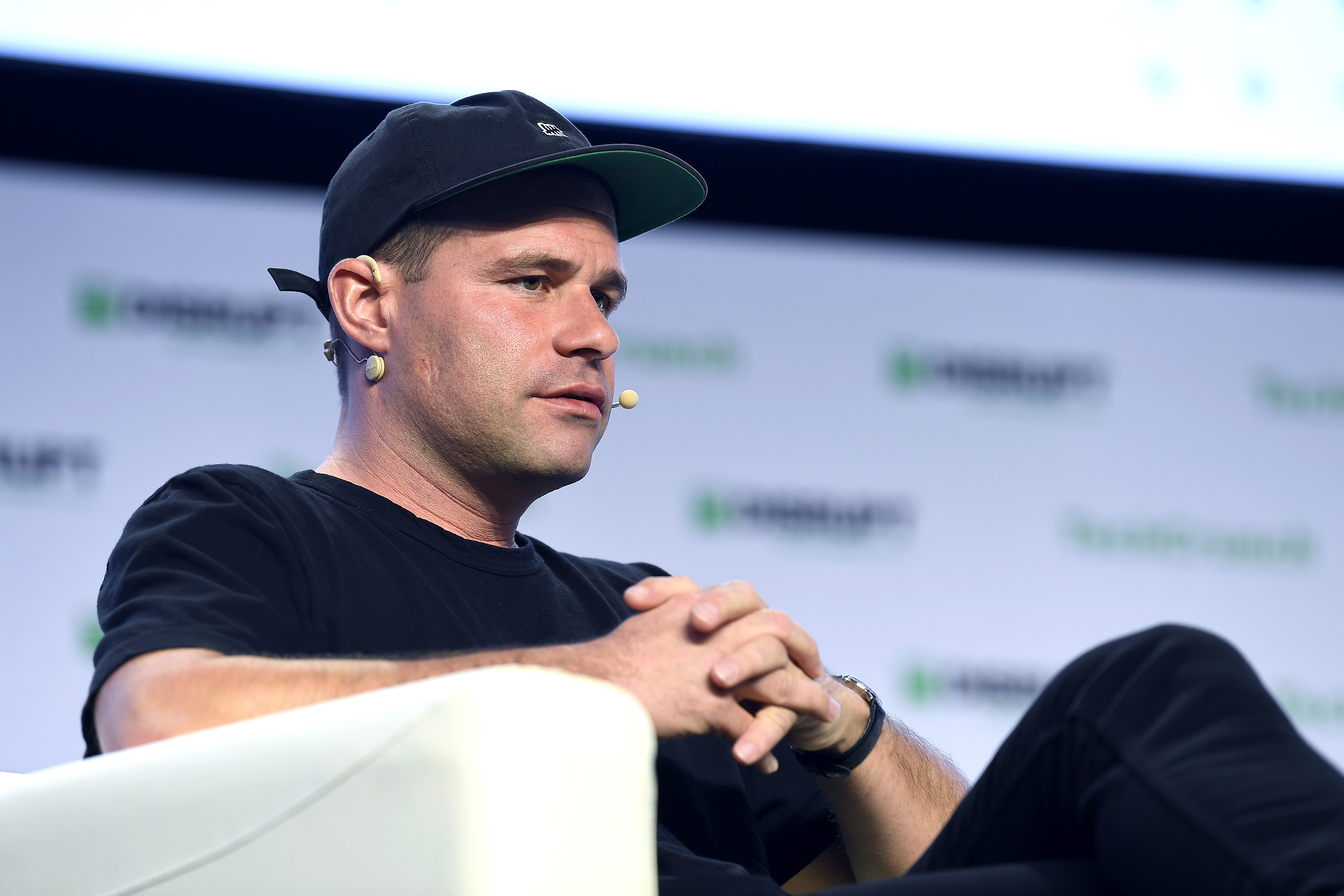
Public appearances supplied occasional relief from the arithmetic. Onstage in 2019, asked to blink twice if Postmates would go public that year, he held a staring contest with the audience and blamed the bright lights. It was an economical answer to a question that could have produced a very expensive one.
An exit with a moving price
Postmates had been preparing for an IPO when Uber's offer took shape in 2020. The negotiation record includes an analyst day on June 17 and an indication of interest from Uber that same day. The following day, Lehmann told Uber's chief executive that the bottom of its proposed valuation range did not reflect Postmates' value.
The sequence matters because an exit headline can make the decision look instantaneous. Here there were competing paths, advisers, valuations and negotiations. The choice was whether the next stretch of Postmates' life should be travelled independently or inside a larger delivery network.
Announced all-stock deal value, July 2020
Acquisition completed December 1, 2020.Company sale value is not personal net worth.
Uber completed the acquisition on December 1, 2020. The announced $2.65 billion consideration was in stock. In a later account, Lehmann explained that the exchange terms allowed Postmates shareholders to benefit when Uber's share price rose before closing. He put the resulting shareholder value at nearly $5 billion. The distinction is between an announced transaction value and his retrospective account of what the shares became worth.
It is also worth keeping the subject of that sentence straight: shareholders. The acquisition price was a price for the company. Turning it into Lehmann's personal fortune would require information that the headline does not contain. The more revealing personal decision came afterward, when he chose another operating business.
The return journey starts at checkout
Tiptop Cash launched in September 2023. Its proposition addressed the neglected half of shopping: selling an object after buying it. A marketplace gives an owner access to potential buyers, but leaves photographs, pricing and negotiation to the owner. Tiptop offered a price and arranged the item's departure. Convenience had a cost: doing the selling yourself could bring more money.
Lehmann returned with an advantage unavailable during his early attempts. Andreessen Horowitz led a reported $23 million Series A in 2022. Sam Altman and Naval Ravikant were among the backers. A recognised founder could raise money before publicly explaining much of the product. That shortened the fundraising problem; it left the consumer behaviour problem intact.
“building things, not cheering from the sideline”
Bastian Lehmann, on returning to operating a company, 2023
In June 2024, Tiptop launched trade-in payments at checkout. An eligible old device could help fund a new purchase at a participating retailer. The launch catalog covered more than 50,000 items, according to the company. Partners included Nothing Tech, Backbone and King of Christmas. Trade-in credit could cross the usual product boundaries. An old gadget did not have to finance another version of itself.
The idea had a certain domestic intelligence. People already confront the cost of their next purchase at checkout. Presenting the value of an unused possession at that moment gives selling a deadline and a purpose. Tomorrow's errand meets today's shopping basket. Whether customers accept the offer still depends on the quote, the process and their willingness to part with the item.
Behind that simple invitation sat valuation, collection, inspection and resale. Someone had to judge what the object would fetch and organise its next journey. Tiptop's November 2024 selling instructions included a seven-day window to send an item and inspection before payout confirmation. Physical commerce kept its physical obligations, however tidy the button looked.
Another object, another beginning
Lehmann's public persona contains smaller ambitions alongside the companies. He describes himself as a sneaker enthusiast. In 2017, he said he would like a small restaurant somewhere in Europe, with himself in the kitchen. Asked about creative blocks, he recommended leaving the office and doing something different. These are pleasantly tangible answers from someone who has spent so much time selling the convenience of software.
They also complicate the familiar founder portrait. The child making Lego films, the would-be restaurateur and the executive discussing delivery economics are interested in making things happen outside a screen. There is room here for taste, impatience and the pleasure of arranging an experience, alongside the financing rounds.
By October 2026, Tiptop's main domain redirects to Mother Computer. Lehmann's public bio says he is building a computer there; Mother describes its work as local AI systems. That is the latest turn, rather than evidence of what happened to every part of Tiptop. The documented checkout experiment belongs to its own dates and deserves to be read that way.
The old phone in the drawer, meanwhile, remains an unusually good test of a technology company. Its owner knows it has value. The hard part is making the next action feel worth taking. Across delivery, trade-ins and his latest beginning, Lehmann keeps volunteering to stand somewhere between a person and a thing they want done. There is apparently always another errand.
Follow the next errand
Conversations, company pages and further reading.