A security dealer needs a customer. Somewhere else, a marketing agency has a roomful of people who know how to find one. Between them sits the awkward business of buying professional help: whom to call, what to ask for, how much to commit. Barbara Zenz saw a business in that distance. In June 2016, The Stephenz Group launched MyStudioPros, a division built around independent home security dealers. It took a service familiar to large technology companies and gave smaller operators a way in.
The launch had an unusually concrete detail: a VIP membership costing $50 a month. That was the membership fee, with discounts and access to services, rather than the price of an entire marketing campaign. Dealers could order help as they needed it. An account representative gave the arrangement a human point of contact. For an industry selling protection and reassurance, having an actual person to ask was an appropriate touch.
Zenz, the founder, president and CEO of The Stephenz Group, had identified a problem inside the market for a sophisticated product. Independent dealers were trying to compete as home security expanded into smart home automation. Cable companies were entering the picture. A local operator still had to attract buyers, keep existing customers and explain new services. The technology might be advancing; the working day had declined to grow any longer.
That practical imbalance is a useful entrance to Zenz's career. Her work sits where a company's capabilities must become understandable to another person. Sometimes that person is choosing a computer. Sometimes it is a dealer deciding how to generate business. The scale changes. The need for a clear next step persists.
a marketing department?
The agency behind the offer
The Stephenz Group is based in San Jose, with a history dating to 1981. Its business brings together branding, advertising and digital marketing. Zenz leads the agency alongside executive creative director Stephanie Paulson. In that partnership, business leadership and creative direction have distinct names attached to them, a useful arrangement in a profession where the word strategy can be asked to do rather a lot of work.
The service list reaches from positioning and naming to websites, lead generation and sales presentations. Those assignments touch different moments in a customer's decision. A name may introduce a business. A website has to answer questions. A presentation has to give a salesperson something worth saying. Bringing those jobs into one agency creates the possibility of a coherent argument across all three.
Her company's description of Zenz emphasizes enthusiasm for clients and an ability to lead teams through complex business challenges. Its public invitation for new business names her directly. The chief executive is also the person a prospective client is asked to contact. That places her at the beginning of the relationship, where an ill-defined marketing request can still be turned into a specific assignment.

Selling the use, explaining the machine
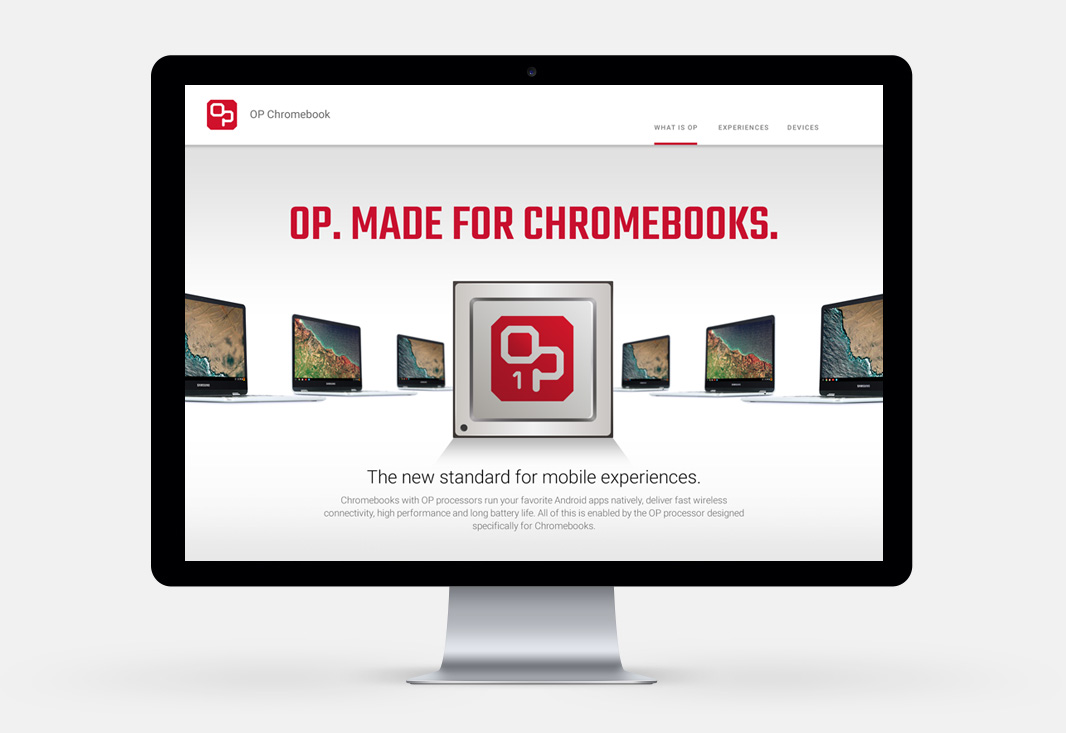
Consider the agency's work for ARM on the OP Chromebook. The brief called for a separate site aimed at prosumers, explaining OP while accommodating multiple partners and their brands. It is the sort of assignment that can become a committee meeting with a scroll bar. The solution used everyday imagery and icons to give technical information a quicker, friendlier reading.
The site connected a computing platform with familiar activities: making things, sharing experiences and using applications. A three-dimensional product video showed the notebook's form and flexibility. Specifications had their place, but visitors also received a picture of what those specifications might let them do. The portfolio gives a concrete example of the kind of translation her agency sells: technical information arranged around the people expected to use it.
Anritsu presented a different challenge. Its ultraportable millimeter-wave power analyzer served engineers and technicians working in demanding conditions. The campaign emphasized portability and use in the field, then extended the idea across digital advertising, social media and promotional materials. A specialized instrument acquired a visual story about the circumstances in which it would be useful.
For Enlighted, the task involved an Internet of Things business and the operation of buildings. The agency combined imagery and graphics to show applications and make the website easier to use. Across these examples, the recurring editorial choice is to put the situation of the buyer within reach of the technology. A clever product still needs an intelligible introduction.
A dealer gets a marketing department
MyStudioPros applied that attention to the buyer to the agency's own services. Instead of asking an independent dealer to navigate an open-ended agency relationship, it offered an industry-specific point of entry. The launch included a relationship with UCC, a central monitoring company in San Antonio. Dealers could reach the service through a monitoring provider or approach it directly.
The relationship mattered because a monitoring provider already had a reason to be in conversation with dealers. Marketing help could travel along an existing business connection. UCC president Teresa Gonzalez described the offering as giving dealers access to resources they would otherwise lack. The distribution of the service was part of its design.
The division's own business profile lists a wonderfully unglamorous range: yard signs, flyers, websites, search optimization and social media. A yard sign has little patience for a paragraph of brand philosophy. It needs to be read. A website has more room, but it still needs to help a visitor act. These are modest objects with direct commercial jobs, and their inclusion says something about the breadth of the offer.
Zenz's aim was to help independent operators build their own brands and compete. The proposition depended on recognizing that a smaller business could need several kinds of marketing help without needing a permanent internal department. Packaging expertise around that circumstance gave the agency a defined audience and gave that audience a clearer service to consider.
Nine leads, and a reason to keep showing up
Later in 2016, security industry executive Mark Matlock turned to Zenz for help understanding social media. He preferred personal contact and wanted to know what online activity could actually do for an alarm business. Zenz answered with a dealer campaign directed at local real estate agents, promoting a package for new homebuyers. She reported nine leads in its first week and new relationships with realtors.
The example is specific enough to be useful without becoming a promise for every dealer. It joined an offer to people who regularly encountered potential buyers at a relevant moment. A new homebuyer package and a real estate audience had an obvious reason to meet. The reported introductions to realtors also gave the result a second dimension beyond the first week's inquiries.
“Social media has become the new ‘town square,’” Zenz said. The comparison fitted her advice about keeping a business's Facebook presence fresh. A neglected page asks prospective customers to do extra interpretive work. They must decide whether the silence means anything. Regular, relevant information gives them something more helpful to judge.
By January 2020, her advice to dealers was equally practical. In a business forum, she said her team worked with more than 300 dealers nationwide. She recommended identifying suitable targets and using several points of contact. Her checklist included clear website offers, click-to-call features, search visibility, realtor referrals and an updated Google My Business listing. It reads like the work someone has to remember to do on Tuesday.
“Social media has become the new ‘town square.’”
Barbara Zenz · 2016
The other side of the judging table
Zenz also has a documented place in the industry's evaluation of other people's work. She appears among preliminary judges for the 2008 American Business Awards, and again in the 2011 and 2015 judging records. That extends the picture beyond an executive promoting her own agency: she has repeatedly volunteered to assess business achievements submitted by others.
In 2024, she chaired the American Business Awards judging committee for websites, apps and video. The committee brought together people from agency, finance and technology organizations, including Ryan Baltz of Grand Prize Agency and Murali Balusu of HalloApp. The role placed her at the head of a committee assessing digital communication across several industries.
The categories connect closely to the work her agency offers. A website has navigation as well as imagery. An app needs people to understand what happens next. A video has to make an idea visible in time. Judging across those forms requires attention to execution as well as the ambition of a brief. It is a fitting additional responsibility for someone whose business spans strategy and production.
Her name also appears on the 2026 MobileWebAward judges roster, identifying her as CEO of The Stephenz Group. Alongside the earlier awards records, it shows continued participation in professional judging. The career has a public life beyond the client meeting, even when its most visible objects are things made for other organizations.
American Business Awards
Websites, apps & video
MobileWebAward
There is still a presentation to finish
Then there is Studio, the agency's design and production offering. Its menu includes trade show support, infographics, digital marketing and video. It also gives substantial attention to PowerPoint: cleaning up existing decks, creating new presentations, building templates and providing ongoing support. Zenz is again the named contact. An executive's role in a creative business can include bringing order to a very ordinary pile of slides.
Studio even has a mascot, Smartie. The small joke belongs comfortably beside the practical service list. Presentations and templates rarely receive the attention lavished on a major advertising launch, but people still have to use them. A business's message becomes real in those repeat encounters, including the materials that leave the office with a salesperson.
Read together, these parts of Zenz's work suggest a consistent professional concern: lowering the effort required to understand and use an offer. The evidence is in the packaging for dealers, the agency's product storytelling and the production services that keep messages moving. Her career makes room for both the ambitious brief and the necessary revision. Somewhere, a customer is deciding what to do next. The work has to help.