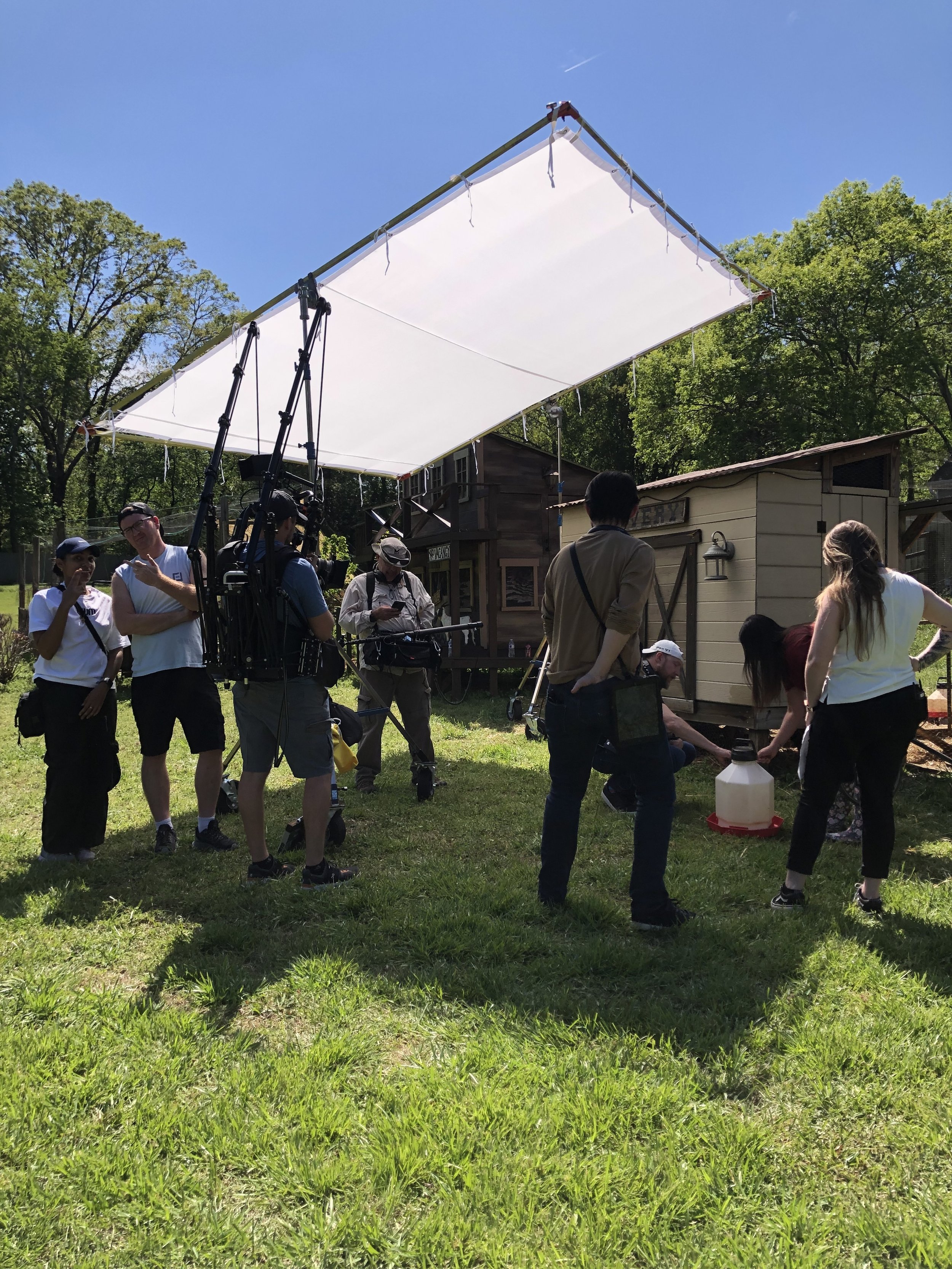
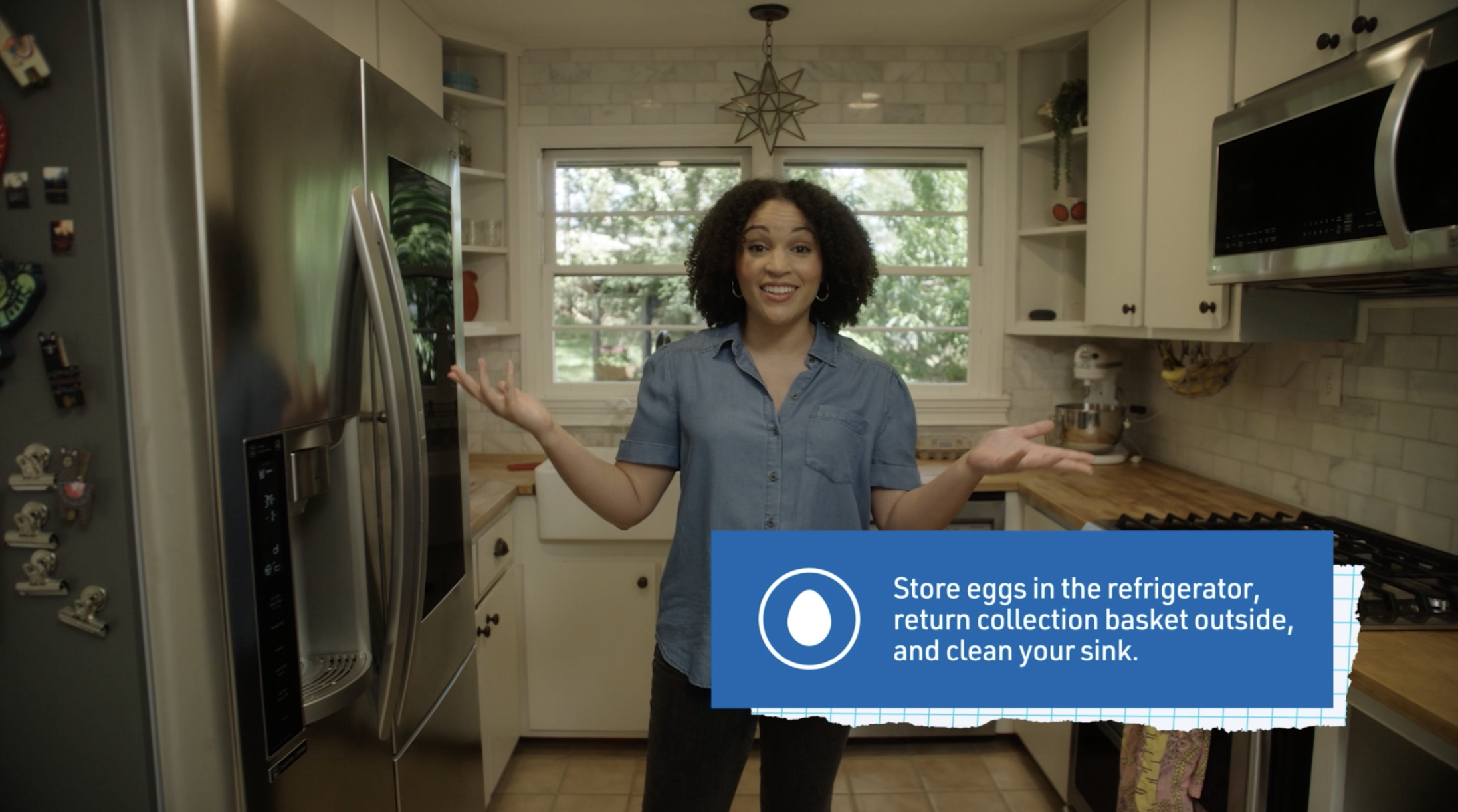
The chicken is named Hen Solo. This is the first clue that Banyan Communications does not approach public-health communication with the solemnity the phrase seems to demand. In a video made for the Centers for Disease Control and Prevention, viewers tour backyard coops in the style of a 1990s celebrity-house program. One episode visits “Chick Inn.” Another stars “Doja Chick.” Between the jokes, people learn where to leave their coop boots and how not to carry germs into the kitchen.
It is tempting to call this a clever ad. The more useful description is a piece of behavioral infrastructure wearing a feather boa. CDC had seen more disease associated with home flocks. The practical advice existed. What failed first was attention. Banyan used lifestyle and geographic targeting to find backyard-flock owners, then gave them a format they already understood. The campaign recorded more than 1.2 million impressions and 35,000-plus views among that audience; the videos went on to collect hundreds of thousands of views, a CDC Director’s Award, and two Telly Awards.
The invisible product is attention
Banyan sells research, strategy, campaign development, web design, training, video, social media, data visualization, technical writing, and evaluation. That list is accurate and not especially revealing. The company’s actual product is the bridge between institutional knowledge and a human decision: click the training, call the hotline, wash the boots, recognize the concussion, use the violence-prevention tool.
Sally Deval and Allen Admire started the firm in St. Charles, Missouri, in 1995 as a documentary and public-service-announcement company. Their rule was unusually plain: no hamburgers, no lipstick, only work meant to improve lives. The format expanded, but the rule held. Banyan opened in Atlanta in 2011, close to the country’s public-health nerve center, and grew into a woman-owned consultancy serving federal agencies, state departments, nonprofits, and health institutions. Its client roster includes CDC, NIH, HRSA, SAMHSA, the CDC Foundation, the American Academy of Pediatrics, and Georgia’s behavioral-health department.
“Organizations today aren’t just navigating complexity. They’re being asked to earn trust continuously, often under pressure, often in public.”Emily Hite, CEO
That word - trust - explains why the firm looks different from a general advertising agency. A sneaker campaign can survive a little ambiguity. Instructions about traumatic brain injury, maternal mental health, or infectious disease cannot. Banyan’s staff includes public-health researchers and subject-matter experts alongside designers, writers, developers, producers, and instructional designers. The evidence and the execution live under one roof.
A hotline can be open and still be closed
Consider the National Maternal Mental Health Hotline. The service was free, confidential, and available around the clock. But a service nobody knows about is functionally unavailable. HRSA brought Banyan in. The team ran research and listening sessions, built a strategic plan, and produced television and radio spots, search and social advertising, print material, and messages in nine additional languages. The campaign surpassed 199.4 million impressions. Average monthly calls rose 20 percent after launch.
Or take Georgia’s effort to connect people with help for quitting or limiting alcohol. The first obstacle was not a media plan. It was shame. Banyan spoke with Latino, Hispanic, and Asian American residents and heard that they wanted practical information without being scolded for drinking. That discovery changed the message. The resulting English, Spanish, and Korean campaign offered help in the language of health, loved ones, and conversation - not moral failure.
The longest proof is CDC’s violence-prevention work. Banyan has helped build and evolve VetoViolence into a system of training modules, videos, social content, and hundreds of evidence-backed tools. In one year, its paid and organic media reached more than 1.345 million people. Meanwhile, the HEADS UP concussion program became a set of role-specific tools and video courses for coaches, trainers, educators, and officials. More than 260,000 users completed the coaches training, which accumulated 116,409 ratings and a 4.5-star score.
What a public agency actually buys
There is no price card because Banyan is not software. It earns revenue through scoped projects, task orders, and multi-year public contracts. In 2024, the company announced an NIH neurological-disorders communications order with a ceiling of roughly $27 million. Later procurement data reflected amendments that reduced the potential award to about $16.8 million, with five years of performance. The distinction matters: a contract ceiling is permission to order work, not cash dropped on an agency’s desk.
Later potential value listed for the amended NINDS order. Public contracts are paid against authorized work and obligations, so the ceiling should not be confused with revenue already earned.
That model puts Banyan between two familiar alternatives. On one side are giant federal contractors with deep procurement machinery. On the other are small creative studios with sharper taste but less health-domain fluency. Banyan’s argument is that a client should not have to choose between subject expertise and craft. Research, human-centered design, production, distribution, and evaluation can be one continuous assignment.
The founder leaves the office, not the story
In April 2026, Banyan made its first CEO change in three decades. Deval became chair of the board. Emily Hite, who had joined in 2020 to lead corporate strategy, became chief executive. Banyan says revenue more than tripled during Hite’s tenure before the promotion, while relationships with NIH and CDC deepened. Two months earlier, the firm had earned a seat on Newfoundland and Labrador Health Services’ agency roster - its first Canadian contract vehicle. The roster does not guarantee assignments. It makes Banyan eligible to compete for them across strategy, production, and digital marketing.
The timing suggests a company trying to scale a specialty without diluting it. Its own culture language - hungry, humane, earnest, free - is unusually sincere for an agency, perhaps because cynicism is a poor material for a maternal-health hotline. The benefits list is more concrete: flexible paid time off, remote-work opportunities, 12 weeks of paid parental leave, health coverage, and 401(k) matching.
The useful limit
What can another organization copy? Begin before the slogan. Ask people why they ignore, mistrust, or misunderstand the message. Let that answer change the format, not merely the wording. Design for a specific role and moment. Put the material where the audience already spends attention. Then measure a useful action - course completion, hotline calls, resource visits - instead of treating impressions as the whole story.
The approach has limits. A funny wrapper cannot rescue a service that is unavailable, unaffordable, or untrustworthy. Audience research cannot compensate for a client unwilling to change the message it arrived with. And the integrated model is most valuable when the subject is complex, the stakes are public, and behavior matters; a routine retail launch may not need epidemiologists and instructional designers at the table.
But when the information is important and the audience would rather look away, Banyan’s work makes a persuasive case for seriousness without solemnity. Sometimes the distance between a government recommendation and a safer kitchen is a chicken pun delivered at exactly the right moment.
Continue exploring