At the Underground Music Showcase in Denver, an advertising campaign handed someone a dose of naloxone. That person used it to save a life the same night. This is an odd sentence only if you think an ad agency’s work should stop at the edge of the poster.
Amélie Company does not. For its Keep The Party Safe campaign, the Denver shop borrowed the glowing visual grammar of bars and concert halls, installed messaging where people actually go out, partnered with AEG Presents, and helped put 11 branded emergency overdose kits inside Colorado venues. At events, its teams gave away nearly 5,000 naloxone doses and 1,860 fentanyl test strips in two months. The campaign was not merely about preparedness. It carried preparedness in a box.
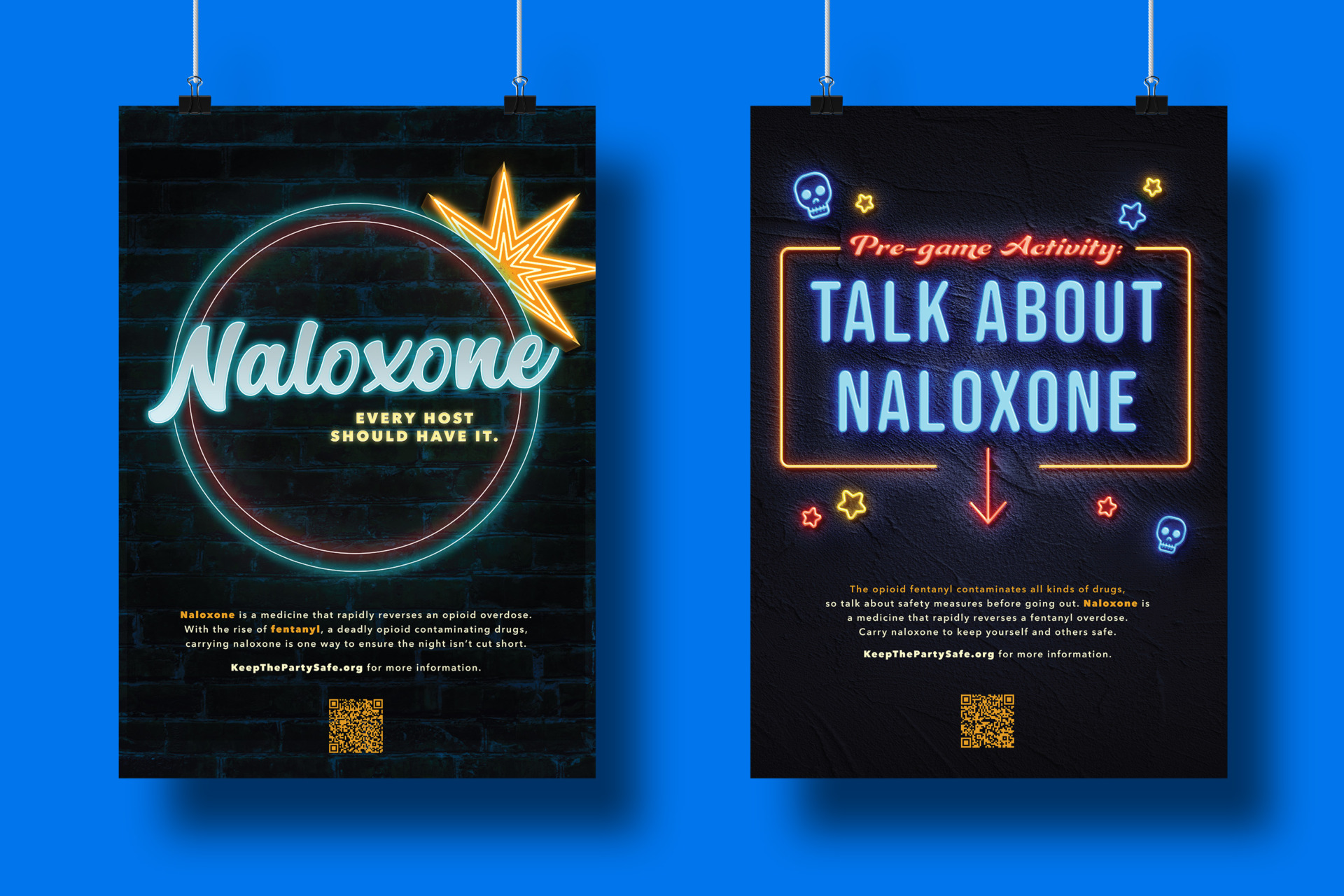
The useful-advertising test
What happens after the impression?
Most advertising case studies end at awareness. There are impressions, click-through rates, brand lifts, perhaps an earnest film with a piano under it. Amélie’s public work makes the more interesting move: it asks what the audience should be able to do next.
In Keep The Party Safe, the next move could be finding naloxone, testing a drug, or becoming the designated sober friend. The first year produced 41.1 million impressions, including 13.2 million earned-media impressions. More revealing was the plumbing beneath the publicity: a free digital toolkit, materials ordered by more than 30 organizations, venue partnerships, event workers, and physical supplies. Attention had somewhere to go.
That combination explains the company better than the phrase “full-service creative agency,” even though that description is accurate. Amélie researches audiences, builds brands, develops campaigns, buys media, makes video and animation, handles public relations and outreach, and ships websites. Its clients include Colorado agencies responsible for behavioral health, transportation, human services and education, plus local governments, nonprofits and a few commercial brands. But the disciplines are less important than the handoff between them. Research shapes a message. Creative makes it legible. Media finds the audience. A local partner lends trust. Distribution turns the thought into an object.
The revision
The first campaign reached people. It did not reach them equally.
Amélie’s clearest lesson came from Lift The Label, a campaign created with Colorado’s behavioral-health authorities in 2018 to reduce stigma around substance-use disorder and help people find treatment. After a year in market, the team concluded that its reach was not equitable. The original work had not represented or connected adequately with high-risk Black, Hispanic and Latine, and LGBTQIA+ communities.
This is the moment at which many campaigns acquire a new stock photo and call the matter handled. Amélie changed the method. It began a multi-year research effort, conducting focus groups and in-depth interviews with people in recovery and with their loved ones. The campaign widened its cast of Coloradans, explored the barriers people had overcome, and later worked with organizations around the state to adapt resources for rural communities. The production left the studio and entered people’s homes and towns.
“Nothing about us without us.”A principle Amélie says it hears frequently in community work
The result was not a single revised advertisement. It became a system: paid media, earned coverage, community outreach, a digital toolkit, free print materials, a newsletter, and Recovery Cards designed by artists and distributed to people seeking recovery and those supporting them. More than 180,000 cards have circulated. Lift The Label has accumulated over 1.1 billion lifetime impressions, and public-health researchers have cited it as an example of addressing the structural components of stigma.
The distinction is easy to miss. Amélie did not abandon reach. It stopped treating reach as proof that everyone had been reached.
A niche born at home
Paris, Denver, and the useful constraint
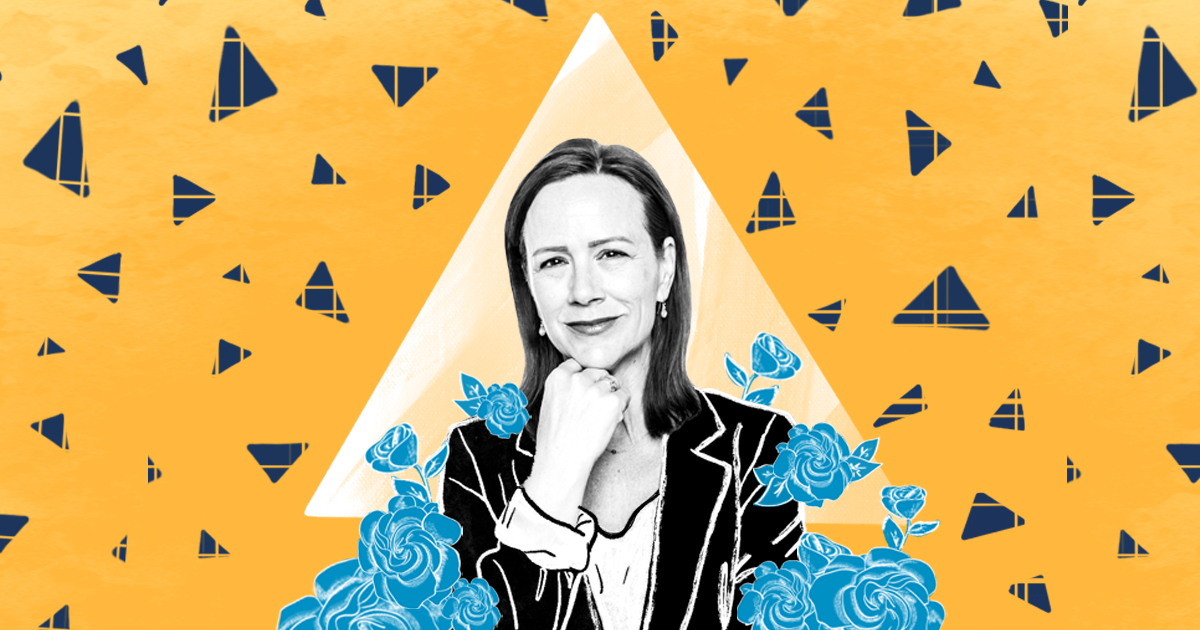
The agency began in July 2002 with a marriage and a move. Benoit Guin had worked in advertising in Paris. Robin Ashmore was an independent marketing consultant there. They married, had children, moved to Denver without jobs waiting, and eventually started a company together. At first, they helped French brands enter the American market.
A few years in, Ashmore proposed a constraint: focus on brands and initiatives that make a positive difference in people’s lives. Public health, transportation, education, safety and behavioral health became the center. Guin remained CEO; Ashmore later became president and majority owner. The positioning was a business decision as much as a moral one. It made the agency easier to understand and gave the team repeated experience with subjects that punish glibness.
The agency makes money in the familiar way - clients pay for strategy, creative, production, media, PR, web work and outreach. No venture rounds or software multiple are required. Its supplied revenue estimate is about $4.6 million, and LinkedIn lists 11 to 50 employees. The market fit is precise: too integrated to be only a PR shop, too field-oriented to be only a design studio, and more specialized in behavior change than a generalist ad agency.
That focus also shapes culture. Amélie names humility, honesty and heart as operating values. It runs paid internships and high-school immersion days, supports hybrid work, and employs a specialist to weave equity into operations and creative output. Ad Age ranked it first among its 2025 Best Places to Work organizations with 150 or fewer employees. The staff nickname, inevitably, is “fAmélie.” A family pun is not proof of a healthy workplace, but employee survey results are at least evidence.
What another team can copy
Begin with the behavior, not the campaign format. Bring people with lived experience into the work before the creative is polished. Recruit a partner that already has permission to speak in the setting. Then remove friction from the next step - put the hotline on the page, the card in the hand, or the medicine in the venue.
The approach depends on patient clients, continuing community access, responsible subject-matter review, and money for distribution as well as creative. Strip those away and the neon is merely neon.
The category Amélie really occupies
Advertising for the moment after awareness
Amélie competes with integrated agencies, health-communications specialists, PR firms, media shops, and government teams working in-house. Its difference is not that it cares more. Every cause agency says it cares. The difference is operational: the company treats community trust and last-mile access as part of the creative product.
You can see the same instinct in the 988 Colorado work, where the website was designed to reduce anxiety and friction for someone seeking crisis support. You can see it in I Matter, which brought youth mental-health resources into Little Free Libraries. You can see it in Recovery Cards, where a message arrives through an ordinary human ritual rather than an official announcement.
The clever part of putting naloxone on the guest list was not the line. It was noticing that the guest list leads inside the venue, where the kit must already be waiting.
Keep exploring