The most important number in Red Rock's portfolio is not a follower count. It is 6.3 months. Before a public-awareness campaign for early psychosis in New Orleans, the average duration of untreated psychosis was reported at 15.5 months. Afterward, it was 6.3. The decline cannot be handed neatly to a single billboard, quiz or podcast. Healthcare does not offer that sort of tidy causality. But the campaign was part of an early-detection program associated with the change, and that makes the number far more interesting than the standard agency parade of impressions.
Red Rock is a virtual creative agency rooted in New Haven, Connecticut. It does the familiar agency things - brand strategy, identity, websites, SEO, advertising, public relations, email, social media, events, video and podcasts. Its clients include health departments, treatment providers, universities, manufacturers and climate-minded businesses. What separates the work is the question the team tries to place before all those deliverables: What should a person do differently after seeing this?
A reported 59% decrease. The careful word is associated: the communications campaign operated inside a broader early-intervention effort.
A brand brief with a clinical clock
CALM - Clear Answers to Louisiana Mental Health - is the outreach arm of Tulane University's Early Psychosis Intervention Clinic. The problem was not simply that young people lacked a pleasing logo. Psychosis was frightening, badly understood and wrapped in stigma. Families could see something changing and still not know what to call it, where to turn or whether asking for help would make matters worse.
Red Rock refreshed the identity and built the communication system around it: an educational website, transit and native ads, social campaigns, community outreach, a podcast, interactive quizzes and event support. One quiz was made for people experiencing symptoms; another was for concerned friends and family. Input came from EPIC's Mom's Group. That detail matters. The campaign was not merely aimed at a community. Part of the community helped shape the instrument.

“Public education and outreach can help people recognize risk, understand their options, and take the next step toward care.”Glen McDermott, founder and CEO
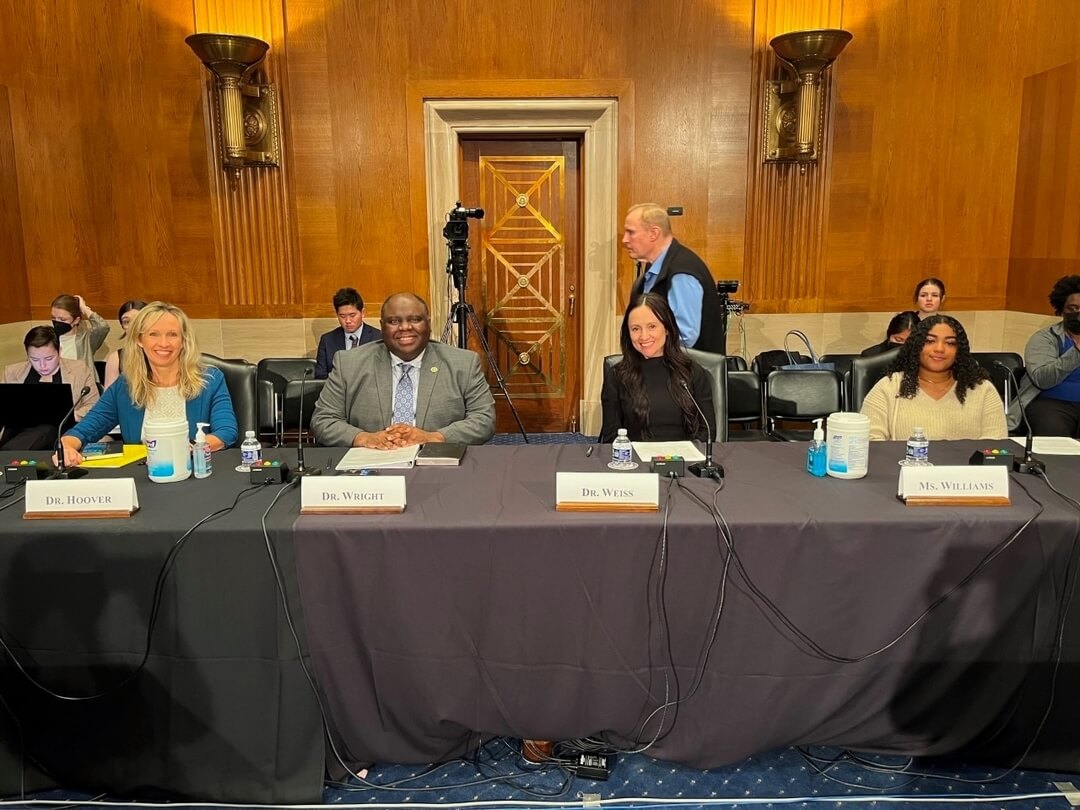
The campaign's vocabulary was blunt without being clinical. “Losing touch with reality? Let's figure it out.” The point was not shock. It was to replace an ominous mystery with a next step. CALM later expanded clinics, carried the work to an international early-psychosis conference and saw its founders invited to testify before Congress. Red Rock won creative awards. The better achievement remained the shortening clock.
The channel that said no
The clean version of agency life goes like this: research, clever idea, media plan, applause. The useful version includes the door that would not open. While planning APT Foundation's “Let's Break Barriers to Treatment” campaign in Connecticut, Red Rock found that Google rejected addiction-service advertising unless the provider obtained LegitScript certification. APT appeared eligible. The fee still looked like a poor use of the campaign budget.
So the team did not treat Google as destiny. It moved through geofenced social advertising, streaming video, buses, twelve billboard locations, podcasts, PR, email and community forums. A graphic-novel-style animated film made the center of the message easy to repeat: opioid use disorder is an urgent medical condition, medication works and treatment can begin now. The campaign ran in Greater New Haven in the summer of 2025.
Write the behavior before you buy the channel.
Define the action, list the reasons a person may avoid it, and give each barrier a format. If a platform becomes expensive or inaccessible, the strategy survives because the strategy was never “buy Google.”
Reported results included a 44% rise in active website users, 406% growth in Instagram reach and more than 600,000 TikTok views. Those are media numbers, but they sat beneath harder measures: inquiries, enrollment and shifts in community sentiment. The Shorty Awards entry also records the failed Google route. Most award submissions hide the splinters. This one left in the useful splinter.
A small agency's operating system
Red Rock's method is a four-part loop. First, explore the client's culture, customers and exchange of value. Second, name goals and choose key performance indicators. Third, make and distribute the work with enough agility to change it. Fourth, report, learn and begin again. It sounds almost suspiciously ordinary. That is its virtue. Serious work often depends on doing ordinary things in the right order.
Explore
Culture, audience, barriers, research.
Strategize
Goals, measures, priorities, plan.
Act
Creative, distribution, adaptation.
Reflect
Report, repeat, revise the next cycle.
The business behind the loop is straightforward. Red Rock sells custom service contracts rather than software or a fixed package. Clients choose the pieces that fit their goals, timeline and budget. A distributed roster covers creative direction, paid media, PR, community engagement, social media, copy, project management and web development. That structure lets the agency behave like a compact external communications department, or slot specialists beside an internal one.
Founder Glen McDermott arrived at this model indirectly. Australian by birth, he named the firm for Uluru and tells his own story through bicycle travel. In 2010, after corporate work, he entered New Haven's coworking scene and assembled the collaborators who became Red Rock. A later role with Conscious Capitalism Connecticut tightened the firm's focus on business as a civic actor. The resulting client list is less lifestyle brand than public square: APT Foundation, Yale School of Medicine, New Haven's health department, ManufactureCT, NYC TCTTAC, CALM and sustainability ventures.
The limit is part of the promise
There is a condition attached to all of this. Communication cannot rescue a service that is unavailable, distrusted for good reason or impossible to navigate. APT had an open-access model behind the message, reducing its own treatment wait from weeks to hours. CALM had clinicians and specialized care behind the quiz. Without capacity, a successful campaign merely produces a better-informed queue.
Nor should a 59% decline be mistaken for a magic phrase on a bus. Public-health results come from systems: clinical practice, referrals, family response, community trust, service design and repeated exposure. Red Rock's strongest idea is not that marketing deserves all the credit. It is that communications belongs inside that system, accountable to the same human outcome.
For a reader building any trust-heavy service, the transferable lesson is compact. Begin with the delay or behavior that matters. Invite the people closest to the problem into the brief. Build several routes to the same next step. Measure action before admiration. And when the obvious channel asks for money without improving the route, keep the objective and change the map.