There is a particular kind of meeting that makes advertising people comfortable. The brief is clean. The audience has a tidy name. The problem fits in a slide. Everyone nods at the same adjective. Then the campaign meets an actual person, and the adjective falls apart.
Russell Herder, an independent Minneapolis agency founded in 1984, has built part of its reputation around entering the mess earlier. Its name for the method is co-creation. Instead of developing a campaign inside agency walls and firing it outward, the team invites the people who will live with the message into the research and creative process. The audience gets a hand on the marker.
That distinction matters because Russell Herder often works where a slightly wrong message is not merely wasteful. Its portfolio runs through opioid misuse, suicide prevention, diabetes, veteran mental health, problem gambling, disability, auto theft and extreme heat. It also handles the more familiar commercial work of resorts, real estate, finance, law, construction and associations. The service menu is broad: research, brand strategy, identity, copy, video, paid media, public relations, social content, UX and web development. The organizing idea is narrower - understand the human situation before dressing it up.
The useful thing hidden inside an ad
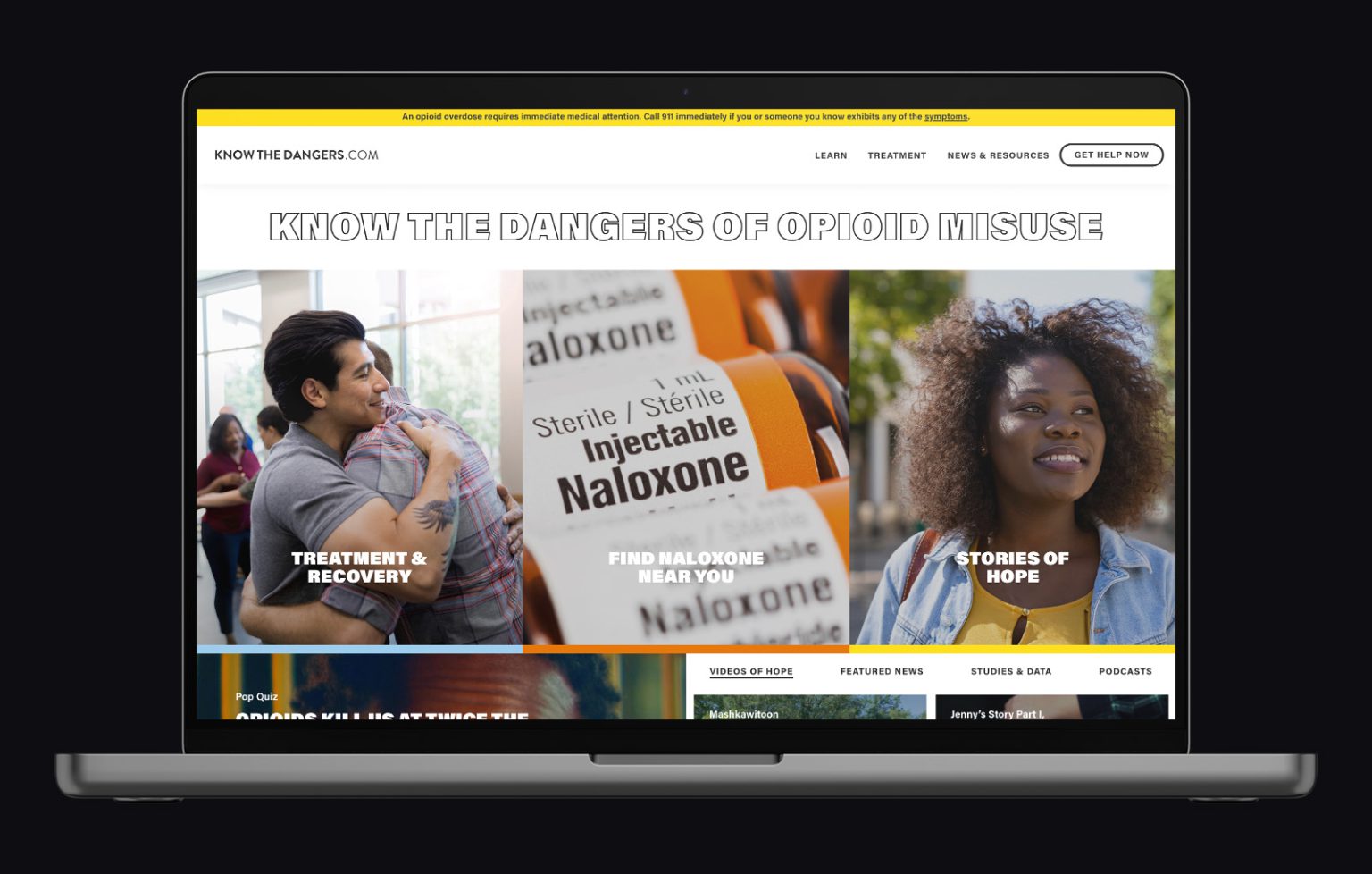
The strongest example is Know the Dangers, an initiative developed with the Minnesota Department of Human Services. What began as a state effort about synthetic drugs became a wider resource on opioids, fentanyl, counterfeit pills, treatment and harm reduction. The revealing object is not a television spot. It is a naloxone finder that helps a visitor locate the overdose-reversal medicine nearby. Advertising became a piece of infrastructure.
The campaign has been running and adapting for more than a decade. Russell Herder says it has generated more than 2.3 million website visits, 84 million in social reach, over 929,000 likes and shares, and 1.7 million digital-ad clicks. Those are agency-reported numbers, but they show the scale of the machine. In 2024, a Know the Dangers television commercial won Best in Show at the Healthcare Advertising Awards.
The public cost offers useful scale. A City of Minneapolis contract record lists $174,000 for opioid media campaign services beginning in May 2024. That is not a universal price list - agency work changes with scope, media and duration - but it is a rare disclosed figure in a business that prefers “contact us” buttons. The practical lesson is that community process does not replace production and distribution. It sits upstream of them, protecting the larger spend from an avoidable mistake.
A disclosed 2024 Minneapolis opioid-media contract. The figure is useful not as a rate card, but as a reminder: the expensive part is everything that happens after a weak assumption enters the brief.
Translation is not the same as authorship
A diabetes-prevention project makes the method easier to see. Russell Herder was working with the Minnesota Department of Health to reach Lao and Latino communities. The ordinary approach would be to write a general message and translate it. The agency instead worked with the Lao Center and CLUES. Lao Center staff supplied translation for a healthy-eating video. CLUES helped shape scripts, food references, location and talent, with a director from the community.
What failed first, in other words, was the fantasy that a technically correct translation equals a culturally credible message. The community partners changed the work before it hardened. Russell Herder calls this an inside-out process: start at the heart of the group, then build the media around what is learned. It is slower at the beginning and likely cheaper than discovering the mistake in public.
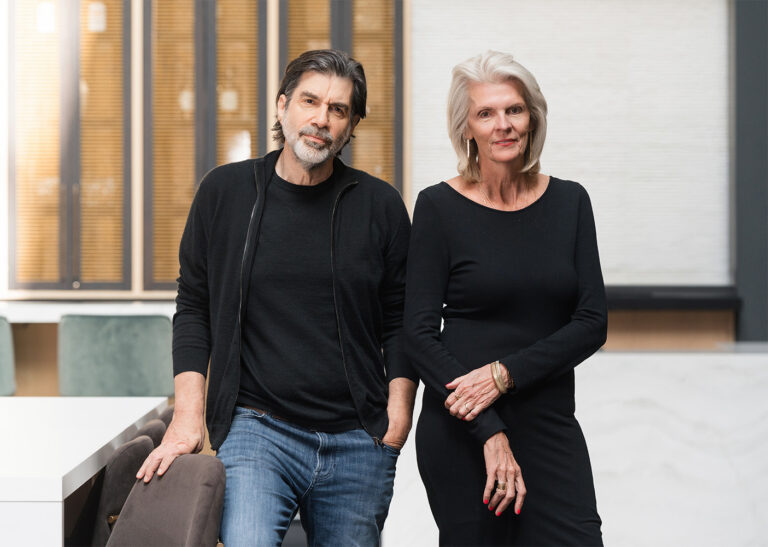
Listen, learn, and then act decisively.Carol Russell, co-founder and CEO
The same rhythm appeared in 2025, when the Minnesota Department of Health hired the agency for Stay CoolMN, a statewide extreme-heat campaign. Focus groups included caregivers and outdoor workers. One construction manager described a workplace culture of pushing through dangerous heat; a government message could give workers permission to stop. The eventual campaign used blunt safety instructions, bright orange and a bear mascot. The research did not decorate a finished idea. It changed what the idea needed to do.
A business built for the second assignment
Russell Herder competes in a crowded field: large integrated agencies, specialist digital shops, PR firms, purpose-led studios and the in-house team down the hall. Its advantage is less about owning a rare production capability than about joining capabilities that clients otherwise coordinate themselves. The same group can research an audience, clarify the brand, make the assets, buy the media, handle press and measure response.
The model appears designed for relationships rather than isolated deliverables. Carol Russell has said most clients are not project-only. The agency reported 96 percent client retention in 2024, alongside a 27 percent rise in new clients. For Timberland Partners, the engagement reached from research to three distinct identities and websites - corporate, investments and residential communities - then into video, social, events, email and paid advertising. One complicated organization became three legible stories.
Its Certified B Corporation status gives the purpose language some external scaffolding. Russell Herder has been certified since 2017. Its 2024 B Impact score was 114.3, well above the 80-point qualification line. The agency said it donated $280,000 in professional services to 20 organizations in 2023 and more than half a million dollars over the prior three years. The point is not sainthood. It is operating design: governance, donated capacity and the client mix all reinforce the same market position.
A method, not a halo
Co-creation is easy to imitate badly. A focus group held after the big decisions have been made is theater. A community partner without authority is decoration. The method is also a poor fit when the team cannot make time for trust, when legal constraints make honest participation impossible, or when management wants endorsement rather than uncomfortable information. If nobody can change the work, asking people to help is worse than not asking.
What another company can copy is not Russell Herder's service list. Plenty of agencies have one. Copy the sequence: locate the people with lived knowledge, bring them in before the answer exists, pay attention to what complicates the brief, turn the message into something useful, and keep the system flexible enough to change. Then measure the response without pretending every social outcome belongs to the campaign.
Forty years is a long time in advertising. Platforms disappear, media plans molt, and yesterday's precision targeting becomes tomorrow's privacy problem. The humble part survives. There is still a person on the other side of the message who knows something the agency does not. Russell Herder's most durable product may be the room it makes for that fact.