In February 2020, a Chicago communications firm called IntraLink Global performed the branding equivalent of walking into court and volunteering to be cross-examined. It renamed itself Purpose Brand. The old name told you almost nothing, which was comfortable. The new one made a claim. From then on, every press release, campaign and client recommendation could be asked the same impolite question: where, exactly, is the purpose?
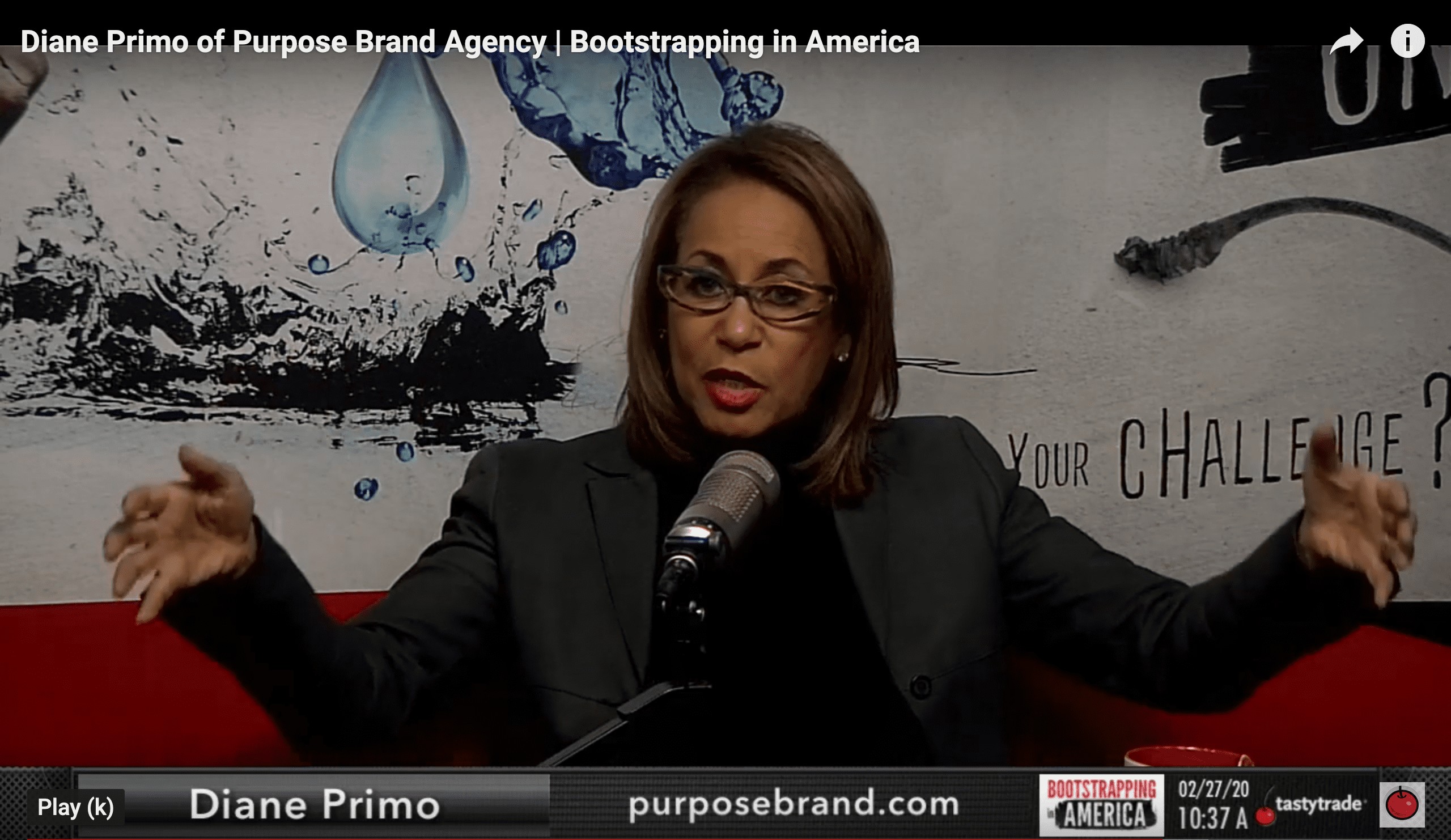
This was not a new shop discovering a fashionable word. Diane Primo had founded the business in 2007, after a career that included senior roles at Quaker Oats, Ameritech and SBC, CDW and a venture-backed home-services company. She has described the agency's beginning in less cinematic terms than founders usually prefer. She stepped away from corporate life, spent more time on philanthropic work, began consulting and eventually noticed that the consulting had become a business. The company arrived before the founder's story about the company did.
That sequence matters. Purpose Brand was not built by starting with a slogan and searching for a service to put underneath it. It began with the work. The language came later.
The name came with a warranty
Purpose is one of marketing's most overworked words. It can mean a corporate mission, a social position, a charitable donation or simply a reason a product exists. Purpose Brand's useful distinction is behavioral: what a company stands for must be visible in what it does. Primo put it neatly in a 2020 interview: “What you stand for is actually what you're going to do.”
This is why the agency's offer stretches beyond publicity. Its team handles brand architecture, media relations, crisis work, content, social, websites, video, events, workshops and community engagement. The menu looks broad until you see the governing problem. A complicated organization rarely suffers from a shortage of things to say. It suffers because the things do not line up. The mission says one thing, the sales deck another, the website a third, and the executive on stage improvises a fourth.
What you stand for is actually what you're going to do.Diane Primo, founder and CEO
Purpose Brand works in that gap between the declared idea and the lived system. For AAR, the agency developed a brand platform and architecture so the aviation-services business could speak in one voice. For Fannie Mae, it mapped themes and search-informed topics to stages of the housing journey, from renting through purchase and retention, with particular attention to multicultural and millennial audiences. For the architecture and construction firm McKissack & McKissack, it built an editorial calendar around aviation, education and infrastructure, then changed the program when the pandemic changed the conversation.
The receipts are oddly specific
Agency case studies are usually museums of soft verbs: elevated, amplified, transformed. Purpose Brand's better examples contain numbers sharp enough to argue with. Its work for McKissack was followed by a 50 percent increase in website traffic, a newsletter open rate of 34 percent and a 300 percent rise in LinkedIn impressions. The agency says the work also supported a talent pipeline and new contract wins.
Cooler Screens
McKissack
Procore, month one
The Cooler Screens assignment was more delicate. Digital doors on retail coolers promised a modern shopping experience and attracted predictable questions about data and privacy. Purpose Brand framed the consumer benefit, educated partners and handled crisis communications while pursuing media attention. The campaign generated more than 511 million impressions. The interesting part is not simply the size of the number. It is that risk communication sat inside the growth campaign, not in a locked drawer waiting for trouble.
For Procore, the construction-software company, Purpose Brand created a corporate and CEO social system. Average engagement across LinkedIn, Facebook, Instagram and Twitter increased 114 percent in the first month. In 2022, reach across seven channels rose 26.9 percent, engagement 20.2 percent and followers 19.8 percent. Again, the mechanism was not a viral stunt. It was a monthly cadence of ideas, channel work and adaptation to platform changes.
What fails first: the shared voice
Across those assignments, the first failure is rarely the logo. It is coordination. AAR needed its largest business to speak coherently. Fannie Mae needed content organized around actual life stages. Procore had stories but lacked a social system. McKissack needed a durable publishing rhythm before a global crisis demanded a new one.
This is also where Purpose Brand sits in the market. A global PR network can bring enormous reach. A design studio can deliver a polished identity. A specialist social shop can feed the channels. An internal team knows the organization from the inside. Purpose Brand competes in the overlap: founder-led counsel with enough disciplines to connect the positioning to the daily output. Its public client list runs from the Federal Aviation Administration and Ventra to African Development Fund, Zing Health, Packed with Purpose and Black Directors Health Equity Agenda. These are organizations where the audience is not merely a buyer. It may be a resident, patient, traveler, employee, regulator, investor or skeptical neighbor.
A rough map of the alternatives
The part worth copying
Primo's ADAPT framework gives the philosophy a usable order: Assess, Define, Amplify, Perform, Transcend. The sequence resists a common executive temptation - jumping straight to amplification because amplification is visible. Assessment and definition happen in quiet rooms. Performance happens in operating meetings. Yet without them, amplification merely helps a weak claim travel faster.
A smaller team can borrow the logic without hiring an agency. Choose one audience. Name the concrete problem. Decide what behavior proves the claim. Give one person ownership of the publishing calendar. Use two channels consistently for three months before adding more. Measure an action that matters - qualified inquiries, applications, registrations, completion rates - rather than congratulating yourself for being seen.
Build the evidence before the launch. The Cooler Screens work paired opportunity with the privacy questions that could undermine it.
Make one operator accountable for the content system. A strategy without an owner becomes sporadic noise.
Purpose works when it is close to the product, workforce or community. A borrowed cause with no operating proof invites scrutiny.
More channels will not repair confused positioning. They will distribute the confusion with admirable efficiency.
A mission with local fingerprints
The agency's social commitments are unusually entangled with Primo's own biography. Purpose Brand donates video and event work to the Primo Center for Women and Children, the Chicago organization she co-founded and co-chairs. She also co-founded SOAR, which supports women of color in media. This does not automatically validate every commercial claim the agency makes. It does something more modest and useful: it makes the word in the company's name observable close to home.
The business is still a business. It sells professional services to organizations that want attention, trust, customers and sometimes cover in a crisis. The distinction is that Purpose Brand argues these commercial ends become more durable when the company can connect them to a real benefit and produce evidence. That approach will not rescue an organization whose operations contradict its message. It is also a poor fit for a leader who wants a fashionable stance but will not assign an owner, change a process or tolerate hard questions. Communication can reveal alignment. It cannot manufacture it indefinitely.
Six years after the renaming, Purpose Brand is applying the same lens to newer subjects: accessible social content, AI, utilities, quantum technology and the difference between a cosmetic refresh and a true rebrand. The topics move. The test remains stubbornly unchanged. Say what you mean. Build the system that makes it true. Then, and only then, turn on the microphone.