The small miracle of a good public-health campaign is that nobody notices the machinery. A sentence appears on a phone. A poster turns up at a bus stop. A pediatrician finds better words for a difficult conversation. Then a person, who has every reason to keep doing what they have always done, pauses. They wear the repellent. They ask about the vaccine. They drink one less drink. Hager Sharp has built a business around that pause.
The Washington agency calls itself full-service, which is accurate and not terribly revealing. It conducts research, builds brands, makes ads and websites, buys media, stages events, courts reporters and measures results. Plenty of firms offer the same menu. The sharper distinction is the kind of problem it accepts: health, education and community issues in which being noticed is only useful if understanding or behavior moves afterward.
The missing step between knowing and doing
Consider Zika in 2016. The virus was already spreading outside the continental United States, the risk of severe birth defects was understood, and the clock was running. Working as a subcontractor to Abt Associates, Hager Sharp helped the Centers for Disease Control and Prevention amplify existing guidance while simultaneously building a domestic-readiness campaign. Digital, radio, print and outdoor advertising were targeted to places and people at higher risk. Spanish, Portuguese and Haitian Creole adaptations acknowledged a fact that mass communication often prefers to ignore: a national audience is not one audience.
Reach was the easy number. The more interesting result was behavioral: people who saw the Zika advertising were more likely to take preventive action than people who did not. That comparison explains the agency better than a trophy shelf. It treats creative work as a hypothesis about people, then looks for evidence that the hypothesis survived contact with them.
That line came from formative research for AARP Foundation, which was redefining its work around housing, income, hunger and isolation. Hager Sharp did not begin with a font or a media list. It began with the emotional obstacle. Older adults in crisis wanted agency, not pity. Stories of real people, plus outreach to donors, influencers and program users, followed from that finding. In the first three years, awareness and familiarity rose 10 percent.
A communications agency with a laboratory habit
The agency's vaccine work makes the research operation visible. For one CDC program, it reports running four to six message-and-material surveys a year. In 2022, one survey included 500 Spanish-speaking parents of young children. The annual program can include as many as 16 focus groups and 48 interviews with parents or health professionals. This is not research as mood board. It is a system for discovering which words invite a question and which make a person retreat.
The same instinct appears in education. For the National Board for Professional Teaching Standards, Hager Sharp aimed digital advertising at teachers in particular subjects and grades who were not yet certified. Monitoring showed where the campaign could improve; changes followed. Nearly 2,000 people completed registrations, while the work beat its click-through-rate and cost-per-click targets. For The Nation's Report Card, the challenge is different: translate dense national assessment data without distorting it. Hager Sharp develops messages and visual stories, organizes embargoed media access and keeps the release useful to educators and policymakers after the news cycle moves on.
What failed first was the format
The pandemic offered a clean test of the agency's claim to be “media neutral.” When masks and distancing made conventional video production difficult for a CDC tick-prevention assignment, the team shifted to animation. The resulting Get the Tips. Stop the Ticks campaign included videos, social posts and a newspaper insert distributed to 1.4 million readers.
Then came the useful reversal. Animation did not work for a different Food and Drug Administration project. Instead of forcing the convenient format, the team staged an on-location shoot with masks, vaccinations and daily testing. A remote monitoring system let the client and outside experts respond without crowding the set. Constraints changed the production system twice, in opposite directions. The fixed point was the audience need.
A 2024 FDA public-health nutrition education task order carried this maximum value. It is an award ceiling, not proof of final spend and not the cost of every Hager Sharp campaign.
Government procurement puts some numbers into public view, but they require careful labels. The FDA call above covered roughly a year. Separately, PR Daily reported that Hager Sharp entered fiscal 2022 with more than $30.5 million in new contract wins across maternal health, pediatric vaccination and COVID-19 work. Contract wins are not the same as revenue, just as impressions are not the same as changed behavior. The distinction is almost comically on-brand for a firm that sells evaluation.
The owners sit inside the agency
Susan Hager and Marcia Sharp founded the company in 1973, when a women-founded Washington agency was itself a pointed idea. Susan led it until her death in 2008. That year also marks the ownership chapter the company now celebrates: by 2023, Hager Sharp described itself as 15 years fully employee-owned.
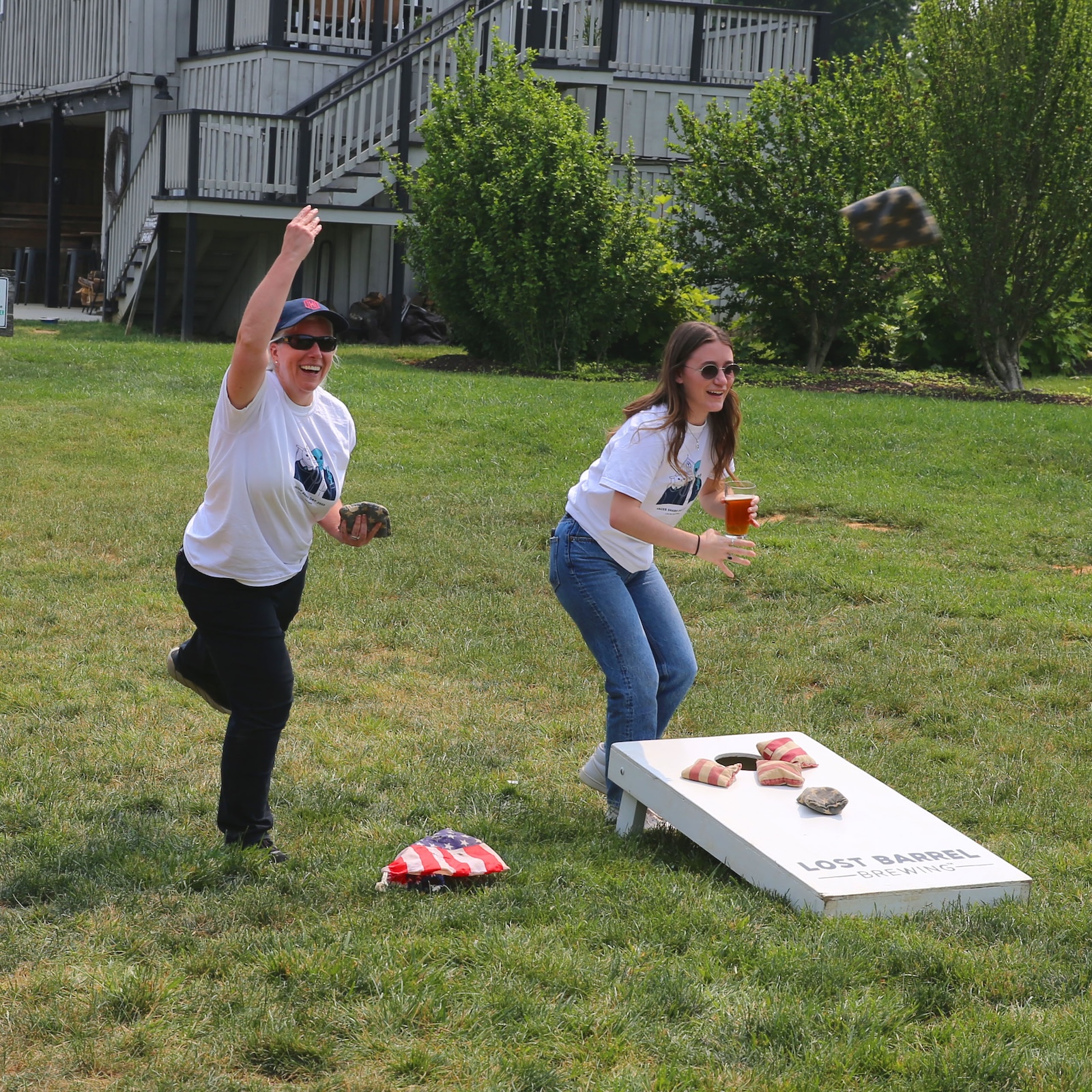
Qualifying employees receive stock at no cost, and representatives from different levels meet through an Employee Ownership Council. The practical benefits are unusually specific: employer-paid individual health coverage, 12 weeks of parental leave, a 3 percent automatic retirement contribution and 16 paid volunteer hours. During one 2023 outing, employees planted more than 7,500 sweet-potato plants for a farm that supplies a food bank. The Washington Post listed 59 local employees when it named Hager Sharp a 2024 Top Workplace.
Ownership is not merely culture copy. It supports the market position. Hager Sharp says it can choose work without serving a holding company's priorities, and it limits its attention to organizations trying to improve health, education or communities. The alternative for a buyer is often a global network such as Edelman, Weber Shandwick or FleishmanHillard, or another specialist in health and public affairs. Hager Sharp's answer is a smaller integrated team, federal purchasing credentials and decades of institutional memory in a few difficult subjects.
What another team can copy on Monday
- Name the action you want before discussing channels.
- Segment by belief and circumstance, not just age or geography.
- Test messages with the people who must use them.
- Treat the medium as a variable, not a tradition.
- Separate reach, response and behavior in the scorecard.
There is a catch. This method needs a behavior that can be named, audiences that can be studied and a client willing to alter the work when evidence disagrees with taste. It is a poor fit when the objective is vague prestige, when legal or political constraints make meaningful testing impossible, or when the timetable allows no learning. Integrated service can then become a tidy pile of deliverables rather than a system.
But under the right conditions, the model is refreshingly plain. Learn what stands between a person and a useful action. Make an idea that respects the person. Put it where they can encounter it. Check what happened. Hager Sharp has spent half a century making that sequence look like communications. Its actual craft is the pause before somebody decides.