Leo had finished painting his house. The leftover paint stayed in the garage. He knew recycling was possible, but believed dropping it off meant showing identification and paying a fee. Both were obstacles. In SGA Marketing’s account of its research for PaintCare, that stalled household chore became a clue: knowing a service exists does little good when people misunderstand how to use it.
SGA sent surveyors into Latino communities in California and Colorado. Its 2015 report said 77% of respondents stored leftover paint and 79% did not know about the locations accepting it. Researchers also encountered the mistaken belief that identification and a payment were required. The proposed next step was a pilot campaign addressing those assumptions. The garage had supplied the brief.
That is a revealing introduction to SGA, a California communications firm whose assignments revolve around water, waste, public health and community participation. Its specialty is social marketing: using marketing methods to encourage behaviors that serve a public purpose. A successful outcome might be a household using a recycling service, an angler changing what goes home, or a resident joining a local program.
The engineer at the kitchen counter
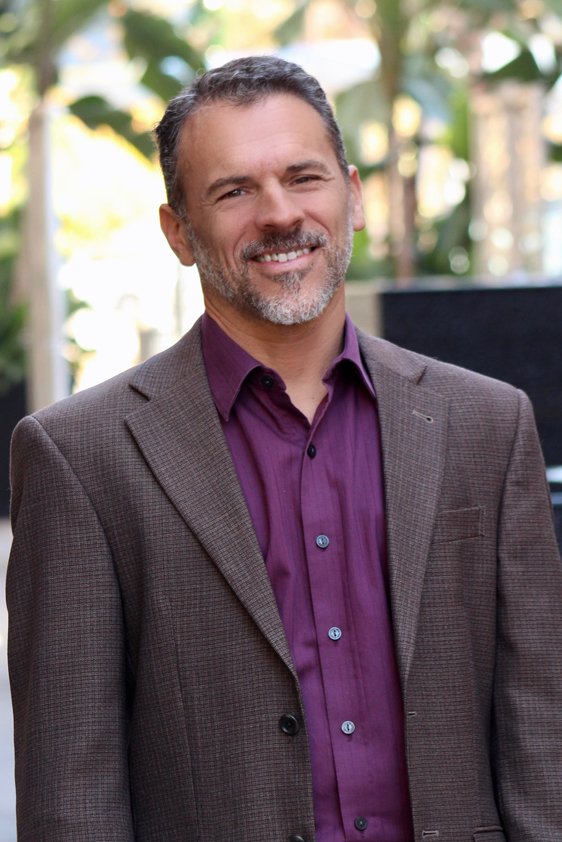
Founder and president Stephen Groner came to advertising by way of environmental engineering. Before establishing SGA in 1998, he worked for the Los Angeles County Department of Public Works. The agency’s origin story gives his first workplace a pleasingly ordinary setting: a kitchen counter, with peanut butter and jelly sandwiches for lunch.
The transition helps explain the business. Public projects have technical requirements, but they also depend on people understanding, accepting and using them. Groner had worked inside the institution trying to make that happen. At SGA, the deliverable could become a public conversation, a website or a campaign, with the same practical concern underneath: will the intended system work when people encounter it?
The company describes its mission as “Helping clients build better communities through marketing.” Its published portfolio gives that sentence some substance. Alongside pollution prevention sit early-childhood awareness, housing-related communication and resource conservation. The common customer is an organization with a public objective that needs residents to pay attention and participate.
A bag beats another reminder
Consider the dog walk. In research for San Bernardino County’s stormwater program, SGA found that being without a bag was a leading reported obstacle to picking up dog waste. The campaign supplied 886 free bag canisters, reminded recipients to attach them to leashes, and later prompted refills and referrals to friends.
In its 2014 write-up, SGA reported that leash attachment rose from 52% to 83% over a year. The follow-up survey covered 190 owners. That measures a useful intermediate action: having the equipment ready. It does not establish an equivalent reduction in waste left on the ground. Still, the intervention is easy to understand. The useful object travels with the behavior it is meant to support.
Water needed a more local story
San Bernardino County also offered a different kind of obstacle. Its stormwater program had noticed weaker engagement with conventional pollution messaging. Community-centered themes, including pride of place and protecting shared water resources, were resonating more strongly with residents.
SGA helped rebrand the program as “Where Water Meets Community,” creating a logo, tagline, brand guide and website. Educational materials and videos carried the approach into public outreach. The work received a California Stormwater Quality Association award, according to the agency’s case study.
The change is instructive for any organization attached to its own technical vocabulary. The program’s underlying purpose remained water protection, while the invitation became easier to connect to everyday life. For a resident, a neighborhood is a place to care about. A program title is something to decipher. The creative assignment was to shorten that distance.
Two routes to the same public-health problem
SGA’s work on fish contamination around the Palos Verdes Shelf shows why one audience label can conceal several different decisions. For the EPA’s Fish Contamination Education Collaborative, the firm developed separate efforts for Asian women and Hispanic male anglers, based on research into the groups it sought to reach.
One effort brought relevant recipes and fish-fillet samples into workshops, including existing community classes. The Los Anglers program used peer connections among people who fished. Meal preparation and choosing what to take home required different conversations.
SGA reports a 93% decline at a test site in contaminated fish taken home by anglers. The location qualifier matters: it is a result from that setting, not a universal forecast. The agency also reports a Silver Anvil award for the public-service work. What a reader can borrow is the attention to distinct decisions and trusted settings, rather than the expectation that a dramatic percentage will travel intact.
Start with the decision someone has to make. Then investigate what makes it difficult.An editorial takeaway from SGA’s campaign work
What $26,000 was meant to buy
A September 2020 RethinkWaste board packet makes the economics visible. It proposed $26,000 for a holiday battery campaign extending earlier outreach. The scope assigned $9,000 to creative materials, $6,600 to multicultural outreach, $6,400 to social media and media buying, $3,000 to monitoring, reporting and meetings, and $1,000 to planning.
The reason for returning was revealing. A preliminary post-campaign survey still found residents uncertain about used batteries, including those embedded in devices. The pandemic had also prevented all elements of the earlier effort from running. Attention had improved; understanding still needed work.
That is the business model in miniature: paid professional services, a defined scope and a client deciding whether another round is warranted. For buyers, the lesson is to reserve money and time for checking comprehension. A campaign’s end date cannot tell you whether the audience is ready to act.
The buyer hires more than a copywriter
SGA sits among specialist social-marketing consultancies, public-affairs firms and environmental outreach contractors. An agency’s own communications staff is another practical alternative. Its proposition combines subject knowledge with research and production: enough understanding of the public problem to ask useful questions, and enough creative capacity to deliver the resulting work.
The research offering includes surveys, focus groups, questionnaires, program reviews and analysis. That work can help a client discover whether the trouble lies in awareness, confidence, access or an incorrect assumption. It also provides a basis for evaluating a campaign against its purpose. A sensible commissioning question is what the research will let the client decide differently.
Creative services include branding, graphic design, videography and website development. Digital work covers social account management, advertising, content and promotions. Those services connect the investigation to the places residents encounter information. A finding in a slide deck still needs someone to turn it into a usable page, an understandable notice or a film worth watching.
Training extends the offer to communication, storytelling, outreach and facilitation. For a public organization, that means the engagement can include improving how its own people explain a program or guide a discussion. The product is professional work tailored to an assignment, with deliverables that range from research findings to finished communications.
From recycling instructions to early childhood
RethinkWaste illustrates the breadth of a continuing relationship. SGA’s case study describes website work, multicultural advertising, public education materials, social media and outreach for waste reduction. The client’s stated audience includes approximately 93,000 single-family households and 10,000 commercial customers, including multifamily properties. Those are service-area figures, not a count of people SGA proved it persuaded.
The relationship continues into more recent public records. In January 2026, RethinkWaste reported hiring SGA the previous October to develop social graphics and copy. Topics included sorting, holiday schedules, seasonal tips and its Coats for Kids program. This is the routine maintenance of useful public communication: information that needs writing and updating long after a website launches.
For FIRST 5 Santa Clara County, the assignment was to expand recognition beyond people already familiar with its early-childhood services. SGA created educational videos, radio spots and digital advertisements to explain the organization’s work and the importance of early childhood investment. Here, awareness was an explicit objective. The intended result needs to match the brief before anyone chooses a metric.
A small firm with several kinds of fluency
The team’s published biographies make the combination tangible. Senior graphic designer Katie Gala holds a public-health master’s degree. Market research lead Charlotte Bloemsma has environmental-science and sustainability training. Community outreach coordinator Angélica Garcia brings design and photography experience alongside Spanish-English interpreting credentials. These are different ways of understanding an audience, assembled inside one firm.
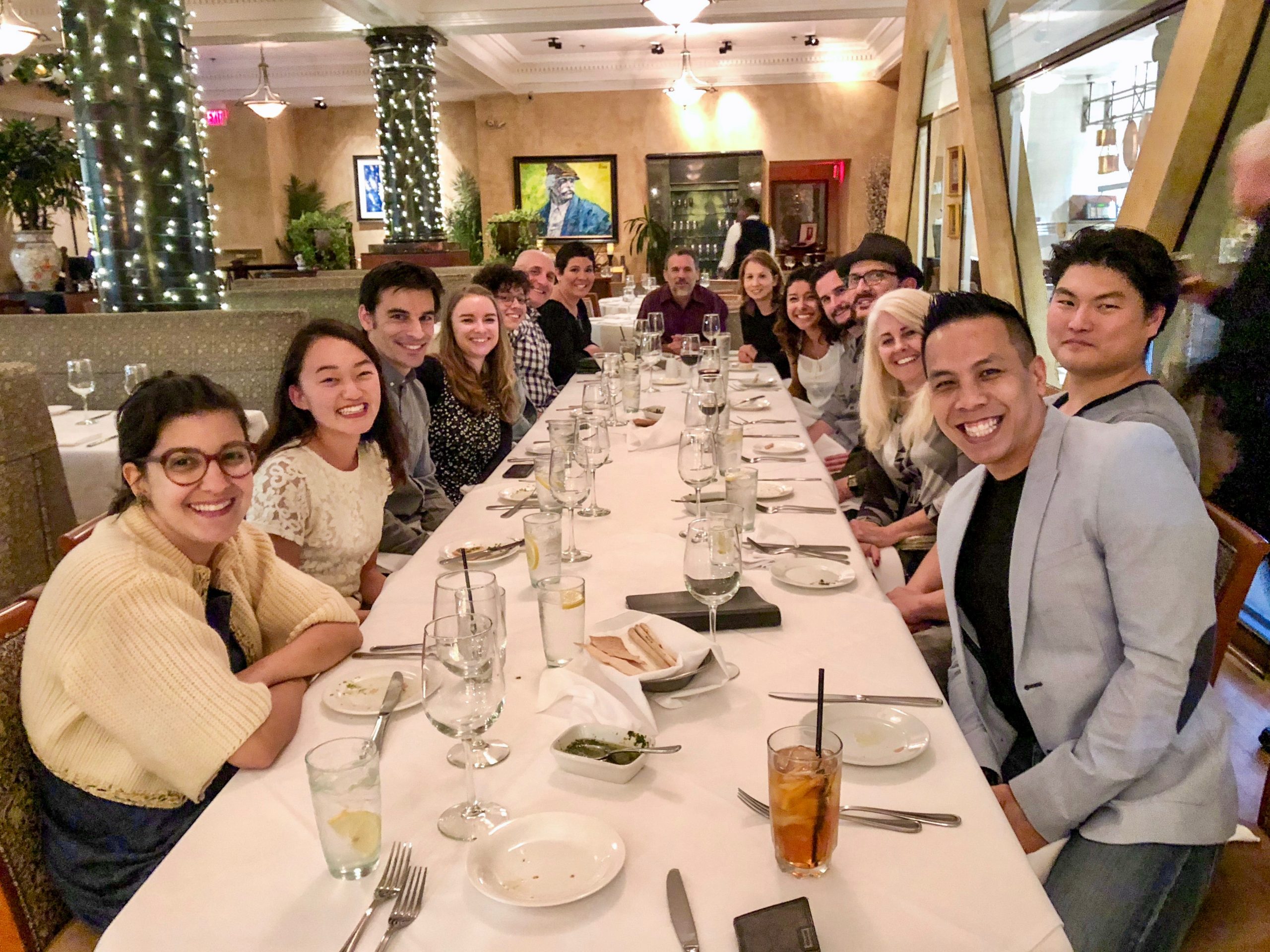
Its community commitments also have a financial expression. In January 2025, SGA announced $50,000 in grants through SGA Gives for organizations supporting more resilient and sustainable California communities. It described its 1% for the Planet commitment as donating a share of revenue regardless of profits. That makes the pledge an operating commitment with a specified basis.
The practical appeal of SGA is clearest when the problem is specific enough to investigate. Who needs to do what, where, and with which service or tool? If the service is inaccessible or the equipment unavailable, communication alone cannot supply it. If the audience is treated as one undifferentiated crowd, the relevant obstacle can disappear inside an average.
For organizations considering this kind of work, the first useful act is to listen closely enough to discover an inconvenient detail. Leo’s paint was already waiting in the garage. The missing information was in his explanation.