There is a peculiar problem hidden inside every public-service announcement. The person paying for it is rarely the person it needs to persuade. A transportation department signs the contract; a driver at midnight makes the decision. A health agency approves the media plan; a teenager decides whether to put down a vape. Somewhere between the conference room and that private moment sits Sherry Matthews Group, an Austin agency that has spent four decades trying to make official advice feel less official.
The business began in 1983 with real-estate clients. It could have stayed a normal regional advertising shop, chasing whichever account had a budget. Instead, founder Sherry Matthews narrowed the field until the constraint became the identity: health, education, transportation, conservation and social justice. The agency describes itself with a line that sounds less like positioning than a refusal: there are fine agencies selling cheeseburgers and chewing gum, but “that’s not who we are.” Cause marketing is not a charitable side desk here. It is the desk.
“This isn’t a division of our company. This is our company.”
The product is a decision
That choice explains the odd breadth of the portfolio. There are seat belts, toll lanes, breastfeeding, opioid treatment, child-abuse prevention, invasive mussels, air quality, tobacco, mental health and orangutans. They look unrelated only if the product is the poster. The actual product is a decision: buckle up, clean the boat, seek treatment, take a sober ride, use transit.
For clients such as TxDOT, Texas health agencies, New York City departments and regional transit authorities, the agency assembles the full persuasion machine. It researches audiences, plans strategy, writes and designs the creative, buys media, handles public relations, builds digital tools and carries the message into schools, festivals and community events. Competitors can sell the same menu. The distinction is accumulated fluency in assignments where a clever line is worthless if it is culturally tone-deaf, medically shaky or impossible to act on.
Two words beat a habit
The most revealing piece of work is not visual at all. TxDOT research found a crack in the familiar phrase “designated driver.” Among some young adults it could mean the person who drank the least, not someone who drank nothing. The agency and its client shifted toward “sober ride.” It is a small edit with large consequences: the new wording closes the loophole and includes the cab, bus or rideshare that gets everyone home.
That is what changed their minds - evidence from the audience, not affection for the old campaign. The same habit showed up during COVID-19. A three-year Texas DSHS campaign began in March 2020 with stay-home and safety messages, then kept changing as the disease, vaccine eligibility and public mood changed. The work drew on eight statewide surveys, 14 interviews with health professionals and dozens of interviews with target audiences. Speed mattered, but so did admitting that last month’s message might now be wrong.
Vapes Down made the same research instinct physical. Texas public-health surveillance helped select outreach locations. The campaign used digital and social ads, but also six high-school football games, six middle-school events, two city squares and a college. A video wall, iPad quizzes, pledge wall, competitions and giveaways turned a health warning into something a student could encounter with friends. The reported result was 114,993 impressions from exhibits and campaign staff - not proof that 114,993 people quit vaping, but a more tangible measure than a video silently autoplaying past them.

The bill is public, too
Public work also makes cost unusually visible. The Texas COVID-19 campaign reported a total three-year budget of $19.9 million. A Texas WIC advertising and marketing contract awarded in 2021 was worth $19 million. Austin’s current public-health marketing agreement carries a $5.4 million authorization through 2027. Charlotte approved a $3.4 million transit communications contract in late 2025. These are program or contract figures, not the agency’s take; they can include media, production and subcontracted work. Still, they reveal the scale of the bet taxpayers place on communication.
The first conspicuous failure in that public record was not creative. It was administrative. A 2023 Texas HHS inspector-general audit found that the agency substantially complied with selected WIC contract requirements, but some payroll invoices were inaccurate or unsupported and subcontractor billing did not consistently follow the required process. The repayment was $1,625. Tiny beside a $19 million contract, it was still the exact sort of control failure a public contractor cannot wave away. Mission does not reconcile an invoice.
There is a second warning in the Charlotte assignment. The contract landed just after serious violence on the transit system, prompting riders and local critics to ask why millions were going to marketing when safety felt more urgent. The timing was incidental, officials said, but the reaction exposes a hard limit. Communication can explain improvements, make services legible and invite use. It cannot substitute for a service people do not trust. The more sensitive the problem, the less advertising can outrun operations.

A constraint worth copying
The transferable idea is not to become a cause agency. It is to choose a constraint strong enough to compound. Sherry Matthews Group’s constraint decides which clients fit, which specialists to hire, which research muscle to build and which past work makes the next pitch credible. A generalist can claim transportation experience after one project. An agency that has worked on tolling, impaired driving, pedestrian safety, seat belts and transit arrives with a library of mistakes already paid for.
The second copyable move is procedural: tie every creative decision to a behavior and every behavior to a credible measure. “Awareness” alone is soft. A phrase people interpret correctly, a field event selected with surveillance data, or a campaign that adapts after a survey gives the team something to improve. This approach is less useful when the audience is too small to research, the desired action is vague, or the underlying service is broken. Under those conditions, integration merely distributes confusion more efficiently.
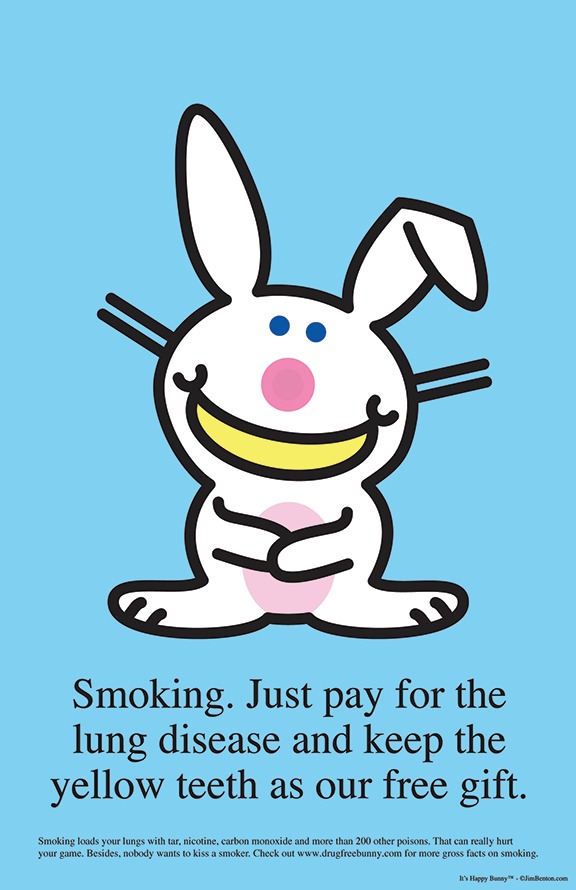
The agency’s mascot logic is a bulldog’s: pick a problem and stay attached. That stubbornness has produced charming oddities - a Happy Bunny anti-drug poster, personality trash cans, even a giant seat belt around the Texas Capitol - alongside sober testimonial films. The common thread is attention in service of action. Advertising usually asks, “Will they remember us?” Sherry Matthews Group’s better question is, “What will they do next?”
See the work move
The company’s portfolio includes campaign films, public-service spots and design work; its LinkedIn page carries agency updates and its careers page shows the house voice in unusually unbuttoned form.