Company Profile / Retail & E-Commerce
The Camera Store That Closes for Shabbat and Still Outsells Everyone
One store. Zero franchises. 400,000 products flying overhead on ceiling conveyor belts - and a checkout button that switches off every Friday at sundown. Here is how a Hasidic-owned camera shop became the gear counter for the entire creative internet.
Walk into the B&H superstore on Ninth Avenue in Manhattan and the first thing you notice is that nobody is carrying anything. Shoppers drift between glass cases empty-handed while their chosen lenses, microphones and hard drives ride overhead in yellow baskets, clattering along conveyor belts bolted to the ceiling on their way to the register. It looks like a factory disguised as a store. In a sense, that is exactly what it is.
B&H Photo Video is the largest non-chain photo and video retailer in the United States, and it runs on a set of choices that most retailers would call handicaps. It has one physical location. It is family-owned and privately held. And it voluntarily shuts down - store, checkout, phones - every Friday at sundown through Saturday night, plus most Jewish holidays and Christmas. By the logic of modern retail, this company should not exist. Instead, it has spent five decades quietly becoming the place professionals go when they are spending real money on gear.
01 / THE ORIGINTwo initials on a downtown storefront
In 1973, Blimie and Herman Schreiber opened a small shop selling film and darkroom supplies in downtown Manhattan. They named it for their initials - B and H - and ran it on a philosophy that has aged remarkably well: be honest, be helpful, know the merchandise, and don't push. In an industry that has always had a reputation for aggressive upselling and gray-market shell games, "don't push" was a strategy, not just a nicety.
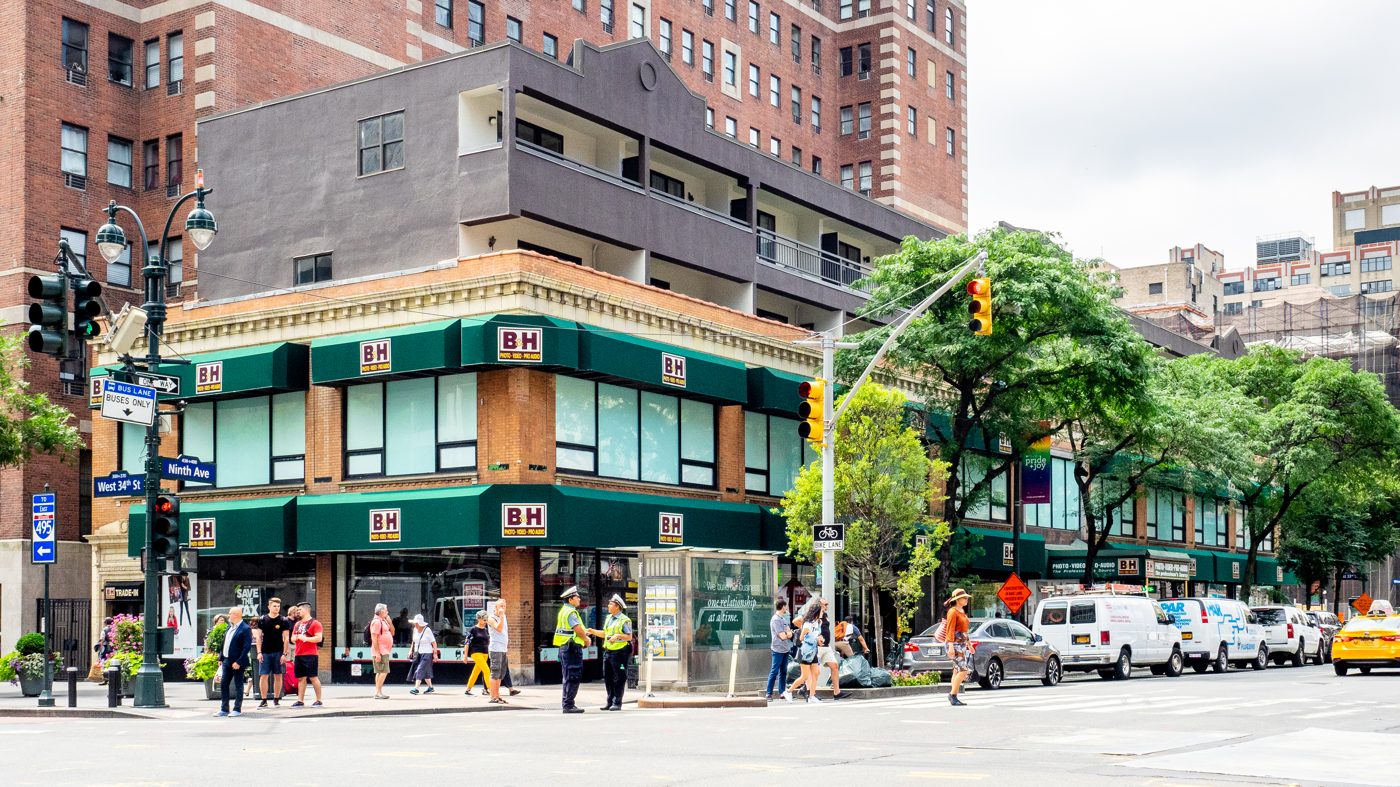
As photography went electronic through the 1980s and 90s, B&H widened its shelves - video, then pro audio, then computers, lighting and grip. In 1996, well ahead of most specialty retailers, it launched bhphotovideo.com. A year later it moved into the sprawling Ninth Avenue superstore it still occupies, later adding a second sales floor. The film-supply counter had become an institution.
02 / WHAT IT ACTUALLY DOESA specialist, not an everything-store
Strip away the folklore and B&H is a specialty retailer with unusually deep inventory. It sells cameras and lenses, cine and broadcast gear, microphones and mixers, lighting, drones, laptops and storage - new and used - across hundreds of brands. The catalog runs past 400,000 items, and the staff are expected to actually understand them. That combination, depth plus expertise, is the whole product.
The customer base splits into two worlds. There is the consumer store that photographers, filmmakers, YouTubers, musicians and audio engineers know - the place you go for your first camera or your fifth cine lens. And there is a quieter B2B arm handling corporate, government, education and house-of-worship sales, wiring up AV systems for schools, agencies and Fortune 500 offices. Same expertise, two very different buyers.
The overhead conveyor system is the part visitors remember, but it is really a tell about how the company thinks. When you pick out a lens on the sales floor, the staffer beams the order down to the basement, where unseen workers load your basket and send it back up on the belts toward the register. You roam the store empty-handed while your gear travels ahead of you. It is theater, yes, but it is also throughput - a physical store engineered to move volume the way a warehouse does, without ever handing a customer a cardboard box to lug around.
"Be honest, be helpful, know the merchandise, and don't push."
The house rule, in force since 197303 / THE BUSINESS MODELWhere the money actually comes from
Here is the counterintuitive part. That famous store is not where most of the revenue lives. The majority of B&H's business runs through bhphotovideo.com, supported since 2017 by a large fulfillment center in Florence, New Jersey. The Manhattan superstore functions as flagship, showroom and proof-of-competence - the place that makes the website trustworthy - more than as the primary cash register.
How B&H makes money (illustrative mix)
Proportions are approximate, illustrating a model where e-commerce leads. B&H is privately held and does not publish a revenue breakdown.
Around the core retail margin sit a few reinforcing pieces. The Payboo store card, launched in 2019 and relaunched in 2022, rebates the equivalent of your sales tax right at checkout - a plain, almost boring benefit that turns out to be enormously sticky. A used-gear department keeps buyers in the ecosystem through trade-ins and resale. And a free education hub called Explora publishes buying guides, tutorials and reviews that pull in readers long before they are ready to spend.
04 / THE SHABBAT PARADOXClosing the store as a strategy
B&H is owned and largely staffed by observant Jews, many from the Satmar Hasidic community, and it keeps the Sabbath the way you would expect a devout household to: everything stops. On Saturdays the phones go quiet, the salespeople go home, and the website - which you can still browse - refuses to take your order until the sun goes down. For a business that competes with retailers who never sleep, this reads like self-sabotage.
It isn't. The closure signals that the people behind the counter operate on principle, and principle is the currency this category actually trades in. When you are about to spend four figures on a lens, "these people won't push me and won't cut corners" is worth more than one extra day of uptime. The constraint became part of the brand.
05 / HOW IT'S DIFFERENTSpecificity against the infinite shelf
The obvious competitors are Adorama, Best Buy, Amazon, and the used-gear specialists KEH and MPB, with Crutchfield and Sweetwater looming in adjacent audio aisles. Against Amazon's infinite, anonymous shelf, B&H bets the other way: narrow category, deep stock, staff who can tell you why one microphone beats another for your room. You cannot ask a search bar what it would use, and you cannot trust a marketplace listing not to be a repackaged return. B&H sells the thing those can't - a point of view.
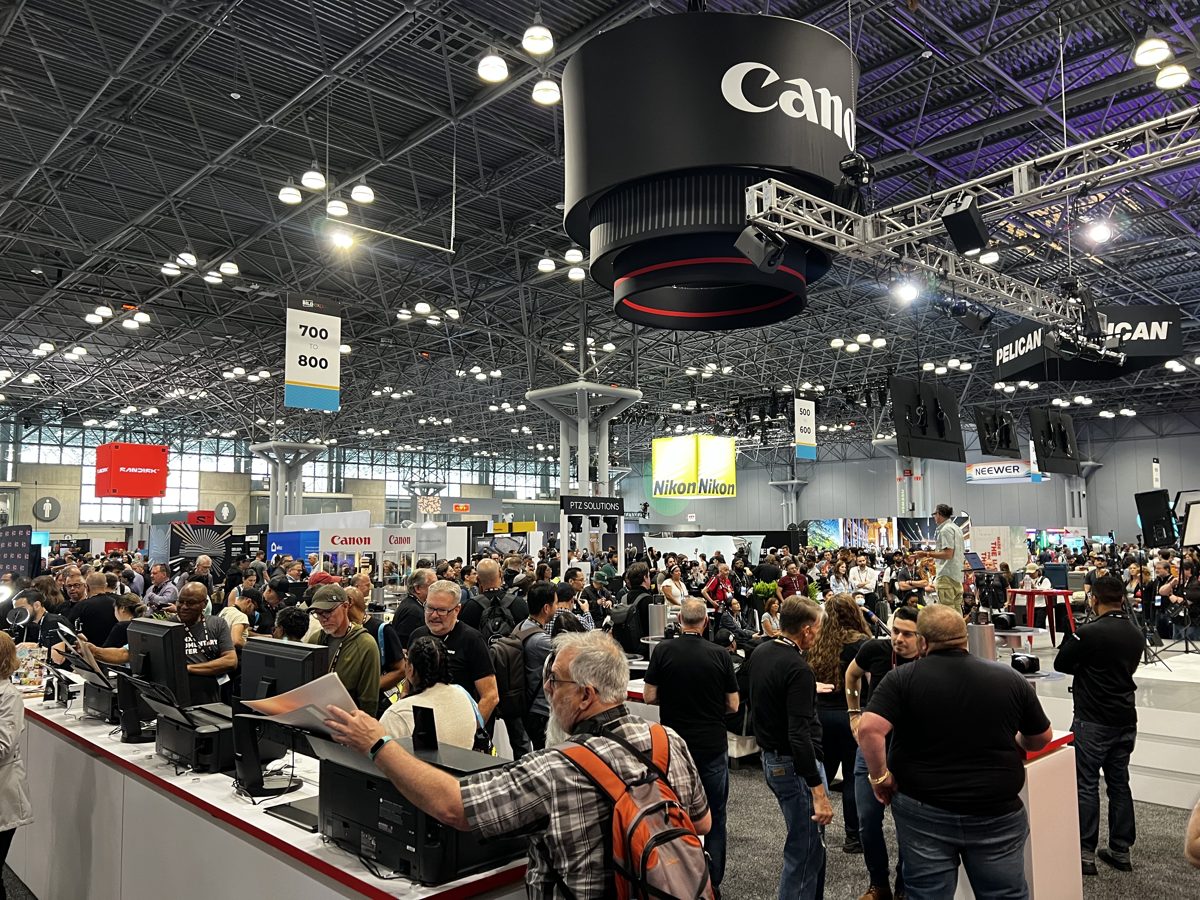
That community instinct is most visible in Bild Expo, the creator conference and gear show B&H launched in 2023 to mark its 50th anniversary. By 2025 it was pulling roughly 50,000 attendees to New York - talks, demos, hands-on booths - the kind of turnout most brands would kill for, thrown by a store as a thank-you note to its own customers.

06 / THE PLAYBOOKWhat a founder can actually steal
The interesting thing about B&H is how little of its growth came from marketing in the usual sense. The playbook is almost embarrassingly copyable: pick a customer and know their world cold; refuse to push product they don't need; publish everything you know for free through something like Explora; and add a benefit so plain - your sales tax back - that people can't quite believe there's no catch. Trust compounds, and compounding trust is a moat that a bigger ad budget can't buy back.
There are conditions where the model wouldn't travel. It leans on scarce, hard-won product expertise, so it works best in categories complex enough that buyers want guidance - it would struggle selling commodities where price is the only question. The single-store, Sabbath-observant shape is inseparable from a specific family and community; you cannot bolt it onto a faceless chain and expect the same credibility. And the whole thing depends on a promise never to push, which one aggressive quarter of upselling would quietly dissolve.
07 / WHERE IT FITSThe default counter for the creative internet
Fifty years in, B&H occupies a strange and enviable spot: it is simultaneously a beloved local landmark and a global default. The first-time buyer and the working cinematographer end up in the same cart flow. The store has been named repeatedly by Newsweek for customer service and listed by USA TODAY among the country's most-trusted brands - recognition that maps neatly onto that original four-word rule. In a retail era defined by everything, everywhere, all at once, B&H made a business out of one store, one specialty, and one promise, kept.
- 1973A film-supply counter opens
Blimie and Herman Schreiber open B&H in downtown Manhattan.
- 1996Going online early
bhphotovideo.com launches, well ahead of most specialty retailers.
- 1997The Ninth Avenue superstore
B&H moves to its landmark location near West 34th Street.
- 2017Fulfillment scales up
A large fulfillment center opens in Florence, New Jersey.
- 2019Payboo debuts
The store card rebates the equivalent of sales tax at checkout.
- 2023 - 2025Fifty years, then Bild Expo
The 50th anniversary launches Bild Expo, which draws ~50,000 by 2025.