Atiq Raza used to think managers were stupid. He said so himself. As a young engineer, he could not understand why the people above him failed to explain how his work connected to the company’s financial aims. He argued. He was impatient. Years later, he found himself responsible for engineers who presented a wonderfully familiar management problem: they were very good, and they knew it.
There is a pleasing economy to this arrangement. The employee who wanted an explanation eventually became the person who had to provide one. Raza’s career, usually described through the companies on his résumé, becomes more interesting when viewed through that reversal. Someone had to connect the circuit to the customer. Someone had to persuade the people building it that the commercial problem deserved their attention.
That responsibility followed him through NexGen and AMD, into the companies he helped build, and eventually to cybersecurity at Virsec. The products changed. The awkward distance between an invention and a working business kept giving him something to do.
Before the corner office, three kinds of science
Raza was born in Lahore. His education crossed institutions and subjects: physics at the University of the Punjab, electronic engineering through the University of London, then materials science and engineering at Stanford. He arrived in the United States in March 1979. The route gave him several ways to examine a technical problem before it gave him a familiar Silicon Valley job title.
His early American career included VLSI Technology, where he held management positions and became president of Technology Centers. Getting into management involved more than knowing the engineering. He later recalled the discomfort of entering a senior executive meeting and sensing that others thought he had wandered into the wrong room. Being able to do the work and being accepted as someone who should lead it were separate hurdles.
He enjoyed classical fiction and business literature, interests he was discussing publicly by 1997. It is a small detail beside the processors, but a useful one. His interests extended to the behavior of organizations and people, subjects that would become difficult to avoid once he was responsible for both.
A design looking for a factory
Raza joined NexGen in September 1988 as executive vice president, responsible for engineering, marketing and prototype manufacturing. That collection of duties put the laboratory and the market in the same brief. He became president and CEO in 1991, and chairman in May 1994. The company was trying to make a place for itself in the Intel-compatible processor business.
NexGen’s position contained a practical difficulty. It designed chips without owning the factories that would produce them. AMD had manufacturing capacity and needed a stronger processor design. In late 1995, the two companies agreed to combine. A transaction announced at $865 million joined businesses with conspicuously complementary problems. The acquisition closed on January 17, 1996.
design
capacity
The acquisition closed in January 1996. The K6 followed in 1997.
Raza entered AMD as senior vice president and chief technical officer. In 1997 he became executive vice president and joined the Office of the CEO. Co-chief operating officer followed in October 1998; the presidency came in 1999. His responsibilities widened as the combined organization tried to turn its engineering into a dependable competitive offering.
The product at the center of that effort was the K6. Its arrival in 1997 gave AMD another way to contest the PC processor market. For Raza, the acquisition had supplied resources. It had also enlarged the coordination problem. A design team and a manufacturer still had to behave like a company with a product to deliver.
The people inside the processor
Vinod Dham, who had worked on Intel’s Pentium, joined NexGen and worked with Raza on the K6. Dham came from India; Raza came from Pakistan. Their collaboration attracted attention for that pairing, although the daily business was less picturesque: divide responsibilities, organize the combined resources and keep the development effort moving.
Raza described taking personal responsibility for the chip’s development when others doubted the project. He spoke about long hours, close control of revisions and the work of clearing bottlenecks. These are unglamorous details, which is partly why they matter. An ambitious processor project could be delayed by a succession of quite ordinary failures of coordination.
By the time he reflected on managing engineers in 2003, his earlier irritation had become a useful memory. He knew that technical people needed to understand how their work related to the company’s purpose. At AMD, he tried to communicate business objectives to the engineers building the processors. The explanation he had wanted as an employee became part of his job as a boss.
“I thought managers were stupid.”
Atiq Raza, remembering his younger self, 2003
There is candor in the admission, and a warning for anyone tempted to frame an engineer’s impatience as a complete management philosophy. Eventually the brilliant people need a schedule, a customer and each other. Raza had acquired responsibility for making those relationships work.
Bring your own engineers
After leaving AMD in 1999, Raza built Raza Foundries. The name suited an investor who wanted to participate in making the company. Its model put veteran engineers and executives beside entrepreneurs to help define products, tackle technical questions and reach customers. Capital came with people willing to get involved in the work.
That distinction mattered during the period when an internet incubator could promise almost anything with a straight face. Raza was dismissive of businesses he considered too easy to form. His portfolio included companies doing semiconductor and communications work. AuroraNetics went to Cisco in 2001; Pacific Broadband Communications went to Juniper that same year.
RMI extended his involvement in processors into networking and communications. He founded the company in 2001. By 2009, NetLogic was describing a business with multicore and multithreaded processors used across networking, storage, communications and security. The PC had ceased to be the only interesting place to put computing power.
NetLogic’s acquisition of RMI closed in 2009, and Raza became a chief technology advisor. The rationale again included the advantages a larger company could offer a smaller processor business. Customers wanted financial strength, continuing investment and confidence in long-term support. Buying a component also meant making a judgment about the company that stood behind it.
The next problem could be elsewhere
Raza’s interests did not stay inside microprocessors. In 2010, he was an entrepreneur in residence at Khosla Ventures and interim CEO of battery company Seeo. He discussed energy density, charging and the demand created by mobile devices. The materials science degree had company in his working life.
He also remained willing to think about another multicore processor business, while stopping short of announcing one. His answer to a question about future opportunities ended with an invitation to ask again in three years. Technical curiosity had survived the acquisitions. It had not obliged him to pretend that every interesting possibility was already a business plan.
Optical switching at Calient supplied another chapter. Alongside operating roles, board work connected him to companies including Arteris and Weebit Nano. At Arteris, he joined the board in January 2014. In July 2019, he became a non-executive director at Weebit. These roles placed him around new engineering decisions after his PC processor work.
A rival worth calling
Virsec reached Raza through David Furneaux, an investor with whom he had worked before. The proposition concerned identifying attacks on running software. Raza became interested in the way the company examined code in memory, then sought another technical opinion. He consulted an architect at Cavium whom he described as a former rival.
Competition had left him with someone whose judgment he valued. He invested in Virsec, joined its board and became executive chairman. When prospective institutional investors made his becoming CEO a condition of their investment, he was already running Calient. He nevertheless took the job. By then, the technical question had become a commitment.
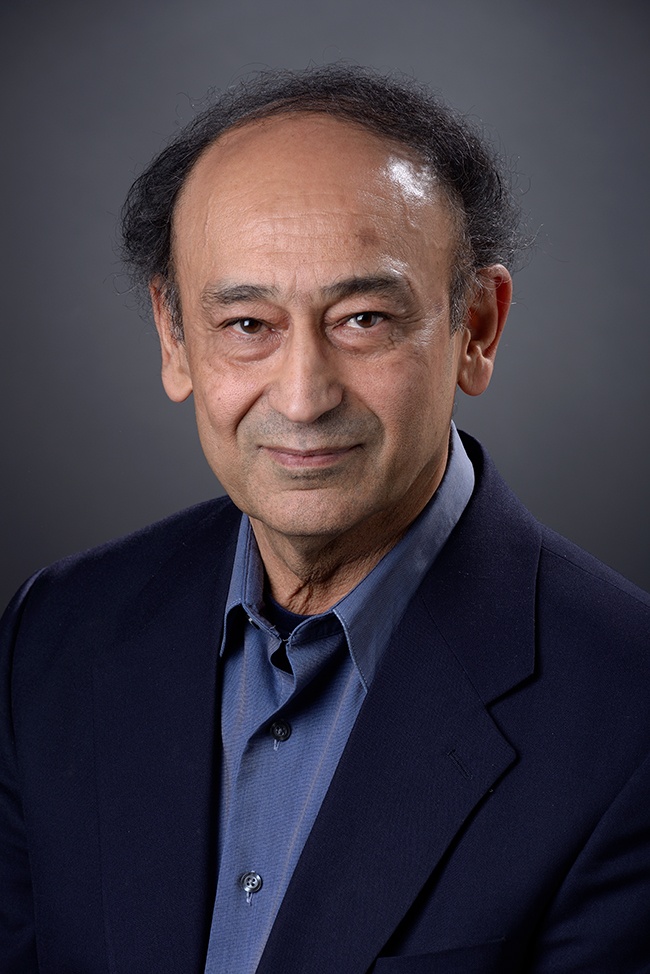
In March 2018, Virsec announced a $24 million Series B round. Investors included technology executives from the semiconductor and security worlds. For Raza, the company brought an old area of expertise close to a different commercial problem: what should software be allowed to do while it is executing?
Virsec’s approach centered on protecting applications during execution. The attraction for a processor veteran is understandable. The action occurs underneath the ordinary user’s view of a program. The business question remains visible enough: can an organization trust the software on which it depends?
The product brief survives the title
In June 2020, Furneaux became Virsec CEO. Raza moved to executive chairman, continuing to work on product delivery and technological development. Furneaux’s brief emphasized operations and the company’s approach to sales and marketing. Responsibility moved around the table as the business entered another stage.
That division makes an apt late chapter in Raza’s working story. He had spent years taking on wider executive duties. Here, a change in title preserved an explicit connection to the product. The work that first attracted him to the company remained part of the assignment.
His public life also includes speaking beyond the companies. In August 2023, The Black Hole in Islamabad scheduled a conversation with him moderated by physicist Pervez Hoodbhoy. The journey from Lahore’s classrooms to Silicon Valley’s management rooms had become something to discuss with an audience back in Pakistan.
The young engineer’s complaint still offers a useful way into everything that followed. Explain how the work connects. Explain why the customer needs it. Give the people doing the difficult technical part a reason to care about the rest. After decades of chips and companies, Raza’s story keeps returning to the business of getting a good idea out of its own way.