Alaa Halawa went to Silicon Valley in 2011 for an assignment expected to last six months. It lasted three years. A temporary posting had acquired the dimensions of a life decision, although the original brief was more prosaic: help with an executive transition in Mubadala’s semiconductor business. Careers sometimes turn on a grand revelation. This one turned, in part, on an assignment that overran its booking.
Today, Halawa is the co-founder and CEO of Salma Health, while continuing his investment work at Mubadala Capital. The distance between those titles and that first assignment contains several different kinds of work: engineering, product management, corporate strategy, investing and board service. Follow the jobs in order and the founder becomes more interesting than a list of investments would suggest.
Before the term sheet, the semiconductor
His undergraduate training was in electrical engineering at the University of Jordan. Early work at the telecommunications startup Globitel included managing the installation of data-center racks; later, he oversaw product lines. It is a pleasingly physical beginning for someone whose later career would involve the comparatively abstract business of allocating capital. There were racks before there were rounds.
He joined Mubadala in 2009. In Abu Dhabi, the work involved designing and developing a semiconductor technology cluster through partnerships with Silicon Valley companies and academic institutions. The assignment joined industrial strategy to practical relationship building: bringing research, businesses and institutions into a common undertaking. Technology was only part of the job. The arrangements around it mattered, too.
That work led to the Bay Area and GlobalFoundries, where Halawa took on strategic, corporate development and transformation initiatives. His subsequent employment history includes a director role at GlobalFoundries from January 2014 to February 2015, followed by a director role at Synaptics from February 2015 to March 2017. Those were company roles; his later board appointments belong to a separate chapter.
The sequence gives his investment career a particular starting point. He had worked within technology businesses before he began helping finance them. Semiconductor partnerships, leadership transitions and corporate development each place a different demand on an executive. A useful idea still needs an organization capable of carrying it, and an organization occasionally needs somebody willing to work through a transition.
- JordanElectrical engineering
- Abu Dhabi · 2009Mubadala & semiconductor partnerships
- Silicon Valley · 2011Company strategy & transitions
- Cornell · 2016MBA completed
- Salma · 2024Co-founder & CEO
An acceptance letter, with company
Halawa earned his Cornell MBA in 2016. His acceptance had arrived on the same day he and his wife learned they were expecting twins. The next stretch of his life included becoming a father to two sons, completing the degree and developing a new career in investing. The calendar, apparently, had received no request to be reasonable.
By 2016, he was laying the groundwork for Mubadala Capital’s ventures business. The formal executive director role began in March 2017. The change connected his technical and corporate experience to a new responsibility: deciding which young businesses to back, and how to support them as their ambitions met the cost of execution.
There is a temptation to make every previous job look like preparation for the final one. Halawa’s chronology is more useful when allowed to retain its turns. Engineering came first. Corporate roles followed. The MBA added a business qualification. Investment responsibilities then became an established part of his work. Each move enlarged the range of decisions he would be expected to make.
“One needs to work very hard to find one’s self in the right place at the right time.”
Alaa Halawa · 2019
The investor who stayed for the next round
In September 2020, Halawa described the San Francisco ventures platform’s original ambition: form early partnerships with founders, then support their companies over time. Recursion was his example. Mubadala first invested in its Series B in 2017, and later increased its commitment as the company developed. By the Series D, the relationship could draw on Mubadala Investment Company’s balance sheet as well.
The distinction concerns the investor’s staying power. An early check establishes a relationship. Subsequent financing asks whether that relationship can keep pace with a growing company. Halawa’s account emphasized the ability to bring additional resources into a business already backed by the ventures platform, rather than treating each stage as the end of the previous conversation.
His remit has since encompassed ventures, growth and private equity. Those stages give an investment organization several points of contact with a company’s development. Halawa’s listed investments include Recursion, Insitro, Innovaccer, Unlearn and Alloy Therapeutics. The names are less revealing than the recurring structure of his argument: begin early, keep assessing progress, and retain the capacity to participate again.
He has also spoken publicly about computing outside that portfolio grouping. In an IonQ announcement in October 2020, he pointed to decades of research, accumulated experience and demonstrated technology. It was a recognizably technical way to explain an investment. The engineering background had not disappeared beneath the financial vocabulary.
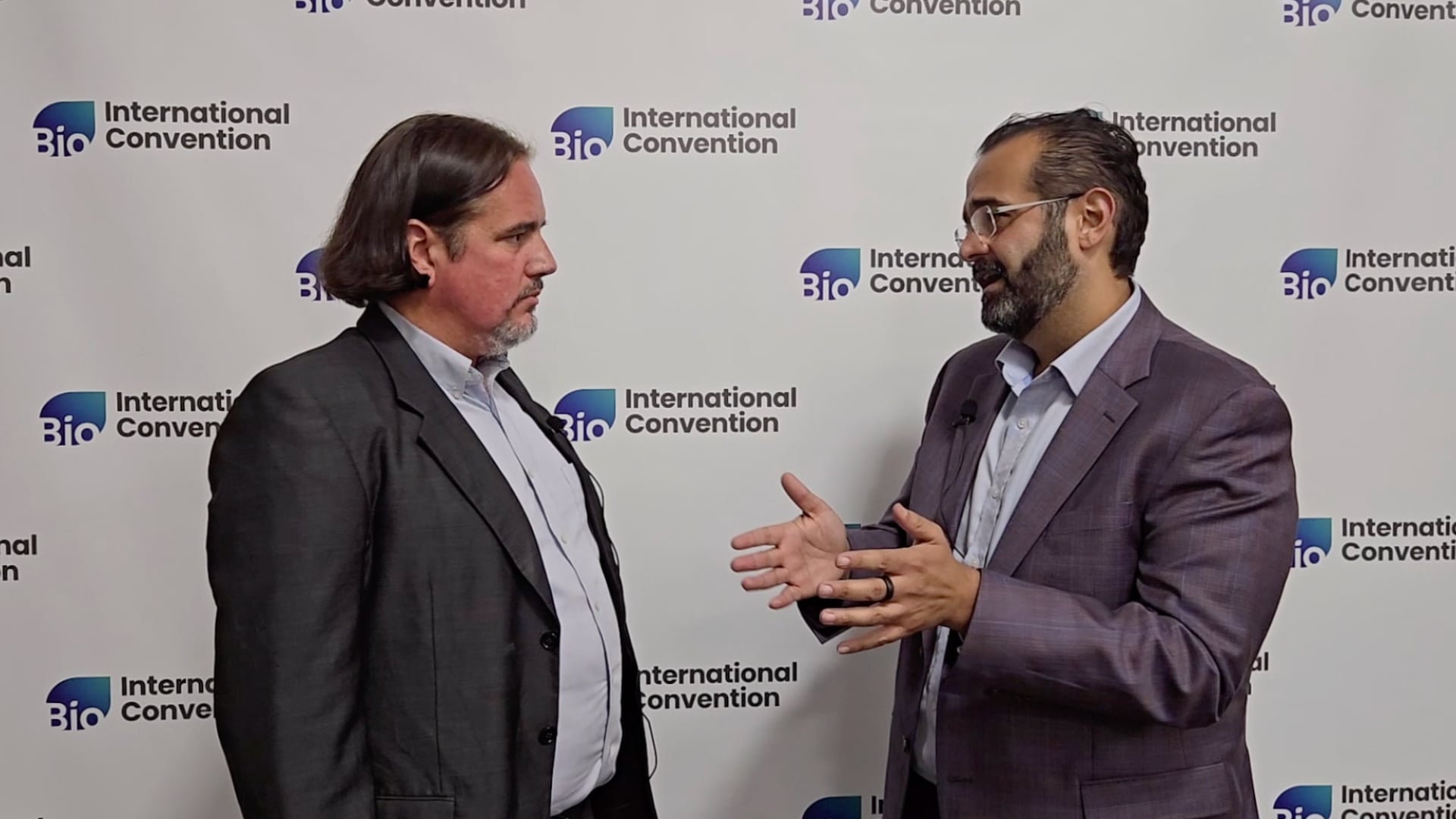
A seat at somebody else’s beginning
In June 2021, Halawa published a conversation with Recursion co-founder Chris Gibson following the company’s public listing. His questions covered the original decision to start a company, the evolution of its vision, going public and advice for founders and investors. A financing milestone supplied the occasion. The discussion spent considerable time on what had made the company possible.
One question turned to Gibson’s interest in supporting founders with less traditional backgrounds through Altitude Lab. Gibson described difficulties finding space and mentorship early on, and the later opportunity to make resources available to other teams. Halawa’s interview allowed room for the network around a founder: the people, facilities and practical assistance that sit behind the more visible milestones.
That same month, Halawa was named a founding member of Altitude Lab’s Investor Coalition. The group set out to connect startups in Utah with capital, mentoring and professional networks. It announced a collective investment goal of $50 million over three years. That figure was a coalition ambition, rather than a personal pledge or a completed investment total.
Participants included Andrea Jackson, Austin Walters, Greg Yap, Nan Li and others across the investment community. The program also offered workshops, guidance and access to a shared facility. For a founder without an established network, an introduction and a place to work are practical resources. They come before the announcement photograph, when the business still needs somewhere to put its ambitions.
Halawa’s involvement adds a concrete activity to his stated interest in backing founders. It also expands the geography of the story. His own work had crossed Jordan, Abu Dhabi and California; the coalition put another set of company beginnings, in Utah, within that professional orbit.
What he said when money became expensive
By July 2022, Halawa was writing about a less comfortable financing environment. After a panel with Alexis Borisy, Robert Nelsen, Jim Tananbaum and Michael Gaito, he described pressure on valuations and changing investor behavior. His resulting advice for founders was practical: keep attention on fundamentals, concentrate spending on the assets most likely to create value, and choose investors aligned with the company’s longer-term direction.
Keep the fundamentals in view.
Put resources behind the core assets.
Choose investors who share the horizon.
He also emphasized management teams and the people needed to build enduring organizations. The discussion considered investment groups that could support a company across its life cycle, rather than assembling a round solely to maximize one investor’s ownership. His concern was what the financing arrangement would allow a company to do next.
It is a revealing set of subjects for someone who would later take on a founder’s operating role. Priorities, people and financing all compete for an executive’s attention. The advice addressed the choices that remain after the pitch has worked: how much to spend, where to concentrate it, and which partners can remain involved when circumstances change.
His own name on the operating plan
In October 2024, Halawa became Salma Health’s co-founder, CEO and a board member. The company’s public launch followed on February 26, 2026, accompanied by an announced $80 million Series A. Mubadala Capital and ARCH Venture Partners co-led the financing, with participation from Lingotto Horizon and other investors, including Averin Capital.
The founding team also included Ayman AlAbdallah, Brandon Bentzley, Emily Phillips-Bru and Zeena Ojjeh. AlAbdallah had appeared alongside Halawa on the BIOS podcast in September 2021, when both worked at Mubadala Ventures. The later company brought an established professional connection into a new setting, with Halawa responsible for running the business as well as helping establish it.
In his launch post, Halawa described work on unit economics, operating structure and enabling technology. Those are familiar subjects from the earlier chapters of his career, now gathered inside a company he co-founded. He also stated that his team remained engaged in investing and working with portfolio companies. His professional life had added another operating responsibility.
The career can be read through a series of increasingly involved relationships with companies: an employee working on products, an executive working on strategy, an investor committing capital, a director serving on boards, a co-founder taking the CEO role. The six-month visitor to Silicon Valley stayed long enough to encounter all of those assignments. The latest one gives him another operating plan to deliver.
Follow the conversation
Writing, interviews and the career behind the company.
- Alaa Halawa on LinkedIn ↗
- Alaa Halawa on X ↗
- His essays and founder conversations ↗
- Salma Health ↗
- Mubadala Capital leadership ↗
- Cornell’s 2019 alumni profile ↗
- 2026 board biography and career dates ↗
- His July 2022 funding essay ↗
- The 2021 Altitude Lab coalition announcement ↗
- Watch: the June 2024 BiotechTV interview ↗
- YouTube: a conversation with Abhinav Shashank ↗
- Listen: Halawa and Ayman AlAbdallah on BIOS ↗