Ashhad Syed had built the product. The customers had other plans. In 2008, his idea was to bring live chat to the new generation of smartphones, letting businesses use the devices for customer conversations. The technology offered a plausible future. Businesses were not yet ready to conduct live chat that way. A working prototype, it turned out, could answer a question that too few people were asking.
There is a particular awkwardness to being early. The thing works; the sales argument does not. Syed’s next move was to look at a different use for the chat technology he had built. Online advertisers were paying to bring people to their websites. Those visitors could leave without making contact. Helping a business turn an existing visit into an enquiry offered a more immediate reason to buy.
That change became the foundation of ApexChat, the company now called Blazeo. It also establishes the central thread in Syed’s career: how a business acquires a customer, and what happens when technology meets the work of answering that customer. The smartphone was an initial delivery mechanism. The enquiry was the more persistent problem. A prospective buyer does not have to admire the engineering to need an answer.
The useful detail here is that Syed built the first version. He had something concrete to change, rather than just a thesis to defend. The eventual service would pair software with people who could handle conversations for clients. That required a broader business than putting chat on a phone. It also required another founder with a different set of skills.
A co-founder, found online
Syed went looking for someone experienced in sales and marketing. He found Jim Bert on Partnerup.com, a website designed to connect entrepreneurs seeking business partners. The two came together in 2008. It is a pleasingly literal origin for a company concerned with making useful connections: before the customers could start talking, the founders needed an introduction.
Bert took on business development while Syed brought the product. The early offer relieved a customer of two jobs at once. ApexChat supplied the chat technology, and its own employees took the conversations around the clock. A business could add chat without making its existing staff responsible for every visitor who opened the window. Installing a new means of contact was only half the arrangement; someone would be there to use it.
The original commercial terms carried the same practical emphasis. The service charged for qualified leads delivered, rather than the raw number of chats, and offered no long-term agreement or minimum charge. That distinction mattered to the proposition. A long conversation could be perfectly polite and commercially useless. The customer was buying a route toward potential business, with the conversation serving as the means.
ApexChat began selling its services in 2010 without outside investors. Its early partner network included marketing companies that could offer the service under their own brands. This put Syed’s product alongside the work of people already responsible for bringing visitors to clients’ websites. The handoff was close to the problem: an agency could generate the visit, then help arrange what happened when the visitor wanted to speak.
The work before the first salesperson
Syed had already spent years around the machinery of customer acquisition. Before ApexChat, he was a principal at Ibex Solutions, a professional services business associated with CRM integration. He also started two businesses in internet lead generation and lead management. These were related territories: finding potential customers, keeping track of them, and making the systems involved work together.
His education spans the technical and commercial sides as well. He holds a Bachelor of Science in Electrical Engineering from Cornell University and an MBA from the Wharton School at the University of Pennsylvania. Degrees cannot explain a founder’s decisions for him. In this case, they sit alongside a career that repeatedly involves both building a system and asking how a business will use it.
During ApexChat’s first years, the focus was on developing the platform and serving the initial customers. Word of mouth supplied early growth. The company hired its first salesperson, David Scheppler, in 2013. The sequence is revealing without needing embellishment: product development, customer work, referrals, then a dedicated sales hire. There was a substantial operating period before a formal sales role entered the picture.
That history gives the familiar word “bootstrapped” some texture. There were conversations to staff as well as software to maintain. Each additional client brought an operating responsibility along with a commercial opportunity. The product’s promise depended on availability, so the service had to continue working after the demonstration ended. A chat window makes a fairly public promise. Visitors are entitled to notice when nobody answers.
The office closes. The enquiry does not.
In March 2024, Syed put a number on the mismatch between business hours and customer behaviour. He said 59 percent of the leads Blazeo generated arrived outside normal business hours. This was a company-reported figure about its own activity. Its significance was straightforward: for that business, much of the opportunity appeared while a conventional working day was over.
of leads generated outside normal business hours
His examples included plumbers, HVAC businesses, carpenters and law firms. These are businesses whose staff have work to do beyond monitoring a website. The same person who is qualified to answer a customer’s question may be occupied with an existing job. Extending responsiveness means solving a staffing and routing problem as well as a messaging problem.
Syed’s response has included both automation and human agents. “Advanced AI in combination with live agents is our formula,” he said in 2024. The pairing is central to the offer. Customers can communicate by text, chat or phone, while the company combines its technology with people who handle enquiries. The operational question remains what happens to an interested visitor once that person starts a conversation.
A useful way to read his position is through the division of work. Speed can help an enquiry get acknowledged; someone still has to gather relevant information and move it toward an appropriate next step. The service makes room for appointment setting and, for legal clients, retainer signing. The commercial ambition follows the enquiry beyond its opening line. Hello is a beginning with quite a lot of administration attached.
A name that had become too small
ApexChat announced its change of name to Blazeo on March 18, 2024. By then, the company described an offering that included call-centre services, SMS, appointment setting and other conversion tools. The old name foregrounded one channel. The newer business was following a customer through several of them, with services extending from capturing an enquiry to qualifying it and helping complete the next action.
At the rebrand, Blazeo reported having helped 35,000 businesses and generated more than 15 million leads. It also described a workforce of more than 400 across offices and remote locations. Those figures are company claims, rather than a personal scorecard for Syed. They describe the operating footprint of an idea that began with a founder building an early product.
The geographical reach had widened too. Blazeo described serving businesses across North America, Australia and New Zealand. The local business remained the unit of attention, even as the service crossed borders. A tradesperson’s service area may be small; the work of receiving and organising an enquiry can be shared across a much larger operation.
Another seat at the table
There is a second organisation in Syed’s story: Mentors Fund. Its founding account names him among the entrepreneurs who joined as founding partners in 2017. The fund was organised around participants contributing capital, experience and connections to young technology businesses. Its partners could take part in sourcing opportunities, evaluating companies and mentoring founders.
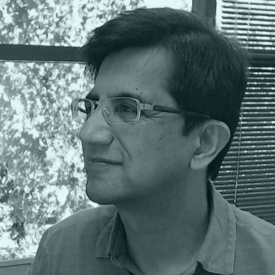
The arrangement placed operating experience inside the investment model. Partners could vary their time commitment, while an investment committee governed committed capital. The model rewarded contributions to sourcing, evaluation and advice. Syed joined that group with experience of building a product, finding a commercial partner and running a business that combined software with a staffed service. Alongside his own company, there was now an organisation designed to support other entrepreneurs.
Away from those organisations, Syed is based in New York. He has a more everyday request for the people around him: restaurant recommendations. The city’s range of places to eat has become an interest since his move there. It is a small personal detail, but a welcome one in a biography otherwise populated by lead records, conversion tools and very attentive chat windows.
Following the conversation further
On November 18, 2025, Blazeo announced SmartHub. The product brought voice, chat, SMS, email, appointment scheduling, automation and lead management into a shared platform. Its design addressed a problem that can follow a successful first response: the next exchange may happen somewhere else. One enquiry can accumulate several conversations before it becomes a booking or a decision.
“Every second a lead waits is a deal slipping away,” Syed said at the launch. SmartHub’s announced functions included keeping interactions together in a lead record, sending follow-ups, updating statuses and letting prospects book appointments. The announced functions show where he has taken the original concern about responsiveness: keeping a conversation organised as it moves between channels and next steps.
“Every second a lead waits is a deal slipping away.”
Ashhad Syed · SmartHub launch, November 2025
The distance from the early smartphone prototype is considerable, but the continuity is visible. Syed started by trying to make a new device useful for business conversations. He then built a service around answering website visitors and expanded into the work that follows an answer. His career has kept returning to the passage between attention and an actual exchange.
That passage is easy to overlook because it happens after the advertisement has done its visible work. Someone has arrived. Someone has a question. There is still a chance to lose them. Syed has built much of his working life around giving a business a way to be present at that moment. The original phone could wait. The person trying to reach the business usually has other options.