Imagine choosing an office by its photograph. The chairs look comfortable. The windows are generous. Then everyone arrives, conversations ricochet across the room, and a meeting next door becomes involuntary entertainment. The photograph omitted the acoustics. Armstrong World Industries makes products for precisely this sort of overlooked problem: ceilings and walls that influence how a room sounds, looks and gets built.
- The product: acoustic ceiling systems, specialty walls and custom architectural surfaces.
- The buyer: commercial project teams, distributors and building owners, with residential products available too.
- The useful idea: sell the panel with the expertise needed to specify and install it.
The quiet part of the room
Start with two abbreviations. NRC describes sound absorption within a room. CAC describes how a ceiling system blocks airborne sound passing between adjacent enclosed spaces through the shared space above their ceilings. A panel can perform well at one and poorly at the other. Armstrong’s Total Acoustics framework asks buyers to consider both. A quiet room and a private room are different design assignments.
Different ratings. Neither replaces a complete acoustic design.
That distinction matters to the people specifying classrooms, healthcare facilities and offices. Armstrong sells mineral-fiber panels for these everyday interiors, alongside metal, wood, felt and other architectural products. Its competitors include USG and CertainTeed in conventional acoustic ceilings. The interesting competition concerns the whole job: acoustic performance, appearance, availability, installation details and whether the designer’s drawing survives contact with the construction schedule.
The scrap pile had another use
The business began somewhere less glamorous than an architectural showroom. Thomas Armstrong opened a cork-cutting shop in Pittsburgh in 1860. The company’s history describes a 65% scrap rate and the development of a sound-absorbing product from that waste. What looked like a disposal problem contained another product. It is a useful origin for a manufacturer whose contemporary recycling program sends old ceiling material back into production.
“Let the Buyer Have Faith.”
Thomas Armstrong’s historic company motto
The history also contains a much harder reckoning. Armstrong filed for Chapter 11 in December 2000 to resolve asbestos-related liabilities, emerging in 2006. That episode belongs beside the account of product invention and customer trust. A material’s consequences can outlast its sale by decades. The present company’s material-health disclosures and recycling requirements deserve to be read with that long industrial history in view.
The drawing is part of the sale
The Armstrong many people remember also sold floors. That business separated in 2016. Today’s company organizes operations around Mineral Fiber and Architectural Specialties. One serves recurring needs for acoustic ceiling systems; the other adds more design-led materials and custom work. Distribution and direct project sales turn manufactured products into revenue. The WAVE joint venture with Worthington Enterprises supplies the suspension grid that helps make the ceiling a system.
Then comes the friction between choosing a surface and installing it. Armstrong’s ProjectWorks service supplies design consultation, layouts, specifications, Revit models and pre-construction quantities. For a contractor, an accurate bill of materials can be more useful than another beautiful rendering. The business logic is straightforward: help project teams resolve a difficult specification, and the manufacturer becomes involved before purchasing begins.
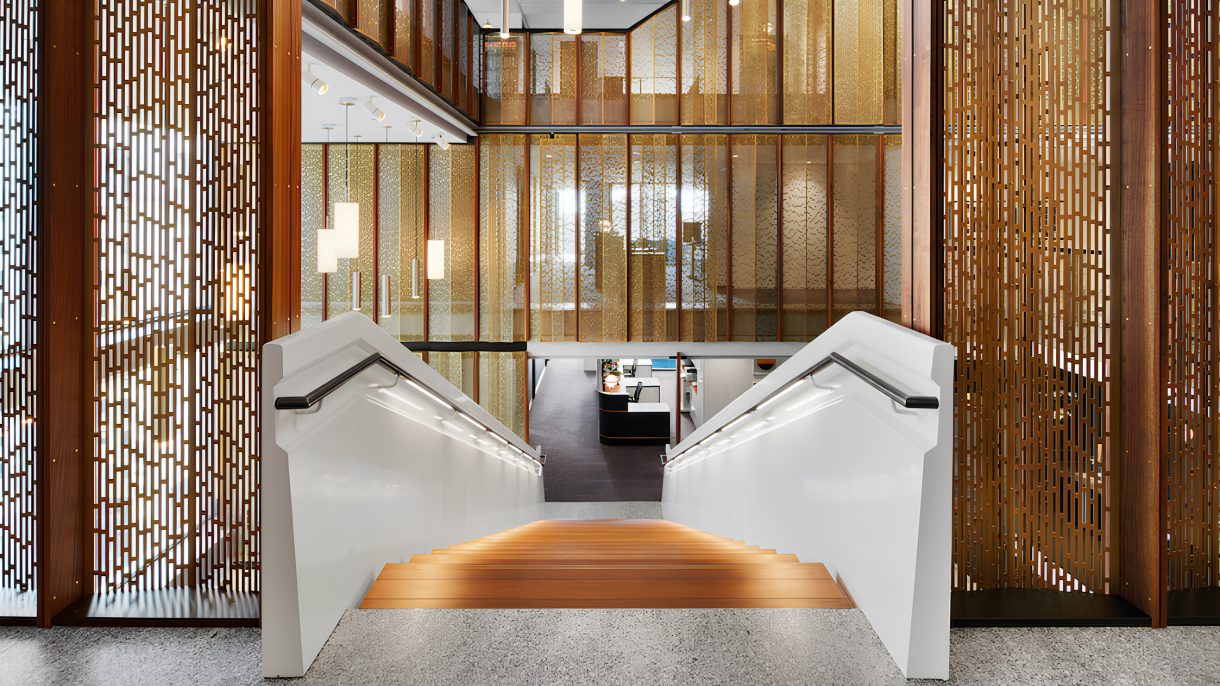
Acquisitions extend that capability. In February 2026, Armstrong bought Eventscape, which designs, fabricates and installs complex architectural features. The second-quarter filing records $64.6 million net of acquired cash, plus potential performance-linked payments of up to $7.5 million. The purchase adds expertise across ceilings, walls and facades. It follows the 2025 additions of wood-system specialist Geometrik and exterior-aluminum manufacturer Parallel.
+11.2% sales growth. Operating margin moved from 29.0% to 28.3%.
Reported Q2 2026 results · year-over-year comparisonThe financial results show both momentum and a qualification. Second-quarter 2026 sales rose 11.2% to $472 million, but operating margin fell from 29.0% to 28.3%. Growth and margin improvement do not automatically travel together. Mark Hershey, CEO since April 2026, inherits a company whose expansion requires integrating specialist businesses while keeping its manufacturing and commercial operations working.
Consider what that means for a purchasing decision. A standard replacement ceiling and a custom architectural installation ask different things of the supplier. The first needs dependable matching components and delivery. The second may need fabrication advice before the design is settled. Armstrong’s portfolio gives it more ways into those conversations. Buyers still have to compare the proposed assembly, the support included and the installed cost against alternatives.
Recycling needs a loading dock
The recycling story is equally practical. Armstrong reports more than 217 million square feet of old ceiling material diverted since 1999. Approved panels become feedstock for new ceilings. A separate partnership with Irving Consumer Products sends tissue-fiber by-product from one Macon, Georgia facility to Armstrong’s nearby plant. The 2022 announcement anticipated more than 3,500 tons diverted annually. Here, circularity starts with a usable input and a manageable journey.
There are conditions. The commercial recycling program generally starts at 5,000 square feet, with exceptions depending on location. Panels must be eligible, dry and uncontaminated; asbestos clearance is required. Customers provide pallets and pay packaging and staging labor. Transportation is quoted. Felt, metal, wood and TECTUM panels are currently excluded. A demolition crew that mixes everything into one waste stream has already made the next step harder.
A room to try things in
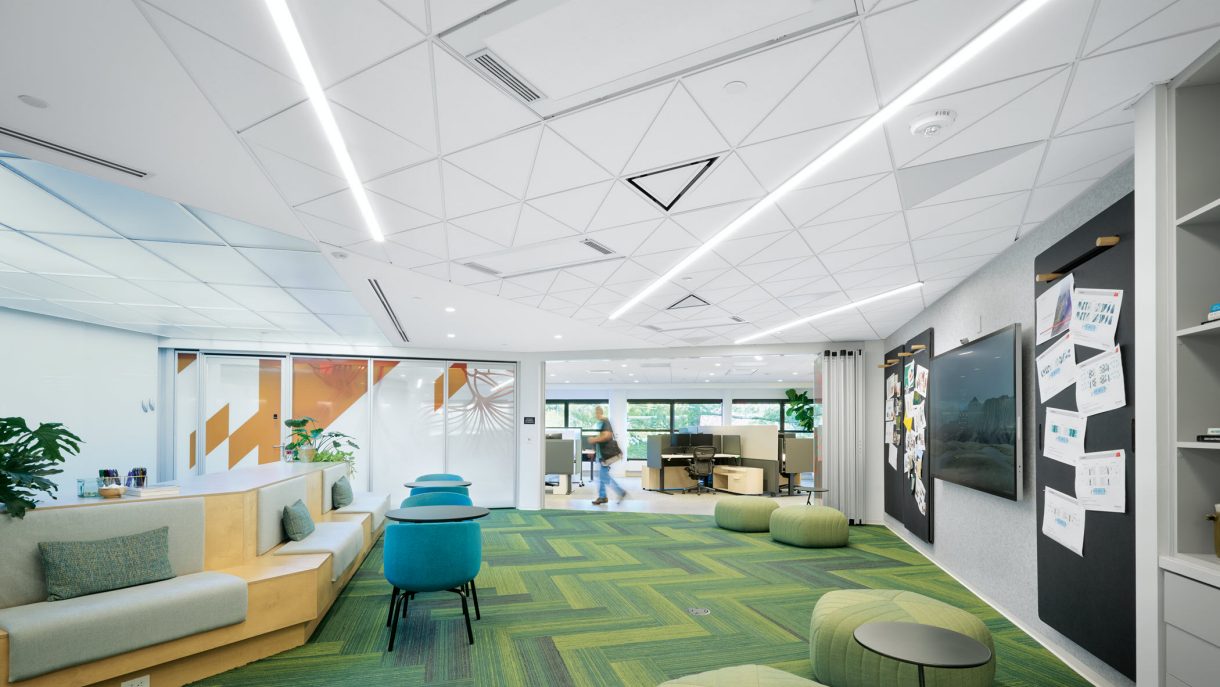
Armstrong and Gensler also built an occupied experiment: the 10,000-square-foot Living Lab in Lancaster. Employees work there and provide feedback on individual and collaborative areas. The collaboration began during the pandemic, when questions about indoor environments became urgent. Rather than infer every need from a sample board, the company can examine products inside a workplace people actually use.
For buyers, the useful lesson is to start with the room’s job. Specify absorption and privacy separately. Coordinate panels, grid, lighting and installation before ordering. DataZone panels, for example, require compatible DynaMax suspension systems; they do not fit arbitrary grids. Price the complete assembly and its labor. Plan recycling before demolition. Armstrong’s appeal lies in connecting these decisions. The ceiling may be above the conversation, but it has quite a lot to do with whether anyone can follow it.