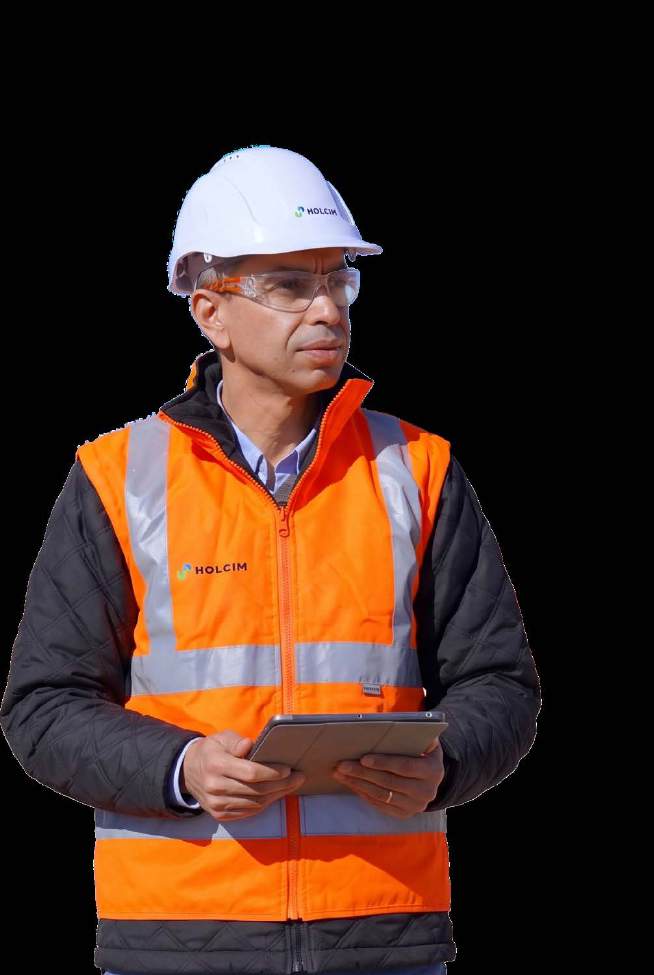
On 1 January 2025, Khalid Samaka came back to the Moroccan business where his career had begun. He returned as chief executive, after years of assignments abroad. The appointment had the pleasing geometry of a circle. The work waiting for him was rather less tidy: run an industrial enterprise while helping change the materials, energy and methods on which it depends.
The board had chosen him in December, under chairman Saïd Elhadi, to succeed José Antonio Primo. At that point, Samaka had accumulated 28 years in the cement industry, roughly half in Morocco and half across five other countries. His responsibilities had covered development, construction, operations and support functions. This was a homecoming with a substantial amount of checked baggage, most of it professional.
Today, he leads Holcim Maroc, the business previously known as LafargeHolcim Maroc. His professional base is Casablanca. His career, however, is easier to understand by following the places he worked and the responsibilities he accepted between his first Moroccan assignments and his return.
A factory education, with people in it
Samaka studied at École Centrale Paris, graduating with the class of 1995. He joined the group in 1996. An engineering education supplied one route into an industry of equipment, processes and exacting specifications. His subsequent career added another route: learning how people acquire the knowledge to operate all of it.
He worked in Moroccan and French plants, and later held plant-management and human-resources responsibilities in Morocco. His education also included an MBA at Université Paris-Dauphine, specialising in human resources. These are useful facts to place beside one another. They describe an executive whose work has involved both the technical requirements of production and the organisation of the workforce around it.
For a materials producer, the connection is quite practical. Equipment represents a promise of performance. Realising that promise requires people who understand the process, can recognise a problem and know how to respond. Training takes up time that an operating business must consciously make available. Its benefits arrive through other people’s decisions, often long after the training session itself.
The chief executive title can overshadow the jobs that preceded it. In Samaka’s case, the earlier responsibilities give the appointment its context. Plant management, human resources and technical training gave him different responsibilities within the same industrial system. The title at the end of the journey makes more sense when the earlier work remains visible.
The route out, and the route back
The international phase of his career began in 2013. Malaysia was followed by Greece, Russia and Azerbaijan. His assignments included manufacturing and technical training for Asia, group technical training in Malaysia and an industrial general-management role in Greece. These posts widened his remit beyond an individual plant or a single national operation.
Training across a region raises a particular kind of management question. What should be consistent wherever a company operates? What needs to be explained differently? A method can travel more easily than the assumptions around it. Language, experience and local practice all affect how knowledge reaches the person who needs to use it.
By 2017, Samaka was technical director at LafargeHolcim Russia. In February 2021, his appointment as chief executive of Holcim Azerbaijan was being reported, alongside the appointment of his successor in Russia. The move put him in charge of a national business, after a role centred on its technical counterpart in another country.
The geographic sequence appears on his professional profile as Kuala Lumpur, Athens, Moscow, Baku and eventually Casablanca. A list of cities can make a career look effortless. The responsibilities tell a fuller story. He moved between training, industrial management, technical oversight and general management, carrying experience from one setting into the next.
- MoroccoOperations & HR
- Malaysia / GreeceTraining & industry
- RussiaTechnical direction · 2017
- AzerbaijanChief executive · 2021
- MoroccoChief executive · 2025
The customer is somewhere else
In Azerbaijan, one of the revealing subjects Samaka discussed was distance. Construction projects could be more than 300 kilometres from the cement plant in the Baku region. The business planned a regional terminal and a local team, bringing its operation closer to the work it was supplying.
In 2023, he described the importance of a rail connection and the possibility of replacing long truck journeys with railway transportation. The account makes a materials business easier to picture. Production is one responsibility. Getting that production to a customer introduces a second set of constraints.
A construction schedule has little interest in how well a factory performed yesterday if the required material has yet to arrive. Transport, ordering and local coordination become part of the product’s usefulness. The distance on a map acquires an operating cost, and a terminal becomes a way of changing the relationship between the plant and its customers.
Samaka also discussed the company’s expansion into ready-mix concrete and other construction products. There is a connection between these subjects: a broader offer has to work where construction actually happens. The chief executive’s job includes looking along the route from manufacturing to use, and finding the places where it becomes awkward.
An inheritance, before an ambition
When he took charge in Morocco, Samaka inherited a business that had already been pursuing environmental and operational changes. In discussing the preceding year, he described progress in renewable electricity, alternative fuels and water consumption. The timing matters. Results for 2024 belong to the period before his January 2025 arrival as chief executive.
For 2024, the company reported that green electricity accounted for 90 percent of its electricity use, while its thermal substitution rate was about 25 percent. These describe different things: the electricity used by the operation and the replacement of conventional fuels in its thermal processes. They should not be folded into a single claim about the whole energy system. Samaka was taking responsibility for continuing that work from an existing base.
Succession does not give a business a fresh past. It gives someone new responsibility for what happens next. Customers, production teams and existing projects continue across the handover. A company can change its chief executive overnight; its operating routines take considerably longer to understand and adjust.
The governance structure makes some of that responsibility explicit. Samaka leads with an executive committee whose members hold responsibility for their respective functions. It monitors operations, strategic projects, budgets and organisational questions, meeting at least monthly. He also became a company director in March 2025, adding a board role to his executive responsibilities.
Alongside the Moroccan executive role, Samaka appears on the board of the Swiss Chamber of Commerce in Morocco. It places him in another business setting, among representatives of companies working across the Swiss-Moroccan relationship. The affiliation adds a local institutional connection to a career already shaped by work across borders.
That arrangement puts different kinds of judgement around the same table. Finance has to meet industrial reality. Commercial commitments have to meet production capacity. New products have to become something the business can supply. For a leader with experience in several of those working worlds, the task is to get their decisions to connect.
Beyond the date on the stadium
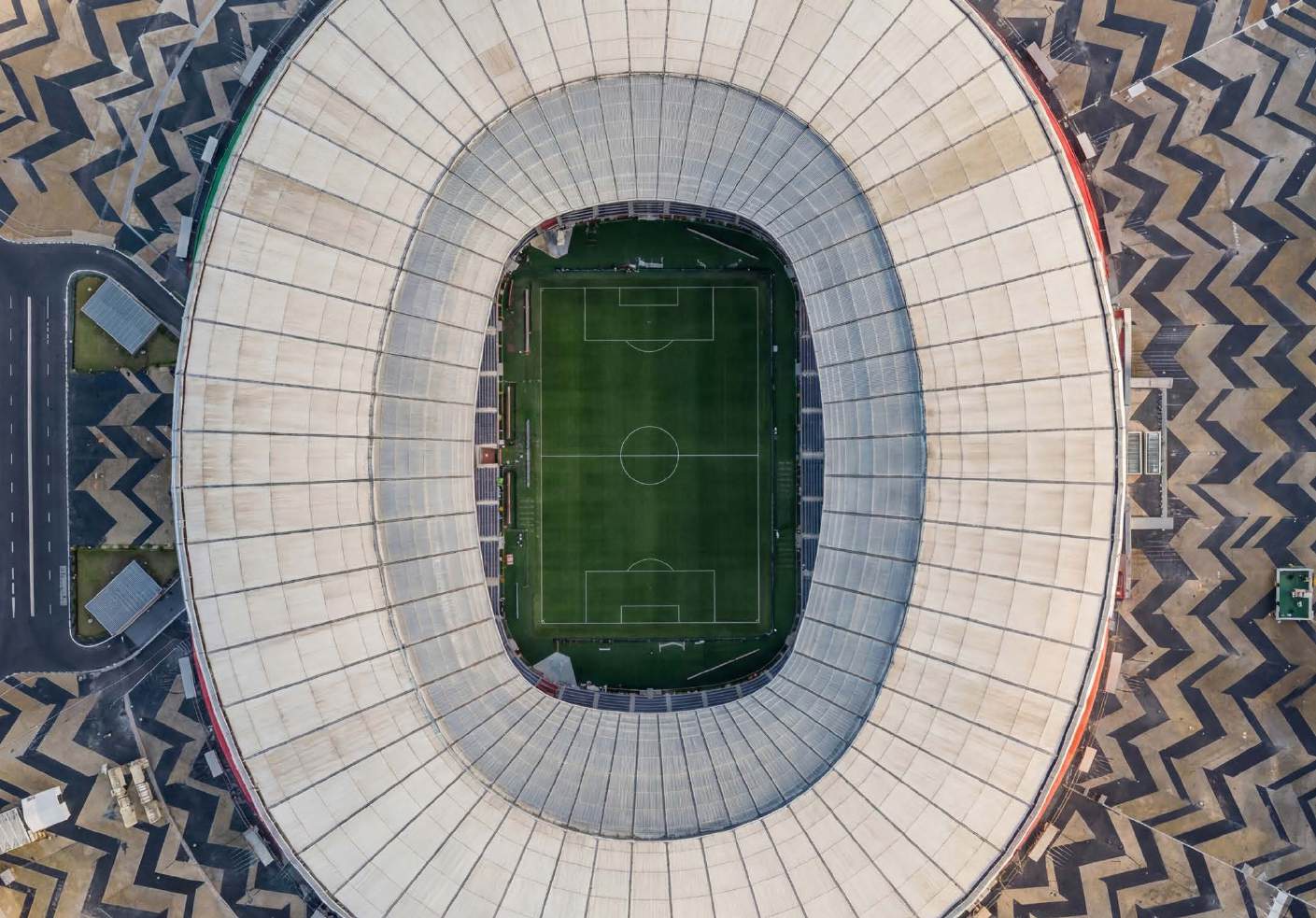
Morocco’s construction calendar gives this work a visible backdrop. Discussing the market in 2025, Samaka described major sporting events as catalysts for infrastructure, while pointing to a longer period of development. His view encompassed urban transport, industry, energy and logistics. The implication is that demand should be understood beyond the most conspicuous event on the calendar.
“L’horizon réel est 2050.”
Khalid Samaka · “The real horizon is 2050.”
His current priorities include lower-carbon products, construction solutions and recycling. These ambitions ask different parts of an industrial business to move together. A product has to satisfy the technical requirements of a project. Customers have to understand where it can be used. The company has to organise the production and delivery behind the offer.
The strategy also reaches toward materials recovered from construction and demolition. That extends the operating question beyond making and selling something new. It asks what can be recovered after an earlier use, and how it can become useful again. Recycling becomes a matter of organising a workable route between one project and another.
These ambitions will take time to assess. A strategy sets a direction; its execution has to be examined over time. Samaka’s record in Morocco will develop through those decisions and their results. His earlier jobs explain the experience he brings to them, without deciding their outcome in advance.
materials
solutions
use again
Three priorities in Holcim Maroc’s current strategy. A direction of travel, rather than a claim of completion.
A traveller’s reading list
There is a smaller, rather agreeable detail in Samaka’s public portrait. Asked to name an inspiring figure, he chose Ibn Battouta. Asked for a book, he chose Homer’s Odyssey. He also names running and reading among his interests. Travel and return have acquired a modest literary presence in this industrial career.
His professional profile lists Arabic, French and English. After a career crossing several national operations, even that brief line is a reminder of the everyday work behind international management: making yourself understood, understanding a reply and leaving room for a question. A strategy may be written once. Explaining it to the people responsible for carrying it out is a recurring responsibility.
It would be excessive to make a management theory out of a reading preference. Still, a story that begins in Moroccan operations and comes back through Malaysia, Greece, Russia and Azerbaijan has earned the association. Samaka’s return leaves him with a familiar country, a changed responsibility and plenty of practical work. The interesting part now is how much of the journey becomes useful at home.