A soil boring is an odd place to begin a story about jobs. It produces no opening ceremony, no handsome corporate headquarters, no photograph of people holding oversized scissors. Yet Arkansas Economic Development Commission will help a community pay for one. The reasoning is wonderfully practical: a manufacturer choosing a location needs to know whether the ground can support what it intends to build.
- AEDC connects business investment with sites, incentives and local preparation.
- Its site grants pay for practical work, including drainage, utilities and due diligence.
- Its 2025 project totals describe commitments and projected jobs.
That small distinction between available land and usable land explains much of AEDC’s job. A state can put a promising property on a map. Making it a credible answer to a company’s deadline takes another kind of work. AEDC occupies that space between the sales pitch and the engineer’s questions.
The land had to become an answer
The agency began with a different mismatch. In postwar Arkansas, an agricultural economy was losing people who went elsewhere for work. The legislature created the Arkansas Industrial Development Commission in 1955. Its first recruited industry, Gay Apparels in Cotter, arrived that April. Winthrop Rockefeller served as the first chairman. The assignment was to connect Arkansas with the industrial economy taking shape around it.
The organization adopted its current name in 1997 and joined the Department of Commerce in 2019. Today its audience includes manufacturers, international investors, entrepreneurs and local governments. The businesses need somewhere to operate. The communities need investment that can support employment. AEDC has to make those interests meet in a project that can actually proceed.
“At AEDC, we know economic advancement doesn't happen by accident.”AEDC’s published mission
Its services follow the obstacles: property searches, business finance, incentive administration, international recruitment and community development. Manufacturing Solutions, established in 1995 and affiliated with the NIST Manufacturing Extension Partnership, helps manufacturers pursue operational improvement and growth. The agency’s role extends beyond persuading a business to cross the state line.
A grant for the unphotogenic work
In 2024, Arkansas introduced its Site Development Program. The first round awarded $10 million to 13 communities that December. In April 2026, another 22 communities received $25 million. Those awards sit within a larger effort to prepare industrial properties before an employer needs them.
The program pays for such work as infrastructure extensions, soil analysis, grading and due diligence. In other words, things that help turn a site from a possibility into a proposition. A town can be enthusiastic and still have an unanswered drainage question. A prospective employer can like the location and still need that question answered before committing.
The eligibility rules make the proposition concrete. A qualifying greenfield site must have at least 30 contiguous acres and be listed in the state’s site-selection database. The eligible applicant must own or option the land, with ownership required when the grant agreement is executed. The local match must be at least five percent of the overall project estimate.
This is also a useful boundary. The program excludes ordinary property purchases, salaries, marketing and expenses incurred before an award. A community with a small parcel or an advertising campaign has a different problem. Another region could copy the discipline immediately: document ownership, utilities, transport, flood risk and development costs before asking someone to choose the site.
For the applicant, that means treating preparation as a project in its own right: an identified owner, a budget and a sequence of work. For the reader watching an announcement, it suggests a better question than how impressive the rendering looks: what has already been made ready?
The offer has conditions
AEDC operates in a crowded market for investment. Tennessee, for example, also funds industrial-site development. Arkansas’s offer combines preparation with its own properties, workforce, industry concentrations and incentive rules. The existence of a grant alone does not establish a competitive advantage; the fit with a particular project matters.
The same applies to tax incentives. Arkansas’s 2025 modernization and automation incentive targets existing businesses, with eligibility including two years of operation in the state and at least $25 million in investment costs. The potential credit is up to five percent of eligible project costs. That is a specific tool for a specific investment decision, with thresholds that leave many businesses outside it.
Community preparation has its own assessment. AEDC’s Competitive Communities Initiative grew from strategic planning and discussions with utility partners. Its four pillars examine organization, funding, workforce narrative and product readiness. The useful change in thinking is visible there: recruitment depends on a community’s ability to answer questions and deliver, as well as its desire to be chosen.
Keep two different ledgers
AEDC’s 2025 annual report records 32 announced projects, $6.71 billion in investment commitments and 3,953 projected jobs. It separately reports $17.74 million in incentive payments disbursed. These figures measure different things. Company commitments are neither agency revenue nor evidence that every promised job already exists.
A commitment is the beginning of a result. Delivery still has to follow.
As a public agency, AEDC works through appropriations and public programs. Its business-finance function monitors agreements and seeks grant reimbursements when recipients underperform. That accountability belongs in the story alongside the announcements. Counting a promise and tracking its fulfillment are separate jobs.
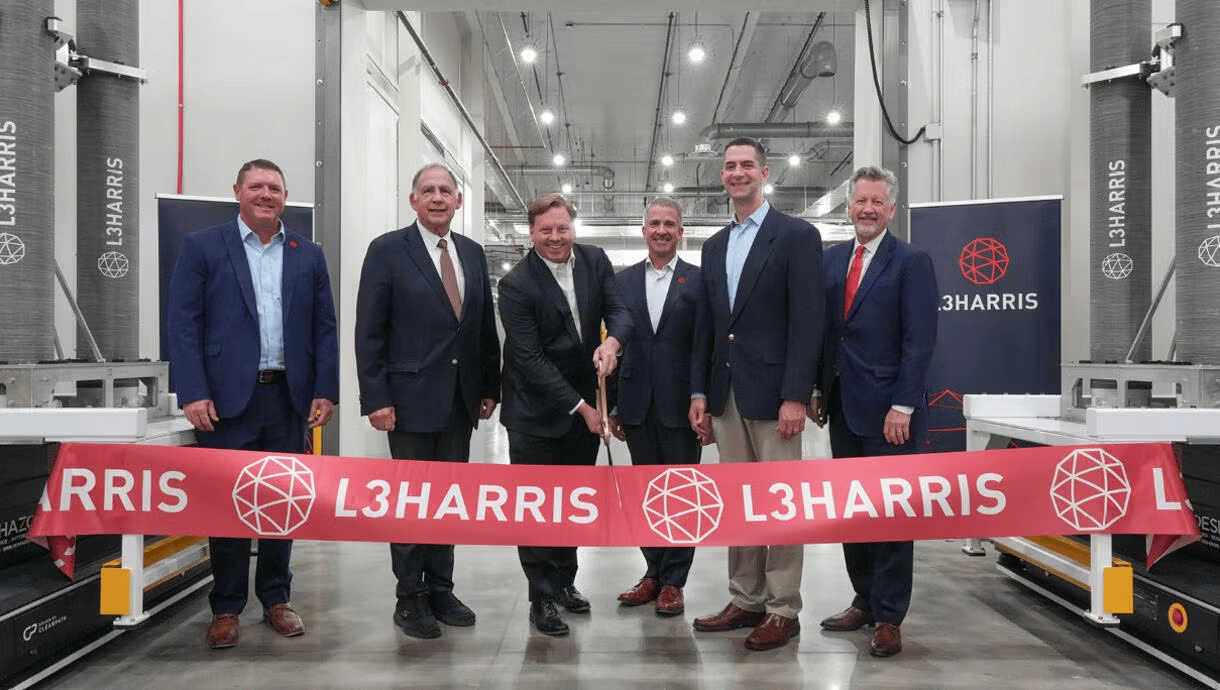
In October 2026, AEDC publicized the opening of L3Harris’s new Camden solid rocket motor facility, designed to double current capacity. An opening is a different milestone from a recruitment announcement. It makes the distinction between a planned project and an operating facility tangible.
Start before the prospect calls
The work also reaches smaller businesses through 75Strong, an AEDC-funded initiative with Conductor that trains local people to support entrepreneurship. For a community leader, the practical entry point is a readiness assessment. For a business, it is a discussion about the actual site, workforce or expansion need. The soil boring offers the enduring lesson: answer the awkward question early enough, and a project has a better chance to move.