A truckload of crushed stone has an awkward limitation: it cannot travel very far before the journey starts costing too much. That sounds like a problem for a quarry owner. For Arcosa, it helps explain the business. Own the right rock near the right construction market, and distance becomes something a competitor must pay to overcome.
- Buy the useful locations. Stavola brought quarries and asphalt plants near New York and New Jersey.
- Follow the orders. An idle wind-tower factory became a utility-pole factory.
- Keep choosing. Barges left the portfolio. CRH bought what remained.
This is a useful place to begin with a company whose products are often noticed only when something goes wrong. A trench collapses. A power line needs replacing. A road needs rebuilding. Arcosa supplies some of the material and hardware that keep those projects moving. On October 23, 2026, CRH completed its acquisition of the company at an enterprise value of approximately $8.5 billion.
A pile of stone with a postcode
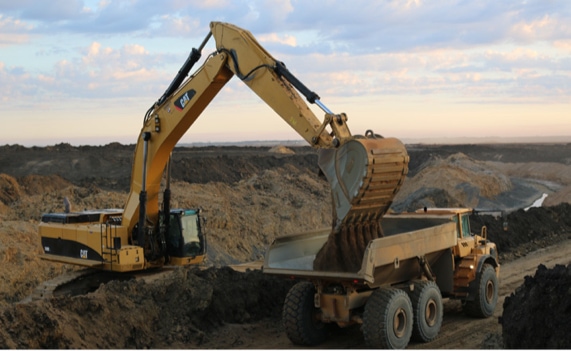
Arcosa’s construction businesses sell sand, gravel, crushed stone, recycled concrete, specialty minerals, and lightweight aggregates. Their buyers include concrete producers, asphalt producers, contractors, and public agencies. Shoring products add another practical service: steel and aluminum equipment that shields workers or supports the walls of an excavation.
The economics change with the product. Ordinary aggregates face tight freight constraints. Specialty materials can travel farther because processing gives them more value relative to shipping costs. Lightweight aggregate, for example, comes from selected shale or clay expanded in a rotary kiln. Its bulk density can be less than half that of natural aggregate.
The $1.2 billion bet
In October 2024, Arcosa bought Stavola’s construction materials business for $1.2 billion. The purchase brought five hard-rock quarries, twelve asphalt plants, and three recycled aggregates sites serving the New York-New Jersey metropolitan area. Those are the assets at acquisition, rather than a claim about today’s plant count.
Stavola had generated $283 million in revenue and $100 million in adjusted EBITDA during the twelve months through June 2024. That meant a 35% adjusted EBITDA margin. Arcosa was buying an established position in a large market, with asphalt operations that also consumed aggregates. The financial attraction was visible before the integration began.
The financing deserves equal billing. Arcosa issued $600 million of notes carrying a 6.875% coupon and borrowed $700 million through a variable-rate term loan. The financing also provided funds to reduce revolving-credit borrowings. In 2025, companywide interest expense reached $108.8 million, up from $70.9 million in 2024, primarily because of the additional acquisition debt.
Cash purchase price, before subsequent adjustments
Steel with a specification
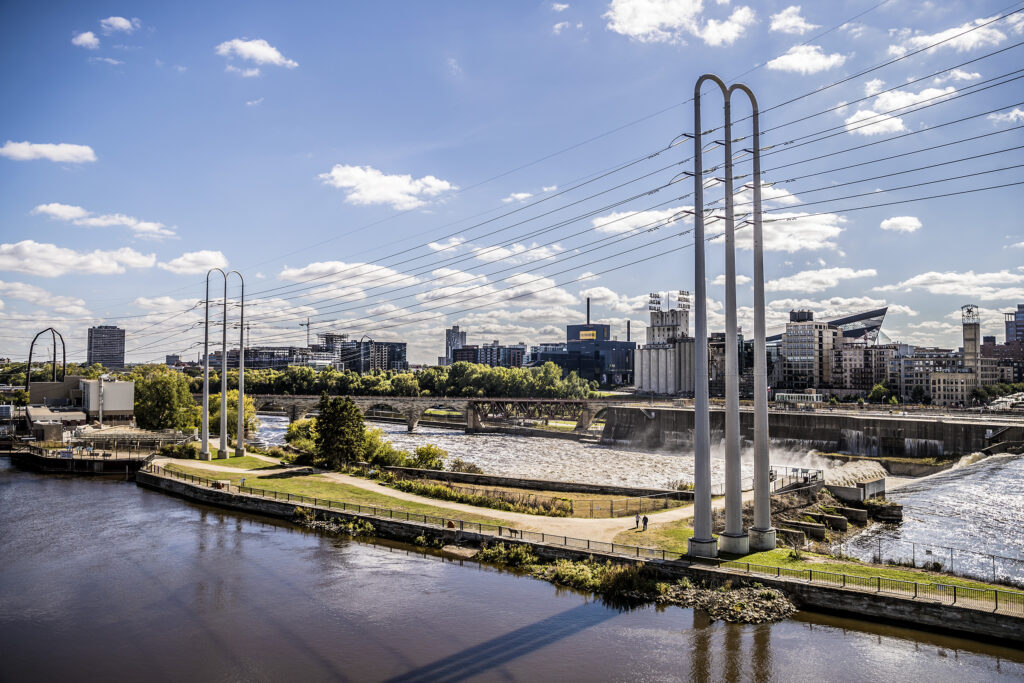
The other side of Arcosa makes engineered structures: utility poles, transmission structures, wind towers, telecom towers, lighting poles, and traffic structures. A utility buyer needs a structure that satisfies engineering requirements and arrives when construction crews need it. Arcosa’s Meyer business designs and fabricates concrete, lattice, and tubular steel structures for that market.
Here, expertise has a different shape from quarry ownership. Meyer brings decades of engineering experience; the company identifies ISO 9001:2015 certification and AISC compliance. Arcosa’s telecom operation details projects internally, while its traffic business supplies both engineered and state transportation department specified designs. Ameron, acquired for $180 million in April 2024, added concrete and steel pole capabilities.
Revenue comes through product sales, project bids, and, for some large utility customers, alliance contracts lasting several years. Wind-tower customers are turbine manufacturers. GE Vernova alone represented 12.2% of Arcosa’s 2025 consolidated revenue. These relationships offer scale while making individual purchasing decisions consequential.
A customer therefore starts with the operating business that fits the job. Roadwork can require local aggregate specifications and a workable delivery radius. A transmission project requires design criteria, manufacturing capacity, and an agreed schedule. Arcosa also sells trench equipment to rental dealers and contractors, with rentals available in selected regions. The company earns revenue by extracting, processing, fabricating, and supplying physical products; its commercial relationships depend on getting those details right.
A factory changes jobs
The revealing move in 2026 happened inside the manufacturing footprint. Arcosa converted an idled wind-tower facility to utility structures and began delivering poles in the second quarter. By June 30, utility and related structures backlog stood at $648.1 million, up 49% from the start of the year.
Wind-tower revenue, meanwhile, fell 19% in the quarter, reflecting lower planned volumes. Utility and related structures revenue rose 12%. Another wind-facility conversion was planned for 2027. Those figures explain the attraction of adaptable steel-fabrication capacity: a plant’s next assignment can matter as much as the product it was originally built to make.
Backlog is contracted work awaiting delivery, not cash already collected.
The cost of choosing
Arcosa became independent on November 1, 2018, when Trinity Industries spun off its infrastructure businesses. Antonio Carrillo led the independent company as president and CEO. Its subsequent decisions steadily narrowed the collection: storage tanks sold in 2022, steel components in 2024, and inland barges to Wynnchurch Capital for $450 million in April 2026.
“We will now be fully focused on construction materials and engineered structures”
Antonio Carrillo · April 2026
These exits do not prove that the businesses failed. They show management choosing where capital should go. The remaining operations still encounter mundane obstacles. Wet Texas weather hurt organic aggregates volumes in the second quarter of 2026. Continuing operations used $24.7 million of operating cash that quarter as working-capital needs increased. A healthy order book does not pay suppliers by itself.
Inside the plants, the company’s safety effort has its own continuity. ARC 100 began in 2019 with input from frontline employees. Regular safety briefings and new-hire mentorship give the program a practical form. Arcosa says its incident rate improved 42% between 2020 and 2025. That is a company-reported measure, and a reminder that industrial execution includes the people doing the work.
What survives the handover
The useful lesson is conditional: buy locations customers need, preserve engineering skills they trust, and keep reassessing capacity. That approach requires sensible purchase prices, financing room, and reliable execution. A distant quarry, an overleveraged acquisition, or a delayed delivery can undo the argument quickly.
For buyers, Arcosa’s place in the market is concrete: a regional materials supplier and a manufacturer of specified infrastructure products. Alternatives differ by job, from nearby quarry operators to competing structure fabricators. CRH’s purchase joins those capabilities to a larger building-materials business. The rock still needs hauling. The poles still need delivering. That is where the strategy gets tested.