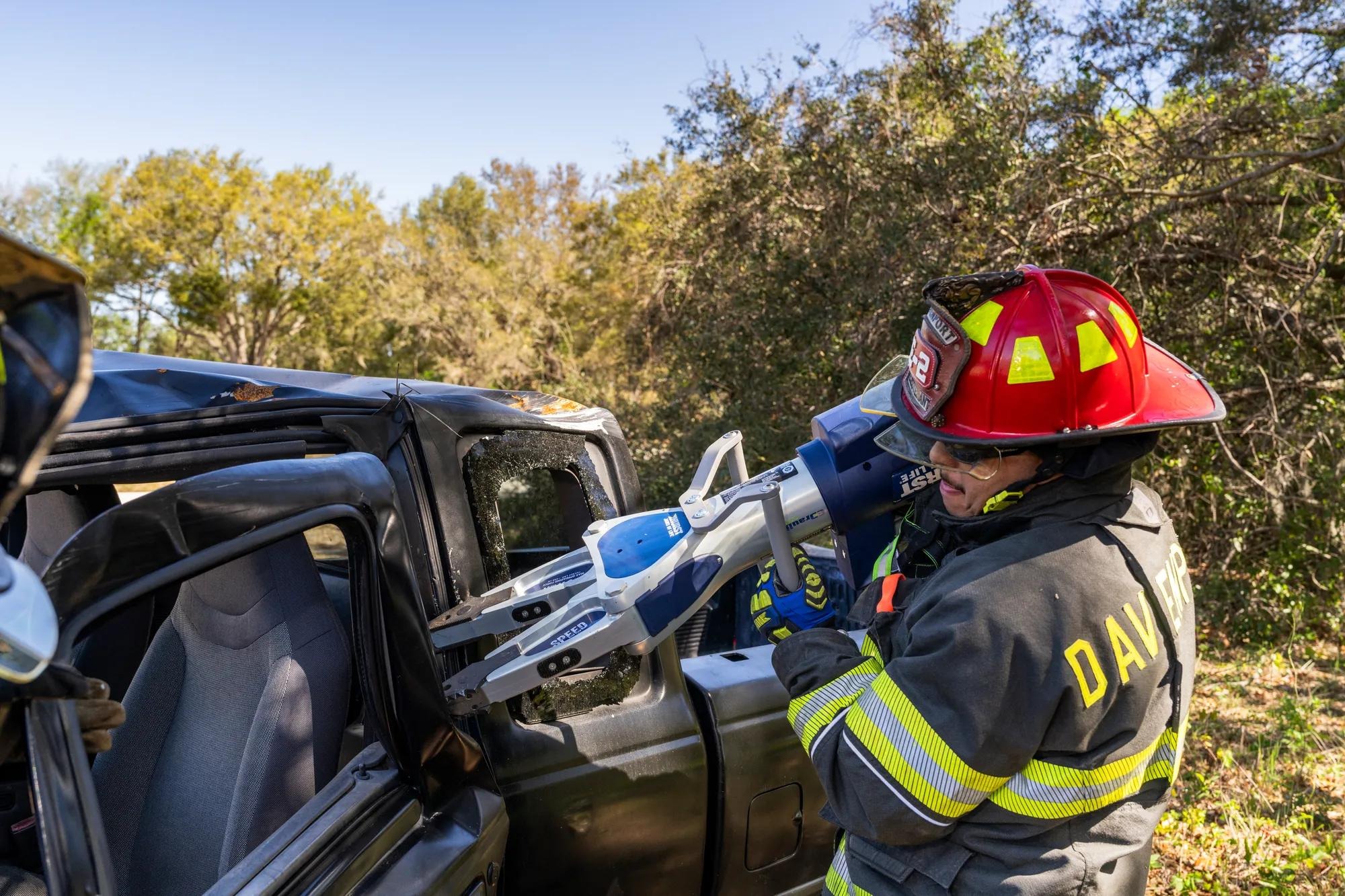
A firefighter working on a wrecked car has little use for a corporate organisation chart. The spreader in their hands needs to open the metal. Its battery needs to hold. Its controls need to make sense. Somewhere behind that urgent, practical transaction sits IDEX Corporation, a business whose catalogue connects the roadside rescue to the laboratory bench.
- IDEX sells the components other people’s machines depend on.
- Its businesses span fluid handling, life sciences, optics and rescue equipment.
- The strategy: own specialist expertise, then make those specialists work together.
The connection is easy to miss. HURST Jaws of Life is an IDEX business. So is Viking Pump. So is Mott, which makes porous materials and flow-control products. These companies serve different buyers, with different purchasing habits. Yet each occupies an interesting position: a relatively small piece of equipment can determine whether a much larger system does its job.
01 The economics of a small part
Think about a diagnostic instrument. Moving a sample accurately and illuminating it correctly are engineering problems before they become medical information. IDEX Health & Science supplies pumps, valves, tubing, optical filters and integrated assemblies for such instruments. Its customers include the manufacturers building the machines, rather than only the laboratories buying the finished equipment.
That distinction explains the business. An instrument developer can buy individual components or work with IDEX on fluidic and optical subsystems. Combining those disciplines can reduce the number of suppliers and engineering interfaces the customer must manage. IDEX’s place in the market is often inside somebody else’s product, doing a job the purchaser of that product may never notice.
The industrial version is less delicate but equally particular. Viking Pump’s 260 Series handles viscous liquids that need temperature control to keep flowing. This is engineering for the actual substance in the pipe. The relevant question is whether a pump fits the liquid, temperature and operating conditions, rather than how impressive it looks in a catalogue.
02 Thirteen steps, three swipes
For fire departments, the problem changes from precision inside an instrument to coordination around an emergency. IDEX’s SAM Waterflow System brings a truck’s pump, tank, intakes and discharges under digital control. At its 2019 introduction, the company described a setup that could replace up to thirteen manual steps with three finger swipes.
That was a company demonstration claim, not a promise that every fireground operation takes the same time. The design logic is still instructive: reduce the sequence an operator has to remember. The customer is buying control over a difficult workflow as well as valves and software.
HURST’s E3 Connect tools extend that thinking into maintenance. Captium dashboards collect equipment alerts and diagnostic history. A dropped or overheated tool can leave a record for the people responsible for keeping it ready. These are modest, useful questions for connected hardware: what happened, what needs attention, and will the tool be ready next time?
There is a purchasing lesson here for a department comparing equipment: consider the maintenance workflow alongside cutting or spreading performance. For an instrument builder, ask whether the supplier can support an assembly throughout development and production. In both cases, the practical value extends beyond a single specification on a product sheet.
03 A billion dollars for porous material
Buying expertise is another IDEX habit. In July 2024, it agreed to acquire Mott for $1 billion in cash, subject to adjustments. The announcement put the value at approximately $900 million after expected tax benefits. The acquisition closed that September.
Mott brought sintered porous structures and flow-control expertise, with applications in semiconductor equipment, water purification, medical technology and other technical markets. Chief executive Eric Ashleman described the acquisition sweet spot as “highly engineered, configurable mission-critical components.” The interesting word is configurable: specialist knowledge can serve several exacting applications without turning every order into an entirely new business.
A component’s size tells you very little about the consequences of its failure.THE BUSINESS LOGIC
By October 2024, management reported that other IDEX teams were developing prototypes with Mott’s filtration products. That supplies a concrete test for an acquisition: can the combined businesses make something useful together? In July 2025, Micro-LAM added laser-assisted machining, diamond tools and custom optics to the same expanding technical toolkit.
04 Give the specialists room
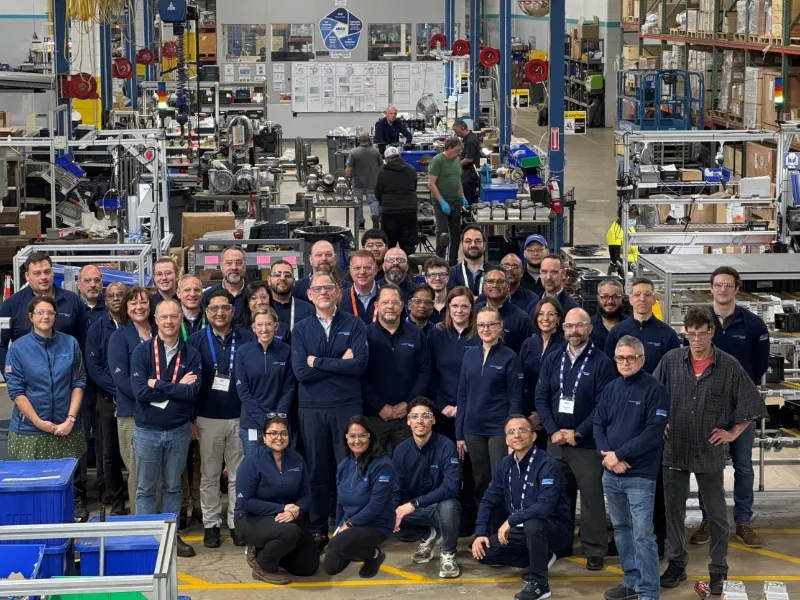
IDEX traces its operating beginnings to 1988 and three entrepreneurial manufacturing businesses. Today it has more than fifty businesses. Its model gives those teams substantial autonomy while using a common operating discipline. The company calls its focusing principle 8020: direct resources toward the products, customers and opportunities that matter most.
Its stated values are Trust, Team and Excellence. More revealing are the mechanisms underneath: regular talent reviews, internal development and improvement events that bring people across businesses together. Local knowledge remains useful only if local teams can act on it. Shared ownership becomes useful when knowledge can travel beyond the team that developed it.
- 43% Health & Science Technologies
- 35% Fluid & Metering Technologies
- 22% Fire & Safety / Diversified Products
05 The numbers keep it honest
The limits showed up in 2025. Reported sales reached $3.46 billion, up 6%, while organic growth was just 1%. Lower volumes in fluid handling and fire-and-safety businesses were a reminder that owning specialised products does not abolish customers’ purchasing cycles. Acquisitions can expand a company while parts of its existing business remain sluggish.
By the second quarter of 2026, sales were $921 million, with 5% organic growth and orders exceeding $1 billion. Those results show momentum, though a quarter cannot establish the outcome of a long acquisition strategy. Nor is IDEX alone in these niches: Holmatro’s Pentheon tools offer an alternative for departments shopping for battery-powered rescue equipment.
For another operator, the useful lesson is to identify the detail a customer cannot casually substitute, invest in mastering it, and connect adjacent skills. That approach depends on real technical differentiation and customers who value it. In a commodity market where price decides everything, expensive custom engineering has a harder case to make. IDEX’s wager is that enough consequential details remain worth getting right.