A potato carton has a surprisingly demanding social life. It must keep moving, carry the right information and, ideally, never lose its place. At GPOD of Idaho, Matthews Marking Systems helped remove that last requirement. With a 2D barcode identifying the box, a carton could leave the production line and return somewhere else. The system would still know what to print.
- Two core businesses: memorialization and industrial technology.
- Customers buy dependable products, production equipment and the systems around them.
- Recent sales of businesses have made choosing what to keep the central management question.
This is a useful place to meet Matthews International. Its catalogue can otherwise sound like several companies accidentally seated at the same dinner: caskets, bronze memorials, industrial inkjet printers, battery-electrode machinery. A carton of potatoes supplies the missing introduction. Matthews works on the physical details that make another person’s business function.
The carton that could cut the queue
In Matthews’ account of the GPOD installation, the customer operates 20 L12 thermal inkjet printers, two T50 printers and print-and-apply labelers through one MPERIA platform. Staff can monitor and adjust equipment from different locations. The operational change is specific: a box’s identity no longer depends on its position.
GPOD general manager Ryan Bybee calls the system “easy to use, very reliable.” The attraction is ordinary enough to be overlooked. People can spend more attention on the plant and less on printing. For another manufacturer, the transferable question is whether a process knows what an item is, or merely assumes it has stayed in line.
Give the box an identity.
Let the line handle the interruption.
“It’s easy to use, very reliable”Ryan Bybee / GPOD general manager
The strange family resemblance
John Dixon Matthews opened an engraving shop in Pittsburgh in 1850. His early tools marked military equipment and wooden crates. The business later entered bronze memorials; its history dates the flush bronze memorial to 1927. What looks like diversification also contains a recurring skill: putting a precise, durable result onto a physical material.
Today, funeral homes, cemeteries and monument dealers buy products through Matthews’ memorialization businesses. Matthews Aurora supplies caskets, urns and keepsakes. Other operations make bronze and granite memorials, build mausoleums and supply cremation equipment. Families encounter the result, usually through the professional helping them arrange a funeral or memorial.
That distinction matters. The immediate customer needs more than an attractive object: selection, ordering, personalization and delivery all sit around it. Matthews sells into that professional relationship. Its architectural operation also makes plaques, metal letters and signage, a recognizable descendant of the engraving shop.
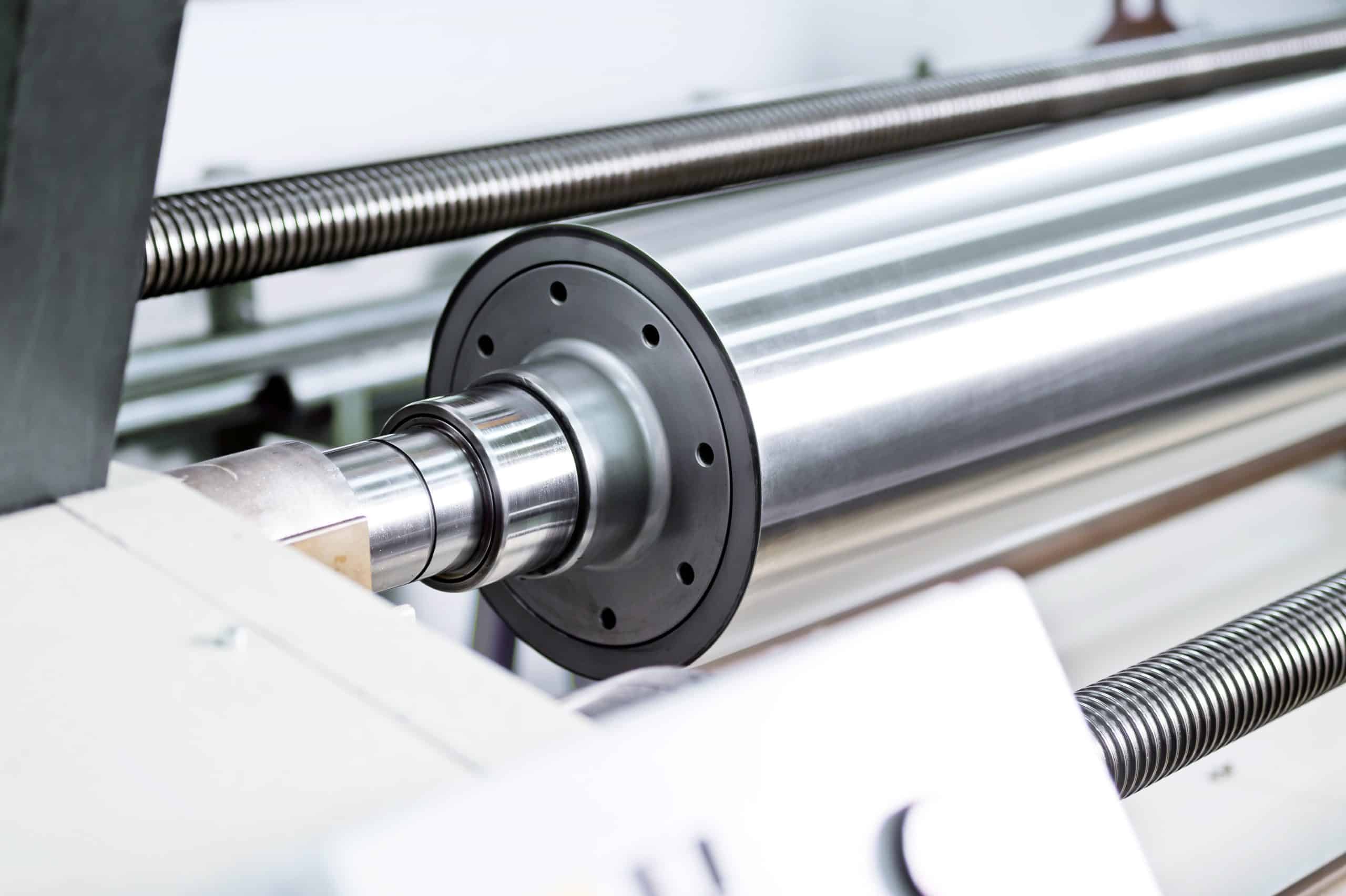
Industrial buyers have different deadlines but a comparable need for execution. Matthews Engineering supplies coating and converting machinery, technical rollers and services. Marking Systems supplies printers, software and consumables. The business model spans capital purchases and follow-on needs such as ink, parts and maintenance. A manufacturer can buy a machine; a working process requires more around it.
Its competitive position depends on the application. Batesville is an alternative for funeral products; Markem-Imaje supplies marking and traceability systems. Matthews’ unusual combination of businesses does not settle either buying decision. Buyers still need to judge the product, service support and fit for their own operation.
A smaller company, by design
For years, acquisitions widened the catalogue. More recently, Matthews has been editing it. In May 2025, SGK joined SGS in the business now called Propelis. Matthews received $250 million cash at closing, preferred equity and retained receivables, while keeping 40% of the common equity. The headline $350 million upfront consideration was a mixture of assets, not a cheque of that size.
Warehouse automation went to Duravant in a deal announced at $230 million total consideration, including $223.3 million cash and assumed liabilities. The acquisition closed December 31, 2025. Warehouse software brands that appear in older Matthews descriptions therefore belong to a different owner now.
DIFFERENT MEASURES, NOT ADDITIVE. DEAL TERMS AND ACQUISITION DISCLOSURES.
It was still buying selectively. The Dodge Company, a supplier of embalming chemicals and funeral-home supplies, cost approximately $55.6 million net of acquired cash. That purchase adds products for an existing customer base. The combination suggests a narrower commercial logic: deepen familiar relationships while releasing capital from other operations.
Management describes the divestitures as outcomes of a strategic review to simplify the company and reduce debt. There is no need to invent a private moment of revelation. The public evidence is a sequence of transactions, followed by changes to leadership and governance.
The expensive gap between a trial and a shift
In Vreden, Germany, Matthews has another answer to the problem of uncertainty: let customers test at production scale. Its Development Center became fully operational with the MEODEO dry-electrode demonstration line in June 2026. Published specifications include electrode widths up to 850 millimetres and speeds up to 150 metres per minute. Those are equipment capabilities, not a promise for every material.
Commercial progress has been less tidy. August’s results described energy-storage customer delays and an ongoing Tesla dispute. Engineering restructuring was expected to cost about $10 million and deliver roughly $10 million in annual savings. The immediate pressure was timing: anticipated work was not contributing quickly enough to support the cost base.
A favorable interim arbitration clarification on proprietary equipment sales did not end that dispute. Nor does full-scale testing guarantee orders. Customers still have to validate materials, fund capacity and commit to a process. Matthews’ cooperation with hs-tumbler on powder preparation addresses another practical dependency before material even reaches the rollers.
Make the exception part of the system
Michael Whitehead succeeded Joe Bartolacci as CEO effective August 31, 2026. His background includes electrical engineering, patent law and manufacturing leadership at Lincoln Electric. He inherits the problem visible in that potato carton: how to keep useful work moving when the expected sequence changes.
The lesson a reader can copy is specific. Identify the interruption, then design for it: a box leaving the line, a customer testing a material, a familiar buyer needing another supply. It works only when the system can recognize the item or validate the process. Without reliable identification, integration and customer demand, more equipment simply adds another thing to manage.