Consider the weld after the welding is finished. Someone may still have to grind it, straighten the metal, polish the surface and check whether the joint holds. The torch has stopped. The meter is still running. This is a useful place to begin with IPG Photonics, a company whose business depends on persuading manufacturers to count everything that happens around a beam of light.
- Own the ingredients. IPG manufactures critical components inside its lasers.
- Sell the finished result. Less distortion and finishing can matter as much as processing speed.
- Keep the machines busy. Manufacturing control carries fixed costs when demand slows.
IPG makes fiber lasers, the optical equipment that delivers their beams, and systems that put those beams to work. Customers cut sheet metal, weld battery connections, strip coatings and manufacture medical devices. Equipment builders buy its sources; manufacturers buy integrated tools. The company can occupy several positions in the same production chain.
The expensive part came inside
Physicist Valentin Gapontsev founded IPG’s predecessor in 1990. A fiber laser amplifies light inside specially doped optical fiber, energized by semiconductor laser diodes. That description contains the business problem: a promising laser still needs affordable, dependable ingredients. IPG’s answer was to develop and manufacture key components itself, including its pump diodes and specialty fiber.
The early market supplied an unpleasant lesson. IPG sold into optical communications, raised outside capital in 2000, then encountered the telecom downturn. A planned public offering was withdrawn in 2001. Its subsequent development pushed toward industrial applications, where light could process material rather than carry a conversation. The underlying technology had more than one possible customer.
This took money. Contemporary reporting described $80 million in venture financing and $20 million in debt financing in 2000. The eventual December 2006 IPO was a $148.5 million gross offering, including shares sold by existing holders. IPG expected approximately $93 million in net proceeds for itself. Those numbers describe different things; treating them as interchangeable would make the story cheaper than it was.
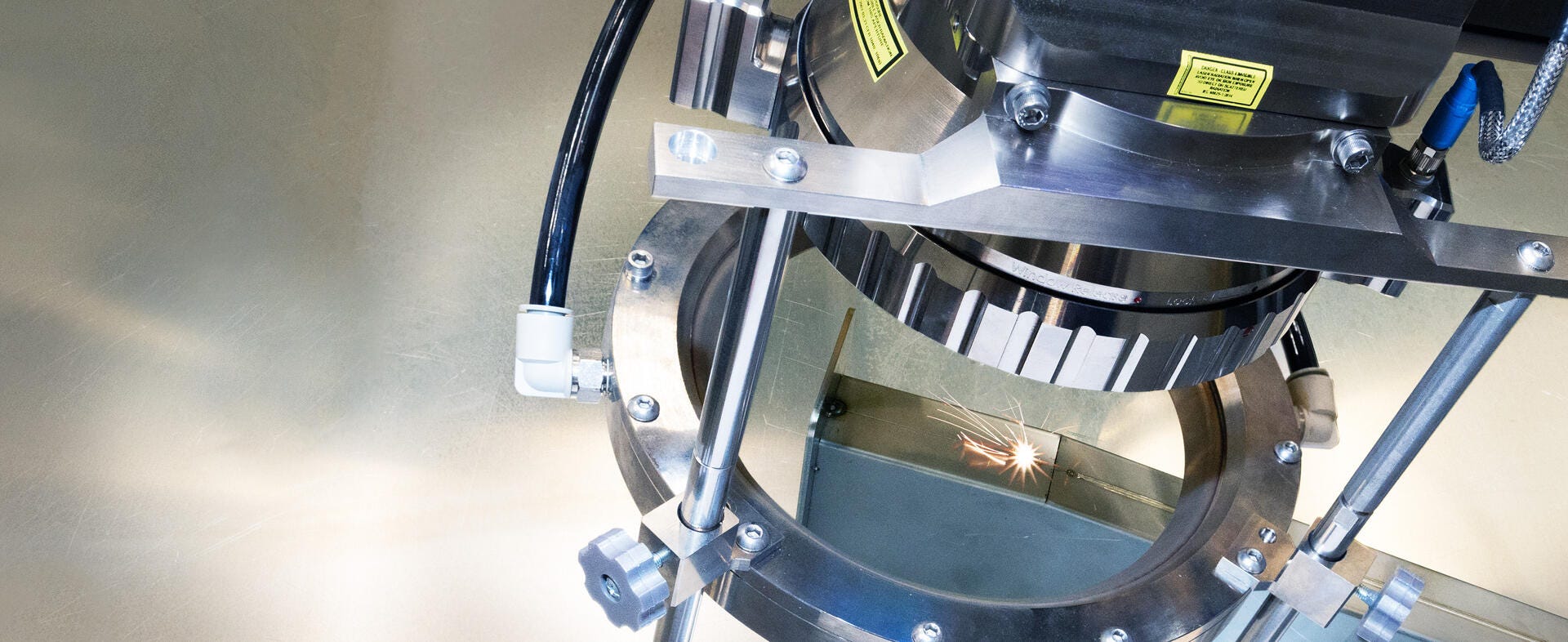
Component ownership gave IPG control over design, quality and manufacturing costs. It also made the company a manufacturer of the machinery behind the machinery. A buyer might see a laser cabinet. Behind it sit diode production, optical materials, packaging and testing. The commercial advantage has roots several layers below the product brochure.
The weld is only half the job
LightWELD, introduced in 2020, translates that engineering into something a fabrication shop can hold. IPG’s handheld welding equipment is designed to join metals with controlled heat input, reducing distortion and subsequent finishing in suitable applications. The useful comparison is the time and expense of producing an acceptable part, including everything required after the seam is made.
Distribution matters here. In November 2023, IPG announced a technology collaboration with Miller Electric, an established welding-equipment manufacturer. IPG brought fiber-laser expertise; Miller brought knowledge of traditional welding and its users. A shop accustomed to MIG or TIG needs a credible path from a familiar process to a different one.
The useful comparison is the time and expense of producing an acceptable part.
IPG also addresses the uncomfortable question beneath a handsome weld: what happened inside it? Its LDD measurement systems send a low-power beam through the welding optics to measure keyhole depth during processing. That produces information the surface alone cannot supply. Measurement supports process control, though a depth reading by itself is no universal guarantee of joint quality.
- 01 Diodes energize
- 02 Fiber amplifies
- 03 Optics deliver
- 04 Metal changes
- 05 Depth is measured
Energy is another line on the calculation. IPG reports electrical-to-optical efficiency exceeding 50% for its YLS-ECO laser family. That describes conversion inside the laser, not a promise to halve a factory’s electricity bill. Cooling, extraction, motion equipment and operating hours belong in the comparison. The buyer needs the system boundary as well as the percentage.
A faster beam still needs a full order book
There is a catch in owning so much production. Buildings, equipment and specialized staff remain expensive when orders fall. IPG explicitly identifies its high fixed costs as a risk. Vertical integration can lower component costs while making a downturn harder to absorb. The same operating structure produces both effects.
Competition keeps the arithmetic honest. Coherent, TRUMPF, nLIGHT, Raycus and Maxphotonics offer alternatives in the broader laser market. Conventional welding and cutting tools compete for the same factory budgets. IPG must justify a purchase through the process economics, service requirements and application fit, even when the underlying physics is attractive.
A return to growth, below the 2023 level. Reported annual net sales; bars start at zero.
Annual revenue returned to growth in 2025, reaching about $1.004 billion after $977 million in 2024. Second-quarter 2026 sales rose 11% year over year to $278.6 million, while GAAP operating income was $4.5 million. Sales recovery and operating profitability are separate tests. A fuller order book does not settle every question.
The next factory might look like an oven
Some opportunities involve changing what manufacturers heat. In March 2026, PPG announced a pilot finishing line in Strongsville, Ohio, using IPG’s PhotoniCURE system. Trials for Whirlpool evaluate laser curing of powder coatings on appliance components. Whirlpool’s Scot Blommel said, “These trials will be critical”. The phrasing matters: this is evaluation, with volume-manufacturing economics still to prove.
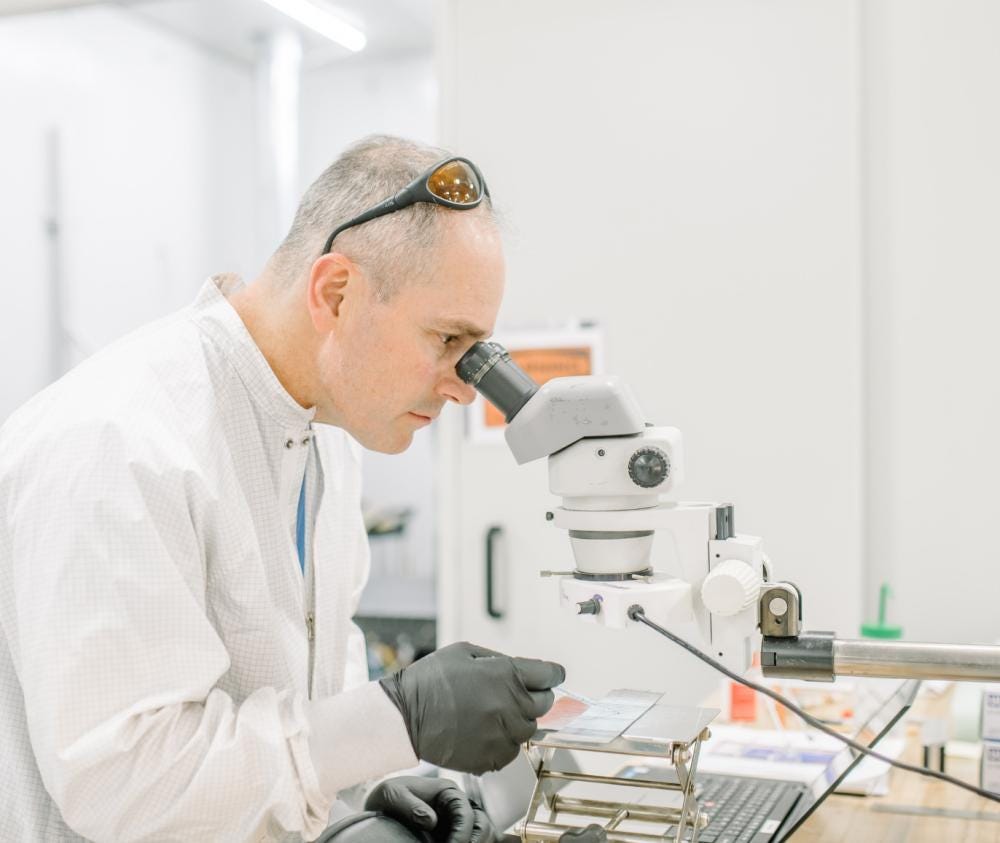
Medical systems offer another direction. In July 2026, IPG announced a binding offer for Lumibird Medical at €300 million, plus a possible €50 million earnout. The announced timetable targeted the fourth quarter, subject to conditions. It is a proposed expansion into ophthalmology alongside IPG’s medical business, rather than evidence that the transaction has already closed.
For a prospective buyer, the transferable lesson is practical: bring actual parts. Compare cycle time, scrap, finishing, energy, maintenance and safety integration. IPG offers demonstrations and sample evaluation. A lightly used machine may never repay its purchase cost. A cobot still needs a laser-safe operating space. The beam earns its place when the whole job becomes better economics.