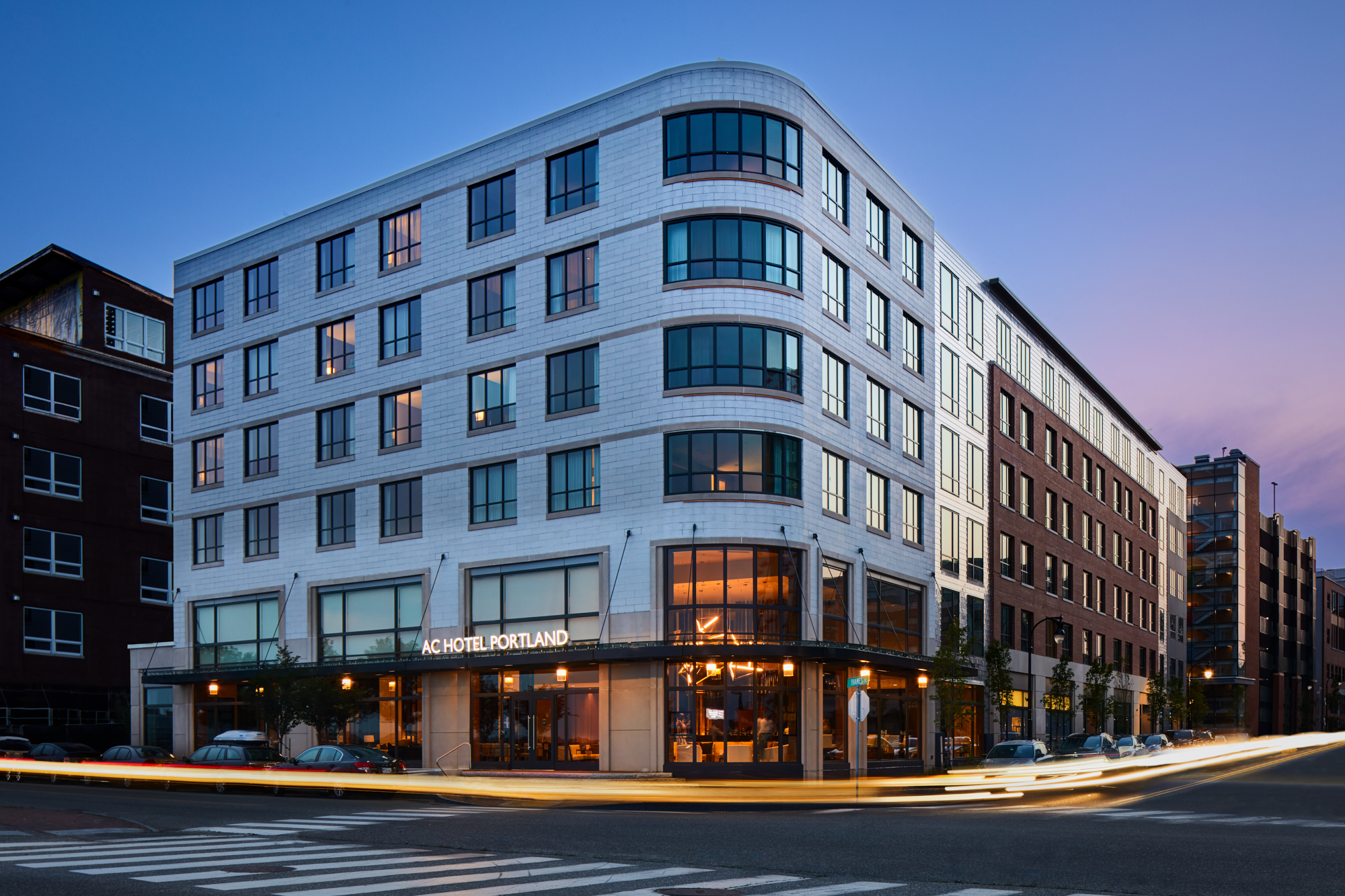
The most revealing thing about a hotel may be the name missing from its sign. In Portland, Maine, an AC Hotel faces the street with Marriott’s brand above the entrance. A traveler can recognize the name, book a room and collect loyalty points without encountering Apple Hospitality REIT, the company whose business is owning hotels like this one. That small separation explains a great deal about how hospitality works.
- The asset: rooms-focused hotels under familiar brands.
- The work: buy carefully, hire operators, maintain the buildings.
- The catch: tonight’s unsold room expires tonight.
Apple occupies a particular place in that arrangement. The brand brings recognition and reservation channels. An outside management company handles hotel operations. Apple supplies ownership and capital, then watches what happens to the money. Its expertise lies in choosing properties, overseeing performance and deciding when another renovation, acquisition or sale makes sense. The guest sees a room. Apple sees an operating asset with a nightly deadline.
The room does the heavy lifting
Consider the difference between selling a night’s sleep and selling an elaborate hotel experience. Full-service properties can require extensive restaurants, meeting facilities and the people to run them. Apple concentrates on rooms-focused hotels, including select-service and extended-stay formats. These still need housekeeping, maintenance and good service. They put more of the economic emphasis on the thing almost every guest came to buy: somewhere dependable to stay.
Business travelers and vacationers both fit that proposition. Residence Inn and Homewood Suites also accommodate longer visits. A familiar brand can reduce the uncertainty of choosing accommodation in an unfamiliar place. For Apple, established reservation systems and loyalty programs help connect those travelers to buildings it owns. Hilton and Marriott are therefore essential partners in the model, even though their names are far more visible to guests.
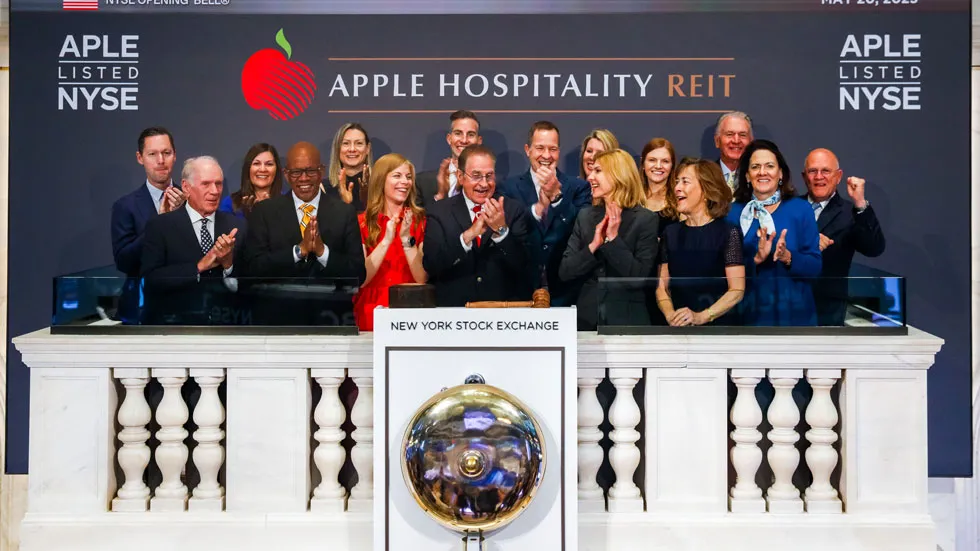
The company’s origins help explain that focus. Founder Glade M. Knight formed Apple REIT Nine in 2007. Mergers with Apple REIT Seven and Eight followed in 2014, alongside the current name. The company listed on the NYSE in May 2015. In September 2016, Apple REIT Ten brought another 56 hotels into the portfolio. This was a business assembled through property investment and consolidation, with predecessor companies reaching back to 1999.
A $160 rate at 75% occupancy produces $120 in revenue per available room. Illustrative arithmetic; expenses still have to be paid.
Why buy the hotel next door?
In June 2025, Apple paid $18.8 million for the 126-room Homewood Suites Tampa-Brandon. That works out to approximately $149,000 per room. The detail that makes the transaction interesting is geographical: Apple already owned the adjacent Embassy Suites. It was buying a property beside an operation it knew, in a market where it already had experience.
The seller was a loan servicer. Apple said the price represented a 12% capitalization rate on trailing results through April, falling to a high single-digit rate after anticipated capital expenditures. Those are management’s transaction figures, not a promised investor return. They reveal the calculation: buy the existing income stream, allow for the renovation bill, then seek better performance through improved positioning and operational coordination.
The transferable idea is quite practical. An asset can have extra value to an owner with nearby operations and useful local knowledge. But proximity alone accomplishes little. The purchase still needs a sensible price, customers willing to book and improvements that earn their cost. Apple’s announcement described an opportunity; successful execution would have to supply the evidence.
The expense that keeps coming back
Ownership makes the renovation bill unavoidable. Apple invested approximately $78.3 million in hotel capital improvements during 2024. Carpets wear out. Equipment ages. A property’s competitive position can deteriorate even when the brand outside stays familiar. Keeping a hotel attractive requires money that cannot simultaneously fund a new acquisition or a shareholder distribution.
Some of this work sits below the guest’s line of sight. Apple’s sustainability program includes LED lighting, efficient HVAC equipment and water-saving plumbing. Its reported 2024 utility cost was $6.09 per occupied room. That figure gives environmental efficiency a concrete operating context: electricity and water belong in the room’s economics, alongside labor and maintenance. A comfortable stay has a surprisingly industrial backstage.
“We are trustworthy and accountable.”Apple Hospitality’s published value: Integrity
For investors, APLE shares offer a way to own part of that hotel real estate business without buying a building outright. Competing lodging REITs offer other property mixes and balance sheets. Apple’s rooms-focused emphasis is a useful comparison point, rather than an exclusive invention. The important differences emerge in acquisition prices, market exposure, operating expenses and the capital the buildings will need.
When the guest disappeared
A hotel cannot warehouse an empty Tuesday for sale on Saturday. That perishability became brutal in 2020. As the pandemic disrupted travel, Apple suspended monthly distributions in March and postponed nonessential capital projects, anticipating roughly $50 million less improvement spending than originally planned. Cash preservation took precedence over the usual schedule.
The company reported a $173.2 million net loss for the year. Demand was the underlying problem; the distribution was one of the early commitments management stopped. Geographic spread could soften a local setback, but a nationwide travel collapse reached across the portfolio. Management said the experience prompted a reconsideration of services and amenities, with attention to what guests valued most. The operating model was adjusted under pressure.
A balance sheet needs room, too
By July 2026, Apple had refinanced its main unsecured facility, including a $700 million revolving credit line, and extended term-loan maturities. It reported no significant debt maturities until 2029. Financing flexibility matters because a renovation calendar and a travel downturn rarely arrange themselves around a convenient loan repayment date.
There was fresh operating progress as well: second-quarter 2026 comparable hotel revenue per available room rose 5.3% to $136.17. That is a dated result, not a permanent condition. Apple’s approach depends on recurring travel demand, capable operators, affordable financing and continuing upkeep. The company hidden behind the sign earns its place by managing those obligations long after the guest has checked out.