Thomas Baltimore once had a fairly specific idea of what college was for. He wanted to play basketball. He went to Baldwin Wallace in Ohio, played, studied, worked, and eventually reached a conclusion that would serve him rather well in business: his better opportunity was somewhere else. Accounting had a more promising future than his jump shot. He transferred to the University of Virginia in 1982.
A hotel executive’s biography usually moves briskly past this sort of thing. There are appointments to list, transactions to total, boards to name. Yet the change of direction belongs near the center of Baltimore’s story. Here was someone ambitious enough to pursue an opening and practical enough to reassess it. Those two qualities would have plenty of work to do together.
Today he is chairman, president and chief executive of Park Hotels & Resorts, the lodging real estate investment trust based in McLean, Virginia. His working world includes resort towers, convention hotels, financing arrangements and renovation budgets. It is a considerable distance from college basketball, though choosing where to put effort remains part of the job.
Seven addresses, one family ambition
Baltimore was born in Front Royal, Virginia, in 1963, the eldest of five children. His parents had attended segregated schools. The family later lived in Maryland, moving among seven rental homes. They never owned a home while raising the children. For a future hotel investor, it is a striking beginning: property was something the family needed before it became something he could acquire.
His father became a Baptist minister. His mother, Geraldine, worked nights while raising the family. Money was tight, and Baltimore took jobs delivering newspapers, washing dishes and landscaping. These were ordinary jobs with immediate purposes. They helped pay for life and, eventually, for the education that might change it.
His mother’s ambition was wonderfully easy to audit. Five children. Five college graduates. All five earned degrees. A corporation can employ a roomful of people to devise a performance measure; Geraldine Baltimore had hers ready at home.
At UVA, Baltimore earned a commerce degree in 1985 and returned for his MBA at Darden in 1991. Between the two came his start at Price Waterhouse and a move toward hospitality. Accounting gave him a way into business. Hotels gave the numbers physical form: buildings, rooms, guests and the cost of keeping everything working.
University of Virginia
UVA Darden
RLJ Development
a public company
Learning the business behind the sign
Baltimore’s early hotel career included positions at Marriott, Host Marriott Services and Hilton. He worked in business development, finance and development, learning the industry from within established companies. A hotel’s sign offers the traveler a reassuring shorthand. The work underneath requires decisions about investment, operations and how a particular property fits its market.
That experience mattered when he joined Robert L. Johnson, the BET co-founder, to establish RLJ Development in 2000. Johnson brought his own record of building a business and a clear interest in expanding Black participation in ownership and investment. Baltimore brought years inside hospitality. Their partnership put those experiences to work buying hotels.
The enterprise grew through acquisitions and private investment funds. In 2011, RLJ Lodging Trust went public. Baltimore became its president and CEO and served as a trustee. By the time he left in 2016, the trust’s portfolio included 125 properties across 21 states and the District of Columbia. The company they had started privately now had public shareholders and the reporting obligations that came with them.
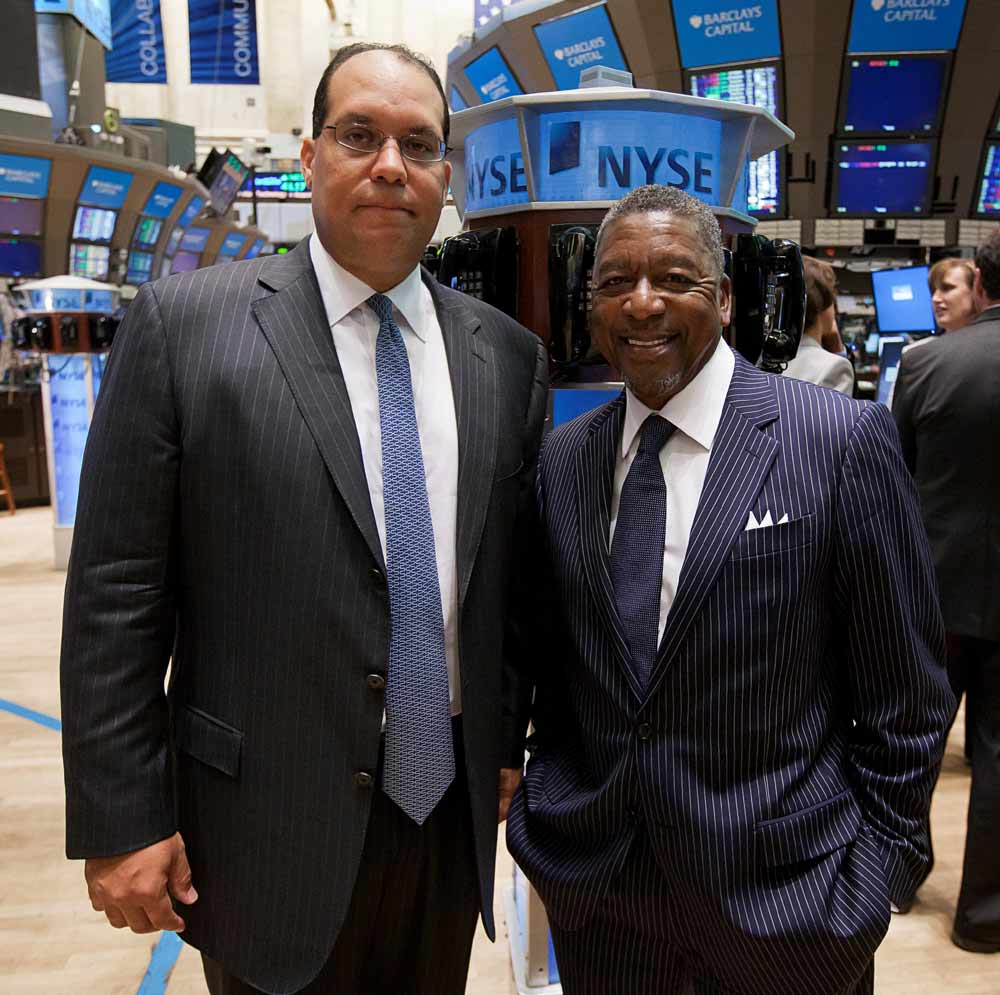
There is a useful difference between working inside a hotel company and helping create one. The second adds a question to every decision: what sort of business are we building? RLJ gave Baltimore an answer in the form of a company that could keep buying, investing and attracting capital beyond its founders’ original undertaking.
Johnson later discussed their hotel venture in the context of opportunity for Black professionals in real estate. That context belongs alongside the transaction history. Ownership determines who participates in decisions, who gains experience and who can offer the next person a larger responsibility. A growing business can change those possibilities as well as its balance sheet.
A second opening bell
In April 2016, Hilton announced that Baltimore would lead the property REIT it planned to separate from the wider company. Leaving RLJ meant leaving a business he had helped build. The invitation offered a different assignment: take an existing collection of hotel real estate and help establish it as an independent public enterprise.
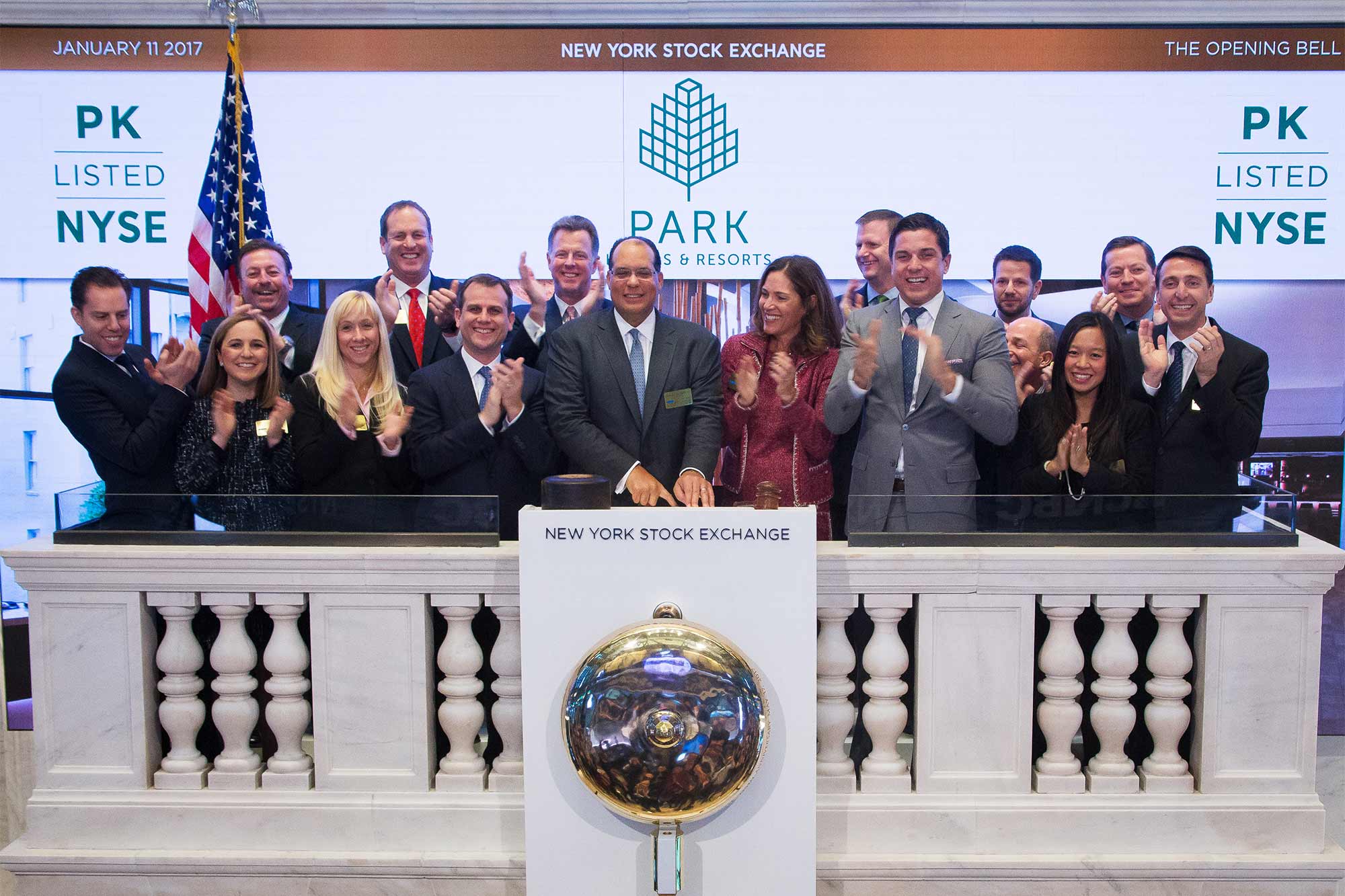
The separation produced Park Hotels & Resorts in 2017. On January 11, Baltimore rang the opening bell at the New York Stock Exchange. The photograph has the familiar ingredients of a corporate milestone: suits, applause and a bell considerably more photogenic than most financial instruments.
Independence also created a continuing task. Baltimore and his colleagues had to decide which properties belonged in Park and where investment could do the most useful work. In 2019, the company agreed to buy Chesapeake Lodging Trust, a transaction intended to improve portfolio quality and broaden its mix of brands, operators and locations.
Buying is the chapter that tends to receive a headline. Selling and renovation can be just as consequential. By 2025, Park’s projects included improvements at properties in Hawaii, Florida and California. These decisions concern the useful life of buildings and the experience they can offer tomorrow. A celebrated address still needs a functioning budget.
The quiet work of buying time
Consider one recent piece of Baltimore’s work. On September 30, 2026, Park announced repayment of the $1.275 billion mortgage secured by Hilton Hawaiian Village. The company used proceeds from a $700 million Bonnet Creek mortgage financing and a $600 million draw on a term loan facility. The original Hawaiian Village loan was due that November.
This was refinancing, with debt elsewhere helping repay the property mortgage. Park said the transaction extended its weighted-average debt maturity to 3.1 years, including extension options, and left less than 11 percent of total debt maturing through 2027. Those figures describe something valuable to an owner: additional time before major repayment deadlines.
Financing proceeds shown total $1.3bn. This graphic does not imply a reduction of total company debt.
A guest need never think about that deadline. The owner has to. Hospitality runs on several schedules at once: tonight’s arrivals, the renovation calendar and the financing timetable. Baltimore’s position requires decisions across those schedules. A good room can be judged in an evening. The wisdom of a capital decision may take years to establish.
The same attention to buildings appears in Park’s October 2026 responsibility update. It described stormwater pumps in Honolulu, hurricane preparation at coastal properties and solar panels at Hilton Waikoloa Village. It also reported LEED Silver certifications for two renovated Hawaiian towers. These are specific interventions in places that have to keep working, with consequences extending beyond the next booking.
What a sponsor can do
Baltimore’s professional responsibilities now reach beyond Park. He serves on the boards of American Express and Comcast and has been Nareit’s chair. In 2020, he became a co-chair of the industry association’s council aimed at improving recruitment, inclusion and advancement for underrepresented professionals. The work puts questions about access inside the institutions that control it.
His language about leadership is particularly practical when he distinguishes a mentor from a sponsor. A mentor can explain a business and offer advice. A sponsor can entrust someone with work that changes a career. The distinction concerns authority: who can actually make the assignment, recommend the promotion or let a colleague attempt something unfamiliar?
“I love pushing people out of their comfort zone.”
Thomas Baltimore
It is an appealing declaration from someone whose own career required a few changes of setting. He describes himself as a servant leader. His three recurring principles are prayer, preparation and perseverance. Faith provides grounding; preparation concerns readiness; perseverance supplies the commitment to continue when circumstances become difficult. They are plain words, and he has resisted replacing them with a more elaborate vocabulary.
Recognition arrived from two directions in 2025. The Horatio Alger Association named him an award recipient, linking his career to its emphasis on education and opportunity. Nareit gave him its Industry Leadership Award. One recognition looks toward a person’s route into success; the other toward his contribution after arriving.
A chance passed along
Baltimore and his wife, Hillary, have supported educational institutions and scholarships, including at UVA. His university service also includes investment governance through UVIMCO and work with the McIntire foundation. The connection has lasted well beyond graduation. Education remains a place where he spends time, influence and money.
His story makes that continuity understandable. Before there were hotel portfolios to examine, there was a young person choosing a course of study and trying to afford it. Later came the ability to help build companies, select colleagues for bigger assignments and support students approaching their own decisions.
The basketball detour is a good place to return. Baltimore changed direction, acquired new skills and kept going. His career has given him an unusual view of what follows when someone gets a workable opening. The next student’s chance may have a much smaller price than a hotel. For the student, the stakes can feel just as large.