Thomas J. Baltimore Jr. gave college basketball a year. He had been admitted to the University of Virginia, but the chance to play at Baldwin Wallace in Ohio proved persuasive. Then came the practical discovery that his academic prospects looked better than his sporting ones. He transferred to UVA in 1982. For someone whose subsequent career would involve buying, selling and reassessing hotels, it was an early exercise in knowing when a promising idea had served its purpose.
There is a pleasing absence of grandeur about this beginning. No childhood blueprint for a lodging company. No inevitable march toward a corner office. A young person tried something he wanted, learned from it and moved. The future hotel investor had made a useful allocation of one year.
The basketball experiment
Baltimore was born in Front Royal, Virginia, in 1963, the eldest of five children. He grew up in Maryland in a family where money required constant attention. His father started a Baptist church; his mother worked nights. Baltimore took responsibility for his younger siblings and worked an assortment of jobs himself. Independence was something to earn, in quite literal installments.
His transfer to UVA brought a new set of calculations. He needed scholarships, grants, loans and work to make college possible. One job involved washing dishes in the cafeteria. There is a particular education in clearing up after people who attend the same classes as you: everybody has the same syllabus, but the hours available to study it can differ considerably.
He completed his McIntire degree in 1985 and later returned for an MBA at Darden, graduating in 1991. Between those two credentials came the beginning of a working education in public accounting at Price Waterhouse. Financial statements became professional material. The hotel business would give those statements doors, beds and room rates.
Marriott, Host Marriott Services and Hilton followed. Across those businesses he worked in finance, operations and development. The sequence matters because hospitality presents several businesses under one familiar sign. A hotel’s brand, its management and its real-estate ownership can sit in different hands. Baltimore was learning how the pieces met.
Seven hotels, and a useful lack of ballrooms
At Hilton, Baltimore got to know board member Robert L. Johnson, the co-founder of BET. In 2000 they established RLJ Development. Johnson and his former wife, Sheila, provided seed capital. The opening portfolio contained seven hotels bought from Hilton. Three years later, it contained twelve.
The investment argument had a practical attraction. RLJ favored upscale hotels with focused service, along with compact full-service properties. A guest might recognize the brand and pay an attractive room rate, while the building carried fewer of the costly complications associated with extensive meeting facilities and food service. The business case could survive without an enormous ballroom. Ballrooms have their uses; they also have expenses.
This was a choice about operating economics, rather than a judgment on travelers’ taste for luxury. What revenue could a hotel produce, and how much of that revenue would remain after running it? That question gave RLJ a recognizable approach as the enterprise grew beyond its original collection.
Private-equity funds supplied the next stage. A 100-hotel portfolio transaction in 2006, valued at $1.7 billion, changed the scale of the undertaking. In 2011, RLJ Development and two affiliated funds were combined for the initial public offering of RLJ Lodging Trust. Baltimore became its founding president and chief executive.
Leaving a company with your fingerprints on it
By the time Baltimore prepared to leave RLJ in 2016, the company held 125 hotels across 21 states. It was a substantial departure in both senses of the word: he was leaving a business he had helped create, and he was accepting another job with consequences measured across a large portfolio.
Hilton was separating its hotel real estate from its management and franchise business and its timeshare operation. Baltimore was recruited to lead the planned hotel REIT. He left RLJ that May. Park Hotels & Resorts began independent public trading in January 2017, with 67 hotels and more than 35,000 rooms.
The numbers describe a different starting point from RLJ’s seven-property beginning. At Park, Baltimore inherited scale. The task involved assembling a team and deciding what to do with an existing collection, including large hotels with substantial meeting space. Experience with one investment model had to be applied thoughtfully to another.
Asked about putting the new company together, he emphasized the people. His formulation was short enough to resist being improved by a consultant:
“No man or woman succeeds alone.”
Thomas J. Baltimore Jr., 2017
That observation fits a hotel owner particularly well. The guest sees a stay. Behind it sit operators, employees, brands, lenders, owners and investment decisions, each with work that the others depend on. A chief executive can set priorities. Delivering them requires a much longer list of names.

Bigger is a decision. So is smaller.
Park’s proposed purchase of Chesapeake Lodging Trust in May 2019 put another set of choices in view. The announced cash-and-stock transaction was valued at approximately $2.7 billion, including transaction costs. The intended benefits included a broader mix of hotel brands, operators and locations.
That distinction matters. Adding buildings can enlarge a company while leaving its exposures much the same. Changing the mix asks a different set of questions about what the whole collection depends on. For Baltimore, the acquisition offered a route beyond the concentration of the portfolio inherited from Hilton. The deal closed that September.
Investment in existing properties has been another part of the job. Park’s Bonnet Creek resort complex in Orlando underwent a $220 million renovation, described in its 2024 annual report. The work included additional meeting space, remodeled rooms and public areas, and improvements to the golf course. A resort investment can involve considerable work beyond the guestroom door.
By 2026, the company was also disposing of properties outside its core plans. Its August results described five hotel sales or dispositions completed since January, alongside substantial renovation spending. The Royal Palm South Beach Miami reopened in July following work costing more than $100 million. Buying, improving and exiting are all verbs in this business. Keeping every building would be a strategy too, with its own costs.
Year-over-year growth in comparable revenue per available room.
The work also extends to the less photogenic parts of a property. In October 2026, Park’s corporate responsibility update described stormwater pumps in Honolulu, hurricane preparedness at coastal hotels and its first solar-panel project at Hilton Waikoloa Village. Baltimore linked those investments to efficiency and the resilience of the portfolio. The hotel brochure may lead with the view; ownership requires attention to what happens when the weather changes. Park’s update put the portfolio at 29 hotels and resorts, with approximately 21,000 rooms, a reminder that the collection itself continues to change.
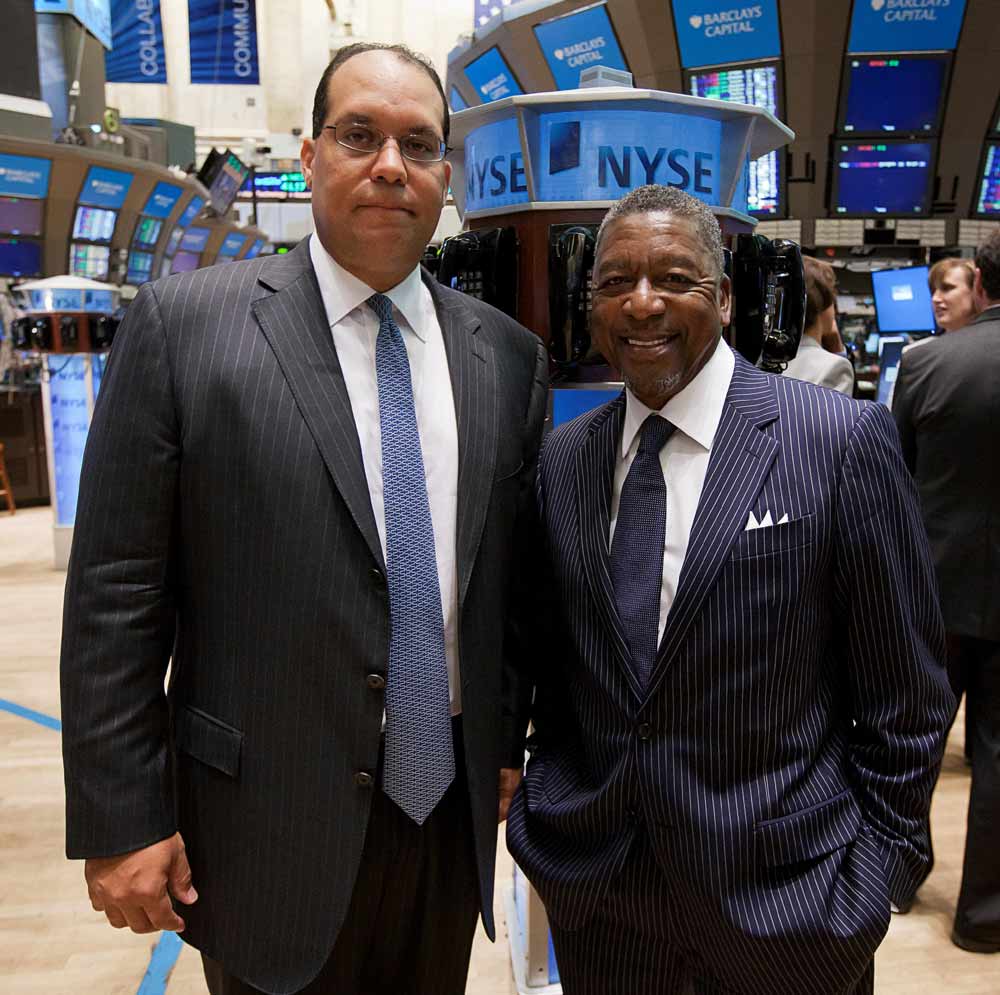
The quarterly figures are a dated snapshot, rather than a verdict on a career. They show the continuing work: allocating money, changing a portfolio and testing whether improvements produce the desired results. A celebratory exchange photograph records an occasion. An annual report keeps asking what happened afterward.
A seat at somebody else’s table
Baltimore’s responsibilities extend into other boardrooms. He serves as a director of American Express and joined Comcast’s board in March 2023. He previously served nearly fifteen years on Prudential Financial’s board. His current industry and university roles include the American Hotel & Lodging Association’s executive committee and the University of Virginia Investment Management Company.
Comcast describes his experience in leading a consumer-facing enterprise as relevant to its own businesses. It is a reminder that a hotel executive’s working knowledge includes much more than buildings: customer demand, capital spending, people and financial risk travel together. Board work brings that experience into discussions where somebody else runs the company.
He also chaired Nareit’s executive board in 2018. At Darden, his alma mater recognized him with the Charles C. Abbott Award in 2020. These roles and honors trace a professional network built across investment, hospitality and education, rather than a career contained entirely within one company.
The names that stay on the ledger
There is another record of Baltimore’s priorities in the institutions he and his wife, Hillary, support. They have backed scholarships and fellowships, including a scholarship honoring Sylvia V. Terry, the UVA admissions dean who helped him make the transfer from Ohio. Decades after that decision, her name remains attached to an opportunity for another student.
Their commitments also extend to the performing arts. Wolf Trap lists Hillary and Tom Baltimore in its campaign’s $2.5 million to $9.99 million giving band. Hillary co-chaired that campaign with Karen Schaufeld. A career usually narrated through hotel transactions has a place for stages, education programs and the practical work of supporting an institution.
In 2025, Baltimore received the Horatio Alger Award. He describes his guiding principles as prayer, preparation and perseverance, and calls himself a servant leader. His account of success includes helping employees take on responsibilities they might initially consider beyond them. The aspiration is recognizable: give someone room to attempt more.
The basketball year belongs in this story because it gives ambition some welcome flexibility. Baltimore could leave a court without abandoning his wish to get somewhere. He could help build RLJ and later leave it. And he could remember an admissions dean long after the transfer paperwork had done its work. Those choices make a career more interesting than the titles alone. They show what he carried forward, and what he was willing to change.