The form asks about vehicles. Then animals. Then an emergency contact. It is the sort of paperwork most people would rather finish than read: a rental application bearing the name Progress Management Company and a San Diego address. Yet this small administrative object is a useful entrance to a much bigger story. Before an apartment portfolio becomes a billion-dollar transaction, someone has to decide where the car goes and whether the cat is coming.
Progress Management operated in that everyday world. Its historical company description places it in residential property management, with more than 5,800 rental apartments and townhouses across San Diego County. The resident was the customer; the home was the product; keeping a residential community functioning was the recurring job. Its company description emphasizes service to residents and the experience of living in the community.
A house was the beginning
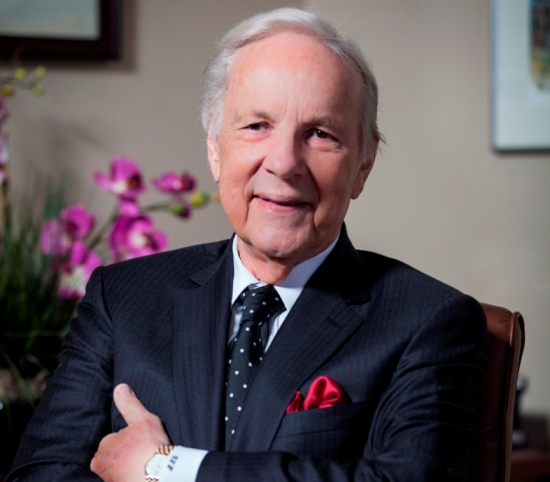
Behind the business was Conrad Prebys. His foundation dates his arrival in California to 1965 and puts the money in his pocket at $500. That detail is memorable, but it deserves careful handling. Arrival money is not a construction budget. It tells us something about the distance traveled, without explaining how every building was financed. The foundation’s account begins with the move west and follows the fortune into philanthropy.
Prebys’s early housing work was remarkably concrete. In a 2014 interview, he recalled an abundance of vacant San Diego lots and houses sold for $6,990 on the customer’s land. He was learning the trade as he went. Later, his real-estate activity expanded into building, owning and renting apartments, the progression described in Sanford Burnham Prebys’s account of his career.
“I didn’t even know what a house was.”
Conrad Prebys, recalling his early building career in an SDSU interview, 2014
The distinction between selling a finished house and operating a rental property matters. A sale ends one commercial relationship. A rental creates work that returns every month. Repairs, vacancies and residents’ needs remain attached to the asset. In this case, the later business was built around precisely those continuing responsibilities.
The business hidden in the application form
The Progress rental application brings the operation down to human scale. It asks for employment information, gross monthly income, vehicles and animals, and directs applicants to the manager for the animal policy. Those fields point to a service with practical boundaries. An apartment has an occupant, a payment obligation and rules that need explaining before move-in.
A former community and marketing manager, Victoria Hanson, describes the machinery behind that encounter: coordinating maintenance and vendors, arranging apartment turnovers, processing move-ins and move-outs, collecting rent and preparing monthly reports. Her published work history also lists applications, credit checks and reference verification. This is a former employee’s account of her role, rather than a promise about every property’s present-day service.
For a renter, those tasks connect to a straightforward problem: finding a home and dealing with the people responsible for it. For the property operation, they connect occupancy with income and upkeep. The basic business model is rental housing. The work surrounding the lease makes that model possible. A useful way to read the company is to follow one apartment through its recurring cycle.
- 01Prepare
Turnover & maintenance - 02Lease
Applications & move-in - 03Operate
Rent & resident needs
Local knowledge, repeated thousands of times
Progress’s market position was regional. A 2020 rental-housing industry program described holdings in North, East and South County as well as the city of San Diego. It introduced Mirian Castro, its director of operations and property management, as a speaker on rental-market conditions and pandemic-related management challenges. The event listing offers a useful snapshot of the operation’s geographic scope and the expertise it brought to an industry discussion.
Staff also appeared in the trade’s teaching and professional networks. The National Apartment Association lists a Progress property manager in its instructor directory. A June 2021 supplier council event included assistant area supervisor LaToya Ray alongside representatives from Greystar and Atlantic and Pacific Management. These are concrete signs of participation in the apartment-management profession.
That is a more useful distinction than a claim that the company possessed a secret technique. Its documented position combined a county-wide apartment footprint with people doing specialized residential work. For anyone comparing rental options, the meaningful questions follow naturally: who manages the particular building, what does the lease include, and how are repairs handled? Portfolio size alone answers none of them.
When the owner becomes a foundation
Prebys’s wealth acquired another purpose through his giving. In 2014, California State University trustees considered naming SDSU’s student union in recognition of his $20 million scholarship contribution. Their meeting materials anticipated support for at least 150 students annually across seven areas. A later Indiana University publication records another $20 million gift in 2015, supporting faculty, scholarships and a career-services center. The university’s account identifies Prebys as the former president of Progress Construction and Management.
After his death in 2016, the apartment assets entered a different institutional chapter. The foundation said it received the properties in August 2019 and began preparing a sale to diversify its assets and carry out its charitable purpose. That was the foundation’s explanation for its decision, as reported by Voice of San Diego.
Transaction coverage identified Blackstone and TruAmerica with a purchase encompassing roughly 5,800 apartments in 66 communities. Institutional Real Estate’s report put the price above $1 billion. Contemporary coverage also described a planned $100 million in property improvements and resident services through Pacific Housing. Those were the buyer’s announced plans, as GlobeSt reported, rather than verified outcomes.
Housing advocates saw another set of stakes. Voice of San Diego reported concern about the future of naturally affordable apartments and frustration that local groups had little time to explore alternatives. The foundation defended its marketing process. The disagreement was about what should happen to a large collection of homes as well as what those homes were worth.
Read the handover as carefully as the growth
The useful lesson here is an interpretation, not a formula attributed to Prebys. A company that operates homes creates relationships that survive a transaction. The purchase can close while the resident’s concern continues: what will living here be like next year? Studying the sale alongside the operating business makes that continuing relationship visible.
There are practical things to copy: understand the work around the product, develop people who can perform it, and examine what an ownership transition means for customers. Those habits travel more easily than the economics of a particular San Diego portfolio. An acquisition price is not an operating margin, and a founder’s charitable generosity is not a lease protection. Progress Management’s history is most instructive when those distinctions stay in view.