At seven, Leslie Hale was already working in the family daycare business in Los Angeles. The compensation arrangement was memorable: as she later explained, the pay did not arrive until after college. Her parents supplied something else in the meantime. They worked seven days a week, and their daughter got an extended, very practical introduction to responsibility.
Watching them did not immediately make her want to run a company. Quite the reverse. She initially wanted a job she could do well, a paycheck she could collect, and the luxury of leaving the electricity bill to somebody else. Anyone raised around a family business will recognize the appeal. Ownership can look rather less romantic from the kitchen table.
Eventually, she would lead RLJ Lodging Trust, the Bethesda hotel real estate investment trust. But the interesting part of her story is how her understanding of responsibility changed. The girl who wanted freedom from the owner’s worries became an executive who wanted to live with the consequences of her own decisions. Along the way, other people kept enlarging her idea of what was possible.
A dollar, then a different future
Hale grew up in South Central Los Angeles and attended public schools. Her family’s history included a sharecropping grandfather and parents who built a business of their own. She has spoken about the difficulty of the surrounding neighborhood and the order she found in family, school, sports, and community activities. Education offered a route toward a different future.
A college tour with her father helped make Howard University that destination. In her first finance class there, she discovered the appeal of making money productive. Turning one dollar into two was an idea she could get excited about. Finance gave her ambition a subject. It also gave the family’s experience of work and ownership a new vocabulary.
She graduated from Howard in 1994, summa cum laude, with a bachelor’s degree in business administration. An MBA at Harvard Business School followed; she was a Goldman Sachs and Toigo Fellow. Those credentials would open doors in finance. Howard, in her telling, had already done something more personal: it changed the scale of the future she allowed herself to imagine.
The distinction matters. A degree can certify what somebody knows. A school can also introduce a student to people, professions, and expectations that previously felt remote. For Hale, the education story includes both. Her later involvement with Howard gives that early experience a continuing place in her working life.
“I am honored and humbled by the opportunity to hold this position and lead this great company.”Leslie Hale, 2018
The appeal of being answerable
At General Electric, Hale entered the financial management program. Her first permanent assignment was in real estate, and she liked its physical presence. Finance could deal in abstractions; a hotel or an office building was something a person could walk into. Work in Paris and Madrid extended that experience beyond the United States.
Her career also took her to investment banking at Goldman Sachs, advising on transactions. There she began to distinguish between helping somebody else decide and holding responsibility for the outcome. Advising offered a view of the game. She wanted more time playing it. She returned to GE and its real estate business before joining RLJ in 2005.
Tom Baltimore, RLJ’s co-founder, was part of the attraction. Hale has recalled knowing within minutes of meeting him that she wanted to work for him. Choosing the people mattered as much as choosing the business. In a later reflection on leaving GE, she described making a list of ten priorities for her next chapter. People came first.
It is a revealing piece of career arithmetic. The spreadsheet might favor a title, a salary, or the size of an employer. Hale was paying attention to the humans who would shape her working day. RLJ offered a place to combine finance, property, and an entrepreneurial organization. It also put her closer to the decisions she wanted to make.
Thirteen years before the corner office
Hale became RLJ’s chief financial officer in 2007. She helped take the business public in 2011, then became chief operating officer in 2016. The work covered successive versions of the company: private investment platform, public trust, and a larger hotel owner following the FelCor combination in 2017. These were changes she helped execute from inside the organization.
The FelCor transaction, valued at approximately $3 billion, brought integration work as well as scale. Bringing companies together creates an unglamorous second act: deciding which assets belong, reducing debt, combining functions, and making the proposed savings real. Hale’s experience encompassed the transaction and the operations around it. The announcement was only one part of the assignment.
Her route to the top still included a disappointment. She has described being passed over for CEO and spending the following two years studying and learning. When she eventually took the job in August 2018, she believed the additional observation had made her better prepared. Waiting had become another form of training, though it had not been her first choice.
Her appointment made her the first African American woman to lead a publicly traded REIT. That fact belongs beside the long apprenticeship that preceded it. The historic promotion came after thirteen years at RLJ, during which she had worked through finance, operations, and corporate change. The title gave public visibility to a career already built around consequential decisions.
- 2005Joins RLJ
- 2007Becomes CFO
- 2011Helps lead IPO
- 2016Becomes COO
- 2018Becomes CEO
A hotel has two kinds of numbers
Hotel ownership suited Hale’s interests because it brought an operating business together with a real estate asset. The building matters. So does what happens inside it every day. That combination gives the owner several questions to answer at once: where to invest, what to improve, and how the guest experience supports the economics.
At RLJ, she has worked with familiar hotel brands, including Marriott, Hilton, and Hyatt. The brand on the building and the company that owns the real estate occupy different parts of the business. Understanding her job means looking beyond the sign outside. A guest sees a room for the night; an owner has to consider the property’s longer working life.
That perspective makes renovations and conversions part of strategy. In discussing RLJ’s portfolio, Hale has described evaluating opportunities to change a hotel’s brand and rethink lobby space. A lobby can be pleasant and commercially useful at the same time. There is no requirement that the furniture carry the entire burden of hospitality.
Her industry work has also put people near the center of the financial discussion. As AHLA’s 2023 board chair, she emphasized employment opportunities and the hospitality workforce. The association’s agenda included advocacy and a five-year strategic plan. For an executive trained in finance, the connection was straightforward: hotels depend on the people who deliver the experience that brings guests back.
Who counts as a peer?
One of Hale’s mentors, Alan Braxton, asked her what her peers were doing. She began with people from college, business school, and previous jobs. He redirected the comparison toward people doing the work she hoped to do. The question changed her frame of reference. Her existing circle no longer had to set the ceiling.
It is a useful intervention because ambition often borrows its measurements from whoever happens to be nearby. A familiar comparison can reassure and limit at the same time. Braxton’s advice encouraged Hale to look ahead. Another piece of guidance was equally concrete: stay close to the revenue-generating side of the business, where experience can lead to influence over strategy.
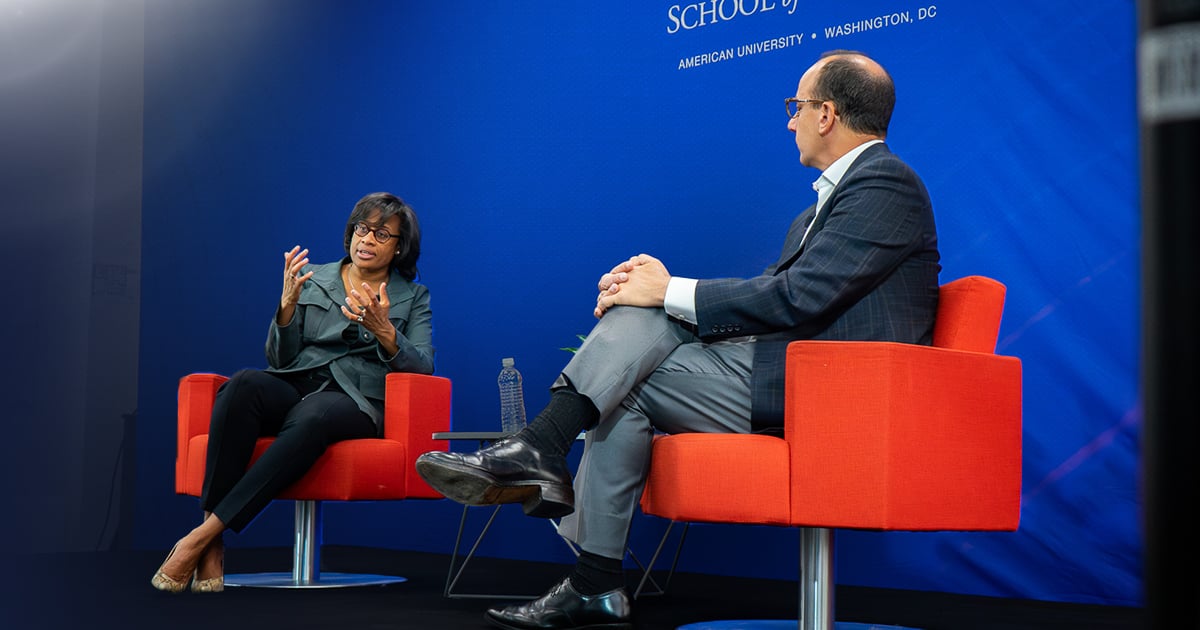
When she talks about representation, that attention to assignments remains. At American University in 2024, she discussed the importance of putting women and minorities into roles that can lead toward the chief executive’s office, then sponsoring and coaching them. The design of a career matters alongside an invitation to enter the company.
She has also described using industry conferences to connect people with internships, opportunities, or access. The effort gives her public milestone a practical follow-up. Becoming the first brings attention. Helping someone else gain useful experience creates another route forward. Her account of mentoring repeatedly returns to those ordinary, consequential acts.
The return on an education
In June 2025, Hale became chair of Howard’s board of trustees. She had joined the board in 2013 and served as vice chair from 2021. Her committee experience included finance, investments, and facilities and real estate. The responsibilities drew directly on the professional knowledge she had accumulated since leaving the university.
Her governance work extends beyond Howard. She joined Delta Air Lines’ board in April 2022, and her 2026 RLJ biography lists her as chair of the Federal Reserve Bank of Richmond’s Baltimore Branch board. These positions place her experience in conversations about travel, business, and institutions beyond the hotel portfolio she leads.
Returning to Howard’s business school in 2025 brought a smaller, more personal encounter with the distance traveled. She saw her own portrait on the wall. As a student, her ambitions had been modest: finish school, find a good job, get the interview. Years later, the person once hoping for an opening was pictured at the entrance.
She told students about the three qualities she had worked to build early in her career: competency, confidence, and credibility. The combination is deliberately practical. Knowing the work matters; believing you can do it matters; other people learning to trust your contribution matters too. None arrives simply because the business card has been printed.
In a March 2026 conversation with Kristin Peck, Hale organized her career around learning, earning, and returning. Giving back to Howard now helps explain what inspires her. The university that expanded her expectations has become an institution she helps govern. The relationship has acquired another direction.
There is a pleasing reversal here. Her parents’ business taught her how much an owner has to carry. Finance taught her how capital can grow. Mentors helped her raise her sights. Today, her account of success leaves room for the people who made the journey possible, and for students still waiting for their first interview. The seat at the table comes with room-making duties.
Continue the conversation
- RLJ Lodging Trust ↗
- Leslie Hale on LinkedIn ↗
- Watch: Walker Webcast conversation on YouTube ↗
- Watch: On Purpose with Kristin Peck ↗
- Howard board chair appointment ↗
- Howard: the return to business school ↗
- Kogod: a conversation about career decisions ↗
- Nareit: the 2018 CEO interview ↗
- CoStar: persistence and preparation ↗
- LODGING: leading AHLA in 2023 ↗