Antonio Nasser was already a vice-president when he described himself as a master’s student. In 2014, he had years of commercial experience behind him, senior roles at Roche and Johnson & Johnson on his résumé, and an eight-year association with Allergan. He was also working toward another qualification at the University of São Paulo. The business card had become quite respectable. Apparently, it had not settled the question of homework.
That overlap is a useful place to begin with Nasser. His career lends itself to the familiar sequence of company names and larger titles. Yet the more interesting thread runs alongside those appointments: the executive continuing to study, the company leader joining a collective board, the experienced operator taking responsibility for a business with an unfamiliar specialty.
In February 2024, GE HealthCare announced him as president and CEO for Latin America. By then, his experience included Brazil, South America and a worldwide remit in emerging markets. He arrived with a substantial professional education. The new job still offered something he had yet to learn.
A vice-president with homework
Nasser studied business administration at the University of São Paulo’s FEA. His postgraduate training also included an MBA in marketing and international business. In the 2014 account of his career, he was pursuing a master’s at the same university where he had studied administration. His professional profile dates the MSc to 2014-2016.
The dates put student life directly beside executive life. He had joined Allergan in 2006 as a Latin American vice-president and taken another vice-presidential assignment in 2012. Two years later, he was discussing the responsibilities of that role while identifying himself as a postgraduate student. A promotion had evidently left room for another syllabus.
It is tempting to turn that detail into a grand theory of character. The detail works perfectly well on its own. Someone with an established career chose further formal study. That is an observable decision, and a more useful introduction than a string of adjectives about curiosity. Plenty of executive biographies describe learning as a value. Here, there are dates.
His education continued beyond the MSc. In February 2022, his professional profile records a board-member training credential from Fundação Getulio Vargas. By then, he had already moved into association governance. The qualification sits neatly beside the responsibility: another occasion when holding a position and studying its demands happened together.
A master’s degree at the University of São Paulo, during an established executive career.
The commercial apprenticeship
Nasser’s account of his beginnings is straightforward: he started in the commercial side of the business. Before Allergan, he held leadership positions at Roche Diagnostics and Johnson & Johnson. Those names matter as successive workplaces, rather than as ornaments. They place the later regional CEO inside a career built through operating roles.
In 2006, he joined Allergan as a vice-president for Latin America. In 2012, his responsibilities changed again. By the time he discussed his trajectory in 2014, he could describe more than two decades in the industry. There was no overnight arrival concealed behind the title. Several organizations, commercial assignments and changes of scope preceded it.
He remained with Allergan for nearly 12 years, ultimately becoming vice-president and general manager for Brazil. In 2018, he joined Baxter as general manager for Brazil. The move gives his career a clear next chapter: a country leadership role, followed by broader regional responsibility, followed by a move to GE HealthCare.
At Baxter, he became vice-president and general manager for South America and took on commercial excellence for emerging markets worldwide. The two remits suggest different kinds of attention. One names a geographic operating responsibility; the other concerns commercial practice across markets. Both appear in the record of experience he brought to his next employer.
The progression is easy to flatten into a ladder. Read more closely, it contains sideways changes as well as upward ones: different companies, different business areas, different boundaries on the map. A résumé makes these transitions tidy. Doing the work requires discovering what travels well from the last assignment and what needs to be learned again.
When the chair belongs to everyone
A separate strand began in 2020, when Nasser joined ABIMED’s board. His professional profile places his board chairmanship from November 2021 through December 2023; the association described his mandate as the 2022-2023 term. This was leadership among companies, with a different relationship to authority from running one of them.
In describing the work, Nasser emphasized continuity. Members had been invited to rank priorities online, allowing the association to compare its agenda with theirs. He also described plans for an independent ethics committee whose members would come from outside the associated companies. There is a practical understanding of governance in both choices: ask the membership, and give oversight some distance.
“Não deve haver muita ruptura e sim continuidade”
Antonio Nasser, 2022
Favor continuity over disruption. Paraphrased from Portuguese.
Continuity is an unfashionably modest word for a new chairman. It promises fewer fireworks than transformation. It also acknowledges that useful work may have begun before the current officeholder acquired a microphone. The interest here lies in his stated approach to the job: confirm priorities, adjust the work and keep the organization moving.
A board brings another complication. Its members may agree on a shared agenda while remaining competitors elsewhere. The chair has to work with people whose authority comes from their own organizations, too. Nasser described participation and respectful debate as features of that board. The arrangement makes listening a practical requirement of the role.
An exit with unfinished business
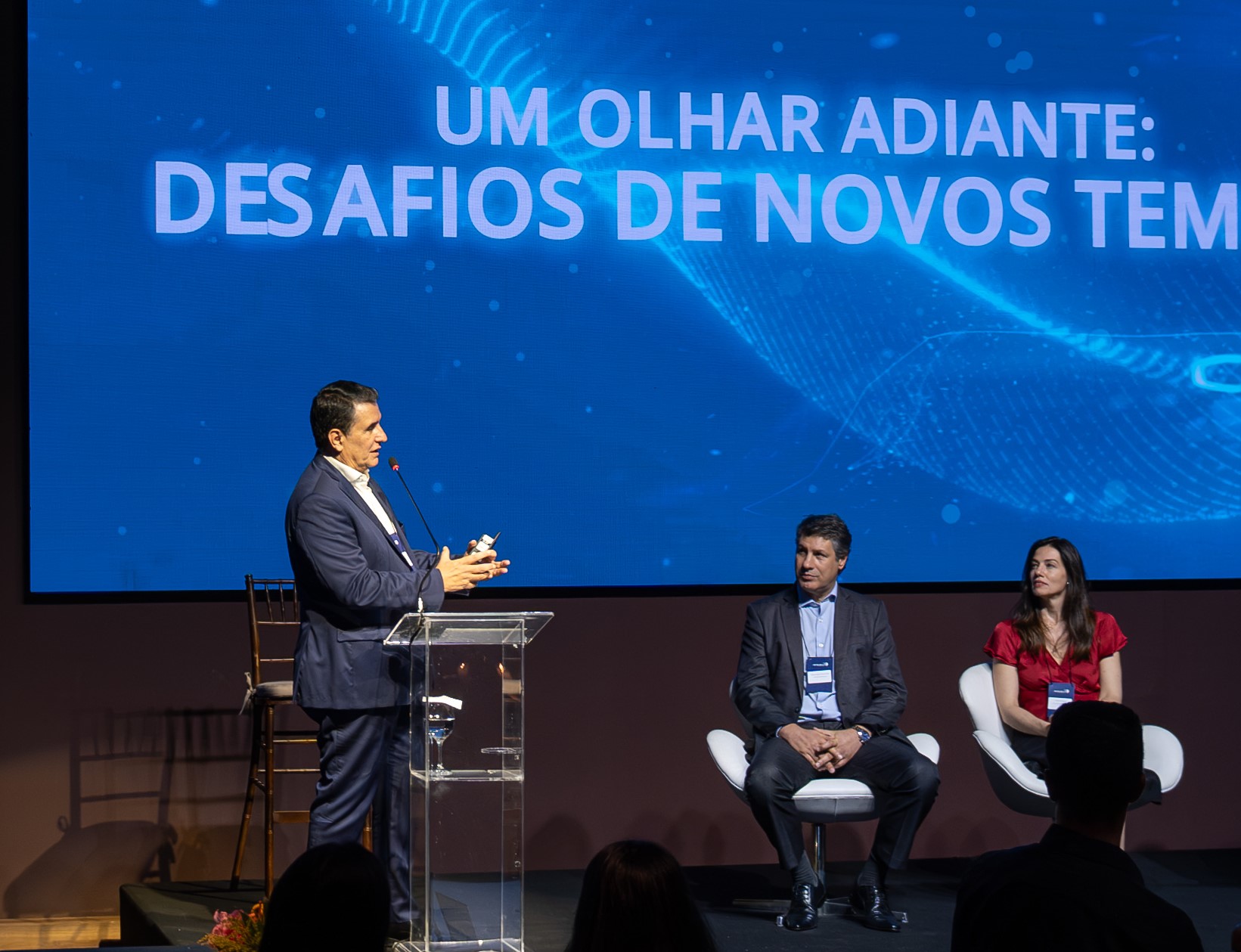
At the association’s annual gathering in São Paulo on December 6, 2023, Nasser thanked the colleagues who had served during his chairmanship. He identified ethics and compliance, tax reform and market intelligence as priorities that had emerged from listening to members. It was an account of an agenda, including work that depended on continued participation.
He welcomed Patrícia Frossard as his successor and praised her contribution as vice-chair. Her incoming term began in January 2024. Nasser remained on the new board as a member. His relationship with the organization therefore continued after the chairmanship changed hands.
That is a small but telling shape for a leadership transition. The outgoing chair could describe what had occupied the group, recognize the incoming chair and continue serving without retaining the top position. Institutions need such handovers. They seldom make as much noise as appointments, which may explain why they reward a closer look.
Within weeks, Nasser had an appointment of his own to announce. The association chapter and the corporate chapter meet here, at the turn of 2024: one chairmanship concluded, one board relationship continuing, and a new regional executive role ahead.
Experience meets a new subject
GE HealthCare announced Nasser’s appointment on February 15, 2024. He succeeded Rafael Palombini, who had held the role for four years. The assignment covered operations across Latin America. At the time of the announcement, the reporting line ran to Elie Chaillot, then president and CEO of the International region.
The company had become independent from GE in 2023. Nasser was joining a business establishing its life as a separate listed company. That corporate setting gave his arrival a particular context: a familiar name was operating within a recently changed structure, and a new regional leader was taking responsibility inside it.
His response to the opportunity included an admission worth preserving. There was a specialty within the company he had not previously worked in. Seniority had not made every part of the new employer familiar. His conversations with its leadership and the prospect of forthcoming innovations helped attract him to the position.
“I am in the right place,” he said in May 2024. It is a short statement, carrying the confidence expected of a newly appointed CEO. Beside his acknowledgment of unfamiliar territory, it becomes more interesting. He could bring experience to the role while recognizing that the employer would give him a fresh subject to master.
A book, a room, another conversation
There is a smaller clue to Nasser’s professional interests in a 2022 podcast appearance. He recommended Trillion Dollar Coach: The Leadership Playbook of Silicon Valley’s Bill Campbell. The recommendation belongs in this portrait because he actually made it. It puts a specific book beside the degrees and appointments, and adds a human detail to an otherwise formal record.
By February 2025, his public activity included GE HealthCare’s summit, where he described bringing together roughly 200 leaders. His account stressed the chance to understand customers and partners and align priorities. Later that year’s JPR event also provided an occasion for him to discuss those relationships publicly.
There is a recurring practical question across these episodes: how does a leader keep hearing from people outside the immediate office? For Nasser, the documented occasions include a membership exercise, a shared board and gatherings with customers and partners. None requires an invented private ritual to make the point.
The student and the CEO belong in the same story. Nasser’s career has accumulated authority, geographical scope and recognizable company names. Alongside them sit a master’s degree earned during executive life, training for board service and the willingness to enter unfamiliar professional territory. The title keeps changing. There is still something left to learn.