Peter Arduini’s new beginning came with old initials. On January 4, 2023, GE HealthCare began trading on Nasdaq under GEHC. The opening-bell celebration came from the company’s manufacturing facility in Waukesha, Wisconsin. There were employees, cameras and the familiar ceremony of a business announcing itself to investors. Arduini had been back at GE for a year. He had returned to help a part of the company leave.
That is a pleasingly untidy career move. The usual executive biography points upward, each appointment a rung on a cooperative ladder. Arduini’s takes a long loop: fifteen years at GE, senior responsibility at Baxter, a decade running Integra LifeSciences, then GE again. The second visit brought the accumulated experience of the intervening jobs. It also brought a different brief. A division was becoming a company with its own obligations.
A shore without an ocean
His story begins in Jersey Shore, Pennsylvania, near Williamsport. Geography has a sense of humor: this Jersey Shore is inland. Arduini grew up with immigrant parents and a father whose railroad career lasted nearly fifty years. The railway changed corporate identities along the way. His father kept working.
Arduini’s early commercial experience came at a roadside vegetable stand. As a child, he sold what had been grown. It is a modest beginning, and useful for that reason. There is no need to promote the stand into a miniature multinational. It was a place to make a sale, long before he acquired a marketing degree or responsibility for a business.
He identified hard work, family and faith as values of that upbringing. At Susquehanna University, he studied marketing and competed in sports. He played football and was a track-and-field captain. A 1986 championship results sheet records a discus throw of 46.63 meters. Before the earnings calls, there was a rather different way of measuring a good performance.
The education between the promotions
After college came Procter & Gamble, where he worked in sales and marketing. Then came his first fifteen years at GE. These were jobs close to customers and, increasingly, jobs that required him to oversee the machinery of a business. He led U.S. sales, a global services operation and a global product business. The responsibilities crossed both commercial and operational lines.
A sales background is worth keeping in view here. Products must make sense to the people buying them. Services create continuing obligations after a transaction. Running a business adds another set of questions: what to invest in, who should lead, how to make the numbers work. Arduini’s assignments brought those questions together over time. His career did not begin with the chief executive’s broad view; it widened toward it.
He also earned an MBA at Northwestern’s Kellogg School of Management, graduating in 1995. Business school was one part of the education. Moving through jobs inside GE supplied another. Later, reflecting on his earlier employers, he put the contribution of other people plainly: “At all three companies I had good mentors as well as good exposure to operations.”
“At all three companies I had good mentors as well as good exposure to operations.”
Peter Arduini, reflecting on his early career
In 2005, he left GE for Baxter, taking charge of its Medication Delivery division. This was a multibillion-dollar global business. He would spend five years there before joining Integra LifeSciences. By then, he had worked within more than one large organization. A familiar corporate vocabulary does not make two employers identical. New colleagues and different operating arrangements require an executive to learn again.
- 1990-2005GESales, services, global business leadership
- 2005-2010BaxterDivision president
- 2010-2021IntegraCOO, then CEO
- 2022 →GE againA return with a new assignment
There is an advantage to seeing the same responsibility from different employers. A process that felt inevitable in one organization may be arranged differently in the next. The executive has to distinguish the purpose of the work from the local habit. Arduini had that comparison available when he moved again. Each company supplied another way to organize a team, evaluate a product and decide where to put resources. By the time GE called him back, he had a working history against which to judge familiar practices.
A rehearsal with real consequences
Integra appointed Arduini president and chief operating officer in November 2010. The remit was broad: worldwide sales and marketing, research and development, manufacturing, quality, regulatory activities and human resources. A list like that can make a press release heavy going. For the person taking the job, it means that every part of the business can arrive at the same desk.
In January 2012, he became CEO. Stuart Essig moved to executive chairman, and founder Richard Caruso remained a director. Arduini’s promotion followed a succession process. That matters to the shape of his story: his first chief executive appointment grew out of a period spent running the operations, with people who knew the company remaining involved in its leadership.
He stayed in the role through December 2021. During that tenure, Integra expanded through acquisitions and internal development. GE’s announcement of his eventual appointment credited him with doubling Integra’s EBITDA and quintupling its market value. Those are descriptions of a period under his leadership, rather than a claim that one person produced every result. A company grows through the work of many desks.
The Integra years also made him answerable as the head of a public company. That experience would travel back to GE. He had run a business within a larger parent and then led one with its own board and investors. His return combined familiarity with the old organization and experience outside it. Both were relevant to the assignment ahead.
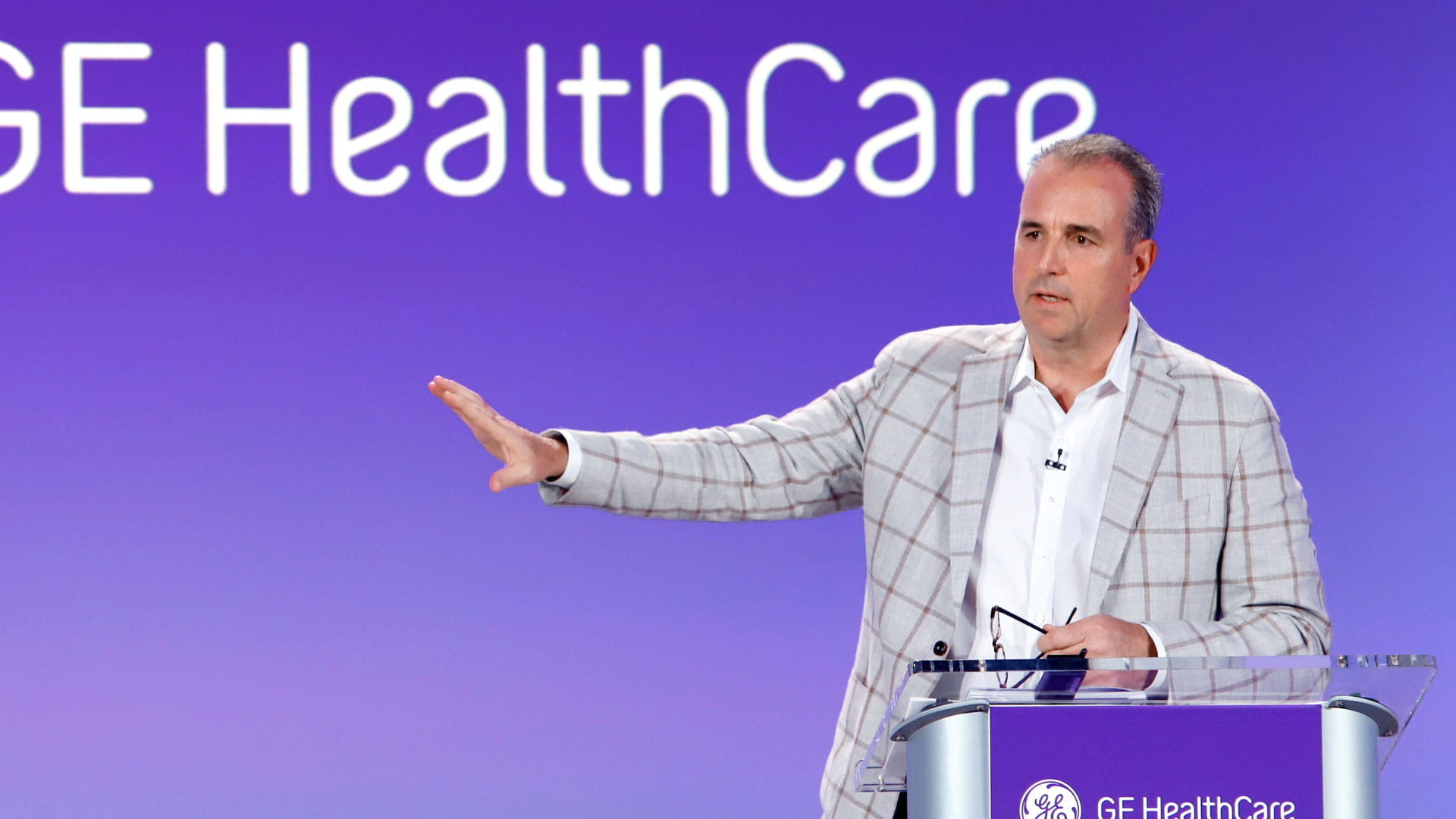
The bell rang in Wisconsin
GE announced his appointment in June 2021, with a January 3, 2022 start. He succeeded Kieran Murphy. Larry Culp, GE’s chairman and CEO, pointed to Arduini’s business record and ability to build teams. The selection put a former insider in charge of preparing a familiar operation for a changed corporate life. Knowing the place was a starting advantage; it did not finish the job.
The separation had a precise financial timetable. GE distributed shares after the market closed on January 3, 2023. Independent trading began the next morning. Shareholders received one GE HealthCare share for every three GE shares they held, subject to the distribution’s terms. A vast organizational change arrived in an investor’s account as an additional line.
There is something wonderfully compact about that. Years of work can resolve into four letters on a screen. Behind them sit agreements covering services, taxes, employees, trademarks and property. Independence requires the practical arrangements that let a business continue doing business. The ceremony makes a clean date available. The work underneath is considerably less photogenic.
Waukesha supplied a useful setting for the opening bell. Leaders gathered at a manufacturing facility, joined by colleagues in person and virtually around the world. The company had its own listing, but the occasion also belonged to people making and supporting its products. Wall Street could watch the screen; Wisconsin had the room.
The first trading day.
GEHC on Nasdaq.
People before the next vacancy
One recurring concern in Arduini’s public comments is how to prepare people for responsibilities they do not yet hold. It appeared during his Integra years in discussions of training, development and succession. It remains relevant when an independent organization needs colleagues who can make decisions across functions. Promotions are visible. The preparation behind them can be much harder to see.
This gives the familiar phrase “leadership development” some substance. A person needs work that stretches their judgment, colleagues who will teach them and an opportunity to see another part of the business. Arduini’s own route passed through sales, services and operating leadership. The range of those assignments belongs in the explanation of his career alongside the titles.
His outside roles extend that range. He joined Bristol Myers Squibb’s board in 2016 and has served the National Italian American Foundation and Susquehanna University. At AdvaMed, he chaired the board during 2023-2025. Mick Farrell succeeded him in January 2026. An executive biography needs to let such positions change; otherwise, yesterday’s appointment quietly becomes a permanent job.
After the anniversary
By 2026, the company’s public account of Arduini’s work included deploying Heartbeat, its business system, and strengthening leadership and operating processes. His annual-report letter put disciplined execution and operational excellence among the priorities for the year ahead. These are the less ceremonial concerns of an independent business: how work gets done and how performance can improve repeatedly.
His annual-report letter thanked approximately 54,000 colleagues. The number puts some scale around the concern with developing people. A company that size needs judgment distributed across teams and locations. The chief executive can set priorities; colleagues have to carry them into the work in front of them.
The distance from the vegetable stand is substantial. So is the distance from his first GE job. Yet the route is easier to follow when the departures remain in the picture. Baxter gave him another operating setting. Integra gave him a decade as CEO. Returning let him bring that experience to colleagues working under initials he already knew.
Arduini’s career offers a useful correction to the perfectly straight professional ladder. You can learn a place, leave it, and become better prepared for a responsibility there. When GE HealthCare’s bell rang, the return had already happened. The company’s independent working life was just beginning. There would be plenty of ordinary mornings on which to find out what he had brought back.
Follow the conversation
Explore Arduini’s public work and career in more detail.
Peter Arduini on LinkedIn ↗GE HealthCare ↗The Kellogg conversation ↗An interview from the Integra years ↗The Nasdaq opening-bell event ↗