At the London Olympics in 2012, Ant Taylor encountered a peculiar kind of sellout: one with empty seats. He had gone to watch volleyball. Outside, fans wanted tickets. Inside, space remained unoccupied. The event had apparently exhausted its supply of admission without exhausting its supply of room. For someone interested in how markets work, this was rather like finding a restaurant with a queue outside and tables reserved for ghosts.
The episode became the origin story of Lyte, the ticketing company Taylor founded in the years that followed. It also supplies a useful way to read his career. He notices the gap between what a system records and what people experience. A ticket has been sold; a fan still cannot get in. A business has software; a person still has to do the work. His attempts to close those gaps have taken him through advertising, live entertainment and, more recently, artificial intelligence.
There is a difficult chapter in the middle. Lyte stopped operating in September 2024, and Taylor confirmed his departure. Any account that ends with the Olympic inspiration, or with the festivals that adopted his product, leaves out the people waiting for money when the service went dark. The idea and the ending belong in the same story.
An education in exchanges
Taylor grew up in Berkeley, California, studied at Princeton and played basketball there. The Ivy Club identifies him with the class of 2001. He later described New York as the city where he came of age, an adopted home that mattered even after he returned to California. His geography runs in both directions across the country: Bay Area childhood, East Coast education and work, then San Francisco.
Before tickets, he worked in advertising technology. He was an early executive at Right Media, which Yahoo acquired in 2007, and co-founded Moat, later acquired by Oracle in 2017. These were businesses concerned with making digital advertising markets and measurement work. Lyte would put a different kind of inventory in front of him: something attached to a particular performance, in a particular place, on a particular day.
The difference gives the empty-seat problem its urgency. An unused concert ticket cannot be put back on the shelf for next month. The performance happens, the lights go up, and the opportunity expires. Taylor approached that problem with experience of exchanges, but also with a fan’s interest in the evening itself. His recorded favorites ranged from Madonna and The Who to the NBA Finals and a Bruins-Canadiens game at the Garden.
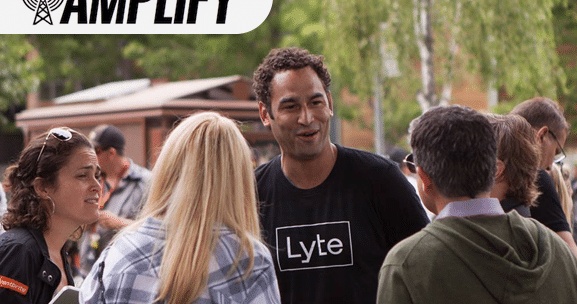
The return button gets complicated
Lyte’s proposition started with a modest request: let people return tickets they could no longer use. In ordinary shopping, a return is a familiar part of the bargain. In live events, changing plans could leave a buyer trying to become a reseller. Lyte proposed an official route back through the event’s own ticketing arrangements, connecting returned inventory with people still hoping to attend.
There was a business reason to care, too. The organizer wanted a full event and a relationship with its audience. The original buyer wanted a way out. The waiting fan wanted a genuine ticket. Lyte’s opportunity lay in making those interests meet without sending everyone off to negotiate in separate corners of the internet.
The machinery required cooperation with existing ticket issuers. A company account of 2017 described an expansion from the Ticketfly partnership to seven primary-ticketing integrations. The detail is less glamorous than a festival lineup, but explains the work: a useful exchange had to connect to the systems already handling admission. The return button was the small visible part of a larger arrangement.
By 2019, Lyte’s festival relationships included Stagecoach, Newport Folk and BottleRock, with Coachella joining that year. Taylor worked alongside Lawrence Peryer, who became a public voice for the company’s commercial approach. The pitch made room for both sides of the gate: give customers flexibility while helping organizers manage the inventory and demand surrounding their events.
A queue before there is a show
The ambition eventually extended earlier in the buying process. Rather than learn about demand only after tickets went on sale, Lyte developed reservations that could register interest before every event detail was settled. A fan could signal a willingness to buy; an organizer could gain information before making all the decisions that turn a possible event into an expensive commitment.
That moved Taylor’s attention from fixing a transaction after purchase toward designing the steps before it. The company described waitlists, transfers, swaps and returns for credit as parts of the same platform. It was trying to make a ticket behave more flexibly throughout its life, from the first expression of interest to the moment someone walked through the gate.
Money followed the argument. In December 2020, Lyte announced a $33 million Series B, comprising equity and debt. The participating investors included Social Capital, Rocketship VC and Quincy Jones. The presence of a musician made sense in a business whose product was administrative but whose purpose depended on people caring deeply about the performance at the other end.
“We believe buying tickets should be no different from any other consumer purchase.”
Ant Taylor, December 2020
In 2021, Taylor appeared in Rolling Stone’s Future 25 music feature. It was recognition for an attempt to change the arrangements around attending a show. The applause, in this case, was for the plumbing. A working return process may never make anyone’s list of favorite concert memories, but its absence can certainly make the list of complaints.
Learning the job after founding the company
Taylor also spoke publicly about the work of leading the organization behind the product. In a 2021 conversation with Brett Kistler, he distinguished being Lyte’s founder from becoming the CEO he wanted to be. He described wanting to learn every part of building a company. It was a revealing qualification from someone already carrying the title.
A founder can choose the problem and still have much to learn about organizing people around it. Taylor’s own account allowed for that unfinished work. He discussed earlier startup experiences with a mixture of satisfaction and self-criticism, describing different outcomes for himself and the companies involved. A successful acquisition, in that telling, could coexist with a more complicated personal assessment.
That candor gives some texture to the familiar sequence of company names. Right Media, Moat and Lyte can fit neatly into a short biography. Living through them evidently did not feel so tidy. Taylor’s willingness to distinguish the commercial result from his experience of it makes the career more human than an uninterrupted procession of logos.
London, again
In September 2022, Lyte announced the addition of Festicket and Event Genius assets and teams. The move extended its reach across markets including the UK, Europe and Australia. It also broadened the shopping basket beyond admission, taking in combinations of tickets, VIP packages, merchandise and hotel bookings. Taylor’s empty-seat project was becoming a more extensive events commerce business.
The location offered a pleasing circle: international expansion reaching back toward the city where his Olympic observation had begun. Taylor explicitly connected the acquisition announcement to London 2012. A decade after noticing the mismatch, he was describing a business intended to serve fans and event creators across borders. The symbolism was convenient; the operating demands would be considerably less so.
Festicket had entered administration before the sale. Acquiring assets and welcoming teams meant expanding out of a distressed situation, with promoters already affected by the old business’s difficulties. That context belongs beside the expansion announcement. The international operation brought additional relationships to maintain, alongside the original task of making ticket returns work. The business Taylor was running had grown considerably beyond the exchange suggested by those empty Olympic seats.
When the exchange went quiet
In September 2024, Lyte’s websites displayed maintenance notices while the service stopped operating. Promoters reported problems accessing inventory, and fans complained about refunds. Taylor confirmed that he had left. The company that had offered a route through ticketing uncertainty had become the subject of uncertainty itself.
He said the board and creditors were seeking a potential buyer to repay affected promoters and fans. The distinction matters: a search for a buyer was an effort toward a remedy, rather than evidence that everyone had been repaid. Reports placed Lyte’s total fundraising at about $53 million. Earlier partnerships and investment could demonstrate belief in the product; they could not settle the obligations left by its closure.
For Taylor, that leaves a record with achievements and consequences alongside one another. Lyte persuaded recognizable festivals to adopt its approach. It also stopped providing the service those relationships depended on. The attractive simplicity of letting someone return a ticket had always rested on the continuing operation of the business underneath it.
Another system to build
Taylor’s subsequent work is at Aida, whose public communications identify him as chief operating officer. The company builds AI software for sales teams. In July 2026, its digital twin launch announcement listed him as the media contact. His career had moved from the event queue to the everyday work surrounding a sale.
In his own Aida launch post, Taylor described the importance of engineering a system that helps teams succeed. The company’s software brings together information from tools such as email, calendars and customer records, with the aim of helping sellers prepare and follow through. The subject has changed, but the interest in the arrangements around a transaction remains recognizable.
The next chapter does not erase the last one. It does show Taylor working on another practical question about how people use software. His Olympic observation still has force because it was so plain: someone wanted to be inside, and there was a place for them. Between those two facts lay a business. Building it proved harder than spotting the empty seat.