A credit card has an unusually busy social life. It appears in a checkout form, passes through a payment system and leaves traces in software the customer will never see. Anshu Sharma has spent years asking why the rest of our personal information should be allowed quite so many acquaintances. An email address can acquire a wider professional network than its owner. Unfortunately, it cannot be trusted to choose its friends.
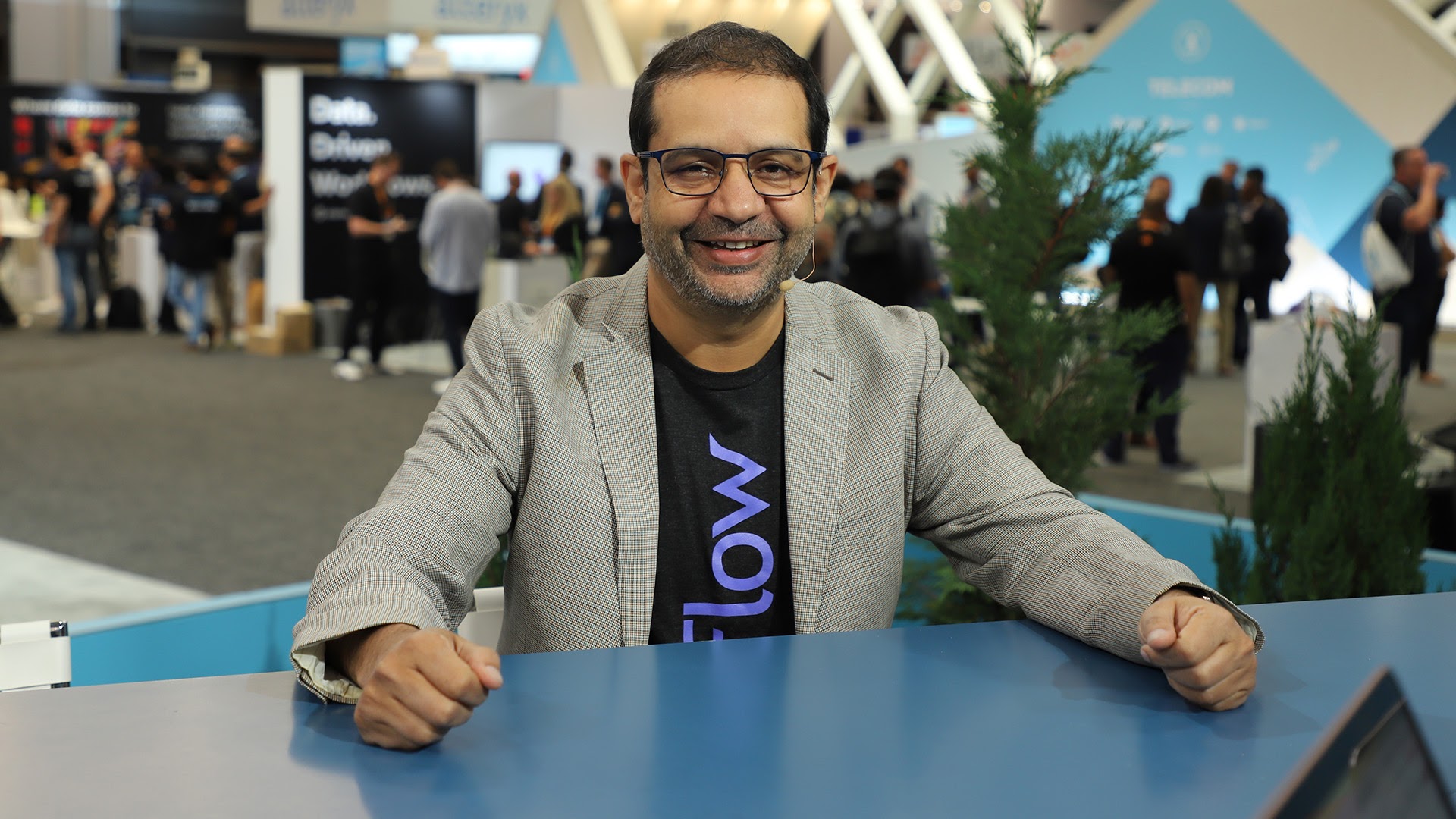
His answer is Skyflow, the company he co-founded in 2019 and leads as CEO. Its premise is plain enough to sound almost impolite at a software conference: keep sensitive information in a purpose-built vault, and let applications do their jobs without each possessing the original. The ambition sits at the intersection of his earlier careers as an engineer, a product executive and an investor. Each taught him something about the distance between a clever idea and a business somebody trusts.
Early to the cloud, late to his own idea
Sharma studied computer science at IIT Kharagpur, graduating in 1996, and earned a master's degree at the University of North Carolina at Chapel Hill. His career began at Oracle, working on data and identity software. He joined Salesforce in 2007 because he expected the world to move to the cloud by 2009. He has described himself, with economical self-mockery, as someone who tends to be early.
At Salesforce, he became a vice president working across product and strategy, with responsibilities involving identity, security and user data management. These are the parts of an application that rarely get applause during a demonstration. Customers notice them when something goes wrong, a distinction shared by plumbing and diplomacy.
The work exposed a recurring difficulty. Businesses wanted the usefulness of customer information while struggling with the obligations of holding it. The same information could live in many applications and databases, each with its own permissions and potential leaks. A company could be thoroughly modern in its software choices and still have a remarkably untidy relationship with the people represented in its records.
A cheque, and an appetite for building
After Salesforce, Sharma moved into active investing and became a venture partner at Storm Ventures. By March 2018, he was describing a working life that mixed writing code, running products and backing startups. His investment test centered on founder-market fit: markets he understood, led by people who understood them deeply enough to build something substantial.
The portfolio grew to include Nutanix, Algolia, Workato, Tekion and Razorpay. Skyflow's biography credits him with investments in more than 50 startups. Those names span infrastructure, search, business automation, automotive software and payments. They also explain why his conversations about company building roam beyond the security department.
In 2025, inclusion in Business Insider's Seed 100 prompted a revealing description of his motives. He said he invested for the pleasure of seeing new products become real businesses and, eventually, enduring companies. He pointed to Larry Ellison backing Marc Benioff, and Benioff backing other founders, as examples he had learned from. His acknowledgments named individual builders, including Workato's Vijay Tella and Tekion's Jay Vijayan. The cheque came with an interest in the workshop.
Across a portfolio that includes Nutanix, Algolia, Workato, Tekion and Razorpay.
The product that politely disappears
One investment essay makes his taste unusually clear. In 2016, writing about ProsperWorks, the CRM company later known as Copper, Sharma began with salespeople's dislike of entering data. He had worked at two major CRM vendors. Making software more beautiful, mobile or social had not removed that chore. ProsperWorks proposed putting the work inside the email environment salespeople already used.
The attraction was a product that could recede from view. A salesperson would spend less time serving the database and more time doing the job. For someone with a background in platforms, Sharma paid close attention to the person stuck filling in the fields.
His other writing that year looked ahead to software built around machine learning and examined Microsoft's purchase of LinkedIn through the value of the professional graph. He was thinking about what data could make possible, who understood the customer and where a company might find its next reason to matter. Years before Skyflow, those questions were already sharing a desk.
In his account of Microsoft's LinkedIn acquisition, he argued that the buyer was purchasing relevance as well as a professional graph. Email, calendars and workplace conversations already described parts of a person's working life; LinkedIn could connect those fragments. The essay showed him examining the same information from the builder's and investor's sides of the table. Data was valuable because of the useful relationships a product could draw from it.
A vault with a working door
Skyflow brought that thinking into a different kind of product. Its founding inspiration included the internal data vaults used by Apple and Netflix. The plan was to make comparable infrastructure available through an API, so an application developer could add privacy capabilities without rebuilding the entire system around them.
The important word is use. Simply locking information away would be a splendid solution for a company that intended to stop doing business. Sharma's approach preserves practical operations such as searching, analyzing and running workflows, while isolating the sensitive originals. Applications can work with tokens that stand in for protected information. Access to the underlying data can then be governed separately.
He has discussed this as privacy by architecture: placing protection inside the way the system is built. That shifts some responsibility away from every individual developer remembering every rule in every application. The vault becomes a controlled place for sensitive records, rather than another copy in an expanding collection.
At Snowflake Summit in 2023, Sharma was already discussing how that architecture applied to large language models. A company's appetite for analysis does not abolish its customers' interest in discretion. The engineering challenge is to accommodate both without turning every useful query into a small administrative opera.
Twelve months before the first sale
Skyflow's early development demanded patience. Sharma has described roughly a decade of studying the problem before starting the company, followed by more than a year building before the first customer conversation about the product. He believed a new infrastructure category needed enough substance for a buyer to understand the difference. His account of the first customer call ends with a sale.
Patience also appeared when a customer wanted to cancel after a change in leadership. He listened to the incoming technology leader's priorities and worked to show where Skyflow fitted. That relationship later helped open a larger opportunity. The useful move was to understand the changed situation. A contract can record a purchase; it cannot make a new executive care about the old explanation.
His perspective on changing direction is similarly particular. At SaaStr Europa, appearing with Rajsi Rana, he used the basketball meaning of a pivot: one foot stays planted. A startup needs to identify what is actually working, whether that is its customers, technology or route to market, before deciding what to change. Keeping the product merely because it consumed the most effort invites the sunk cost fallacy to chair the meeting.
“Have a beginner's mind.”
Anshu Sharma, on advice he values
Then the software began taking action
AI expanded the setting for the same problem. In March 2024, Skyflow announced a $30 million funding round led by Khosla Ventures. By August 2026, it was announcing runtime data control for enterprise AI search. The vault's territory had grown beyond the familiar application database.
The distinction matters because an AI agent can take action. Information moves through prompts, model responses, logs and tools; a useful answer may trigger another system. In September 2026, Sharma described Skyflow's work across data stores, models and agents, including controlling what reaches a model and enforcing policy on what an agent may do.
He also described the company's adaptation to unstructured material such as PDFs. Protecting a neat database field and handling sensitive passages inside a document require different capabilities. Skyflow had to develop its engineering, product work and commercial approach accordingly. For a founder who talks about planting a foot before turning, the continuity is clear: the information still needs protection, even as its itinerary becomes harder to predict.
An engineer makes room for persuasion
There is a useful tension in Sharma's public thinking. He makes the case for strong technical foundations, yet keeps returning to the person who must understand and buy them. He tells technical founders to respect marketing as a craft. A capability acquires commercial meaning when somebody sees how it solves a problem they already recognize.
His own history offers an example. In the ProsperWorks essay, he did not begin with the architecture of a CRM. He began with the salesperson's unwanted task. In the investment conversations, he asked whether the team knew its market. In discussions of privacy, he makes room for actual workflows. The explanation has to survive contact with someone's working day.
He brings the same qualification to advice itself. He has named a beginner's mind as useful counsel and described separating time for execution from time for strategy. Learning a pattern is only part of the job; deciding whether it belongs in the current situation is the less comfortable part. An engineer can accumulate frameworks as readily as a company accumulates databases. Both collections eventually require judgment.
Sharma's aspiration is to build an enduring company around protecting information people entrust to businesses. Skyflow's task now includes software that can act on that information, often through several systems in succession. The career that began with data and identity has arrived at another question of permission. Before an application, a model or an agent gets acquainted with your private life, he would like someone to check the guest list.