An empty room is an unusually honest business problem. You can put a beautiful picture of a sofa on a screen. You can approve the fabric, admire the proportions and imagine the compliments. Eventually, someone has to get the thing through the door. Ankur Agrawal has spent the Inhabitr years working backward from that moment.
He started with people who needed furniture without a long commitment. The company he now leads handles commercial furnishing, where the customer may have a hotel to open rather than an apartment to settle into. The scale has changed. The stubborn physical facts remain. A chair has to exist. A shipment has to arrive. The room has to be ready.
There is something pleasingly inconvenient about his choice of industry. Furniture gives a technology entrepreneur very little room to hide. A promising interface can earn applause; it cannot persuade a missing bed to materialize. Agrawal’s career makes more sense when you notice how often it returns to the work required after somebody has made a decision.
An engineer learns where the friction lives
His route ran through Germany, where he earned an engineering degree at Jacobs University Bremen, and through jobs at Procter & Gamble and Infineon Technologies. At P&G, his work included helping start a baby-care manufacturing plant in India. Before furniture became his own business, manufacturing and the movement of goods were already part of his professional life.
McKinsey supplied a wider field of view. He became a partner in the firm’s Chicago office, working in consumer packaged goods. His remit included design, pricing, operations and supply-chain complexity. His career took him across Asia, the Middle East, Europe and the United States. These are useful places to learn how many decisions sit behind a seemingly straightforward purchase.
Consulting lets you examine other people’s systems. Founding a company gives you one of your own, including the parts that misbehave. In Agrawal’s case, the move into entrepreneurship also had a domestic precursor: he had moved more than a dozen times before Inhabitr’s April 2018 launch. Furniture had become a recurring obligation attached to a change of address.
A sofa with an exit plan
The early proposition was legible without a diagram. Rent the furniture. Have it delivered and assembled. Choose a room package or individual pieces. When circumstances change, the furniture arrangement can change with them. A sofa, ordinarily bought with the solemnity of a small diplomatic treaty, could have an exit plan.
By November 2019, Inhabitr had furnished more than 2,000 homes in ten American cities. A $4 million Series A led by Great North Labs would help fund expansion and technology. The operation mixed new and refurbished furniture, sourcing from manufacturers and working with local retailers. Those retailers brought something a website alone could not supply: people who could handle the physical job.
That choice matters to the shape of Agrawal’s story. He was connecting existing capabilities, giving them another route to the customer. The designer, store and delivery crew each knew a piece of the work. The business opportunity sat in getting the pieces to cooperate. Even the early rental model contained a coordination problem larger than choosing the right couch.
“the focus on profitability is very important”
Agrawal on expansion, 2020
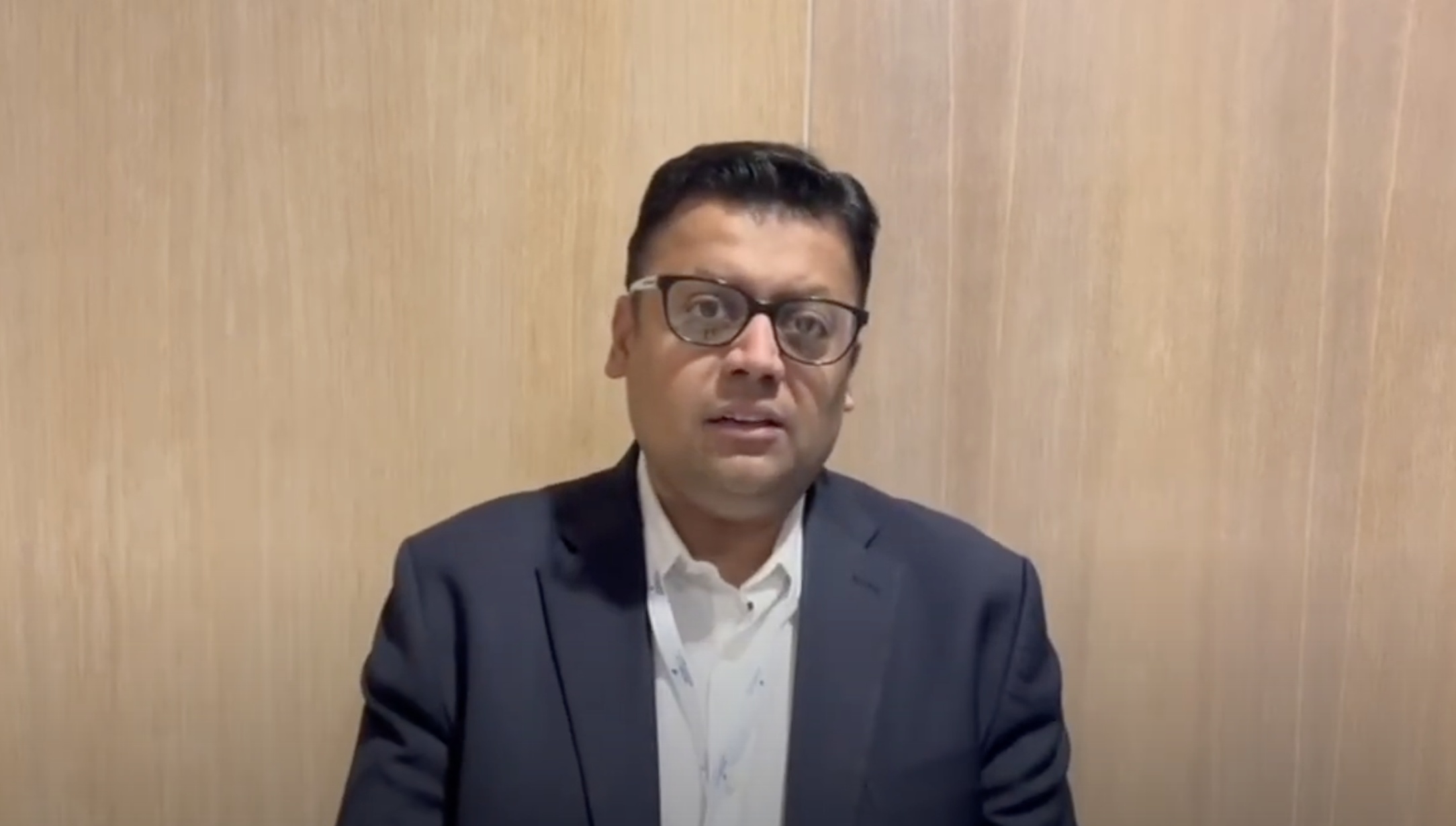
His public comments about growth were accompanied by talk of profitability, employees and culture. He described a family with generations of business experience in India. In 2020, he also emphasized loyalty to the people who had helped build the company. The picture is of a founder discussing obligations alongside opportunity. Expansion would bring more cities; it would also bring more people depending on the operation working.
The room gets bigger
Commercial furnishing changed the unit of ambition. An apartment customer needs somewhere to sit. A hotel owner needs a building full of rooms to become usable on a schedule. Repetition magnifies the consequences of a small choice. A specification that works beautifully in one room must remain available, affordable and consistent when ordered again and again.
In April 2024, Inhabitr announced a $27 million Series B led by Hamilton Ventures, with participation from commercial real estate owners and operators. The stated expansion covered hospitality, multifamily properties and student housing, alongside plans for the Middle East and the United Kingdom. Capital was following a business whose customer and responsibilities had become broader.
The following March, the company reported furnishing 15,000 rooms during 2024 and doubling annual revenue. It also reported opening a Dubai design studio and launching operations in the UAE and Saudi Arabia. These were company-reported results, with a geographic spread that made the original local-store model look like the first chapter of a longer operational education.
Rooms furnished in 2024, as reported by Inhabitr in March 2025.
A separate measure arrived in November 2025. Deloitte’s Technology Fast 500 placed Inhabitr at No. 179, recording 455% revenue growth over 2021 to 2024. It is a bounded figure, tied to a specific period. It gives the story a useful anchor without requiring anyone to confuse an expansion plan with an accomplished result.
For Agrawal, the public account of that growth kept returning to technology and execution. The furnishing process contains design, sourcing, procurement, manufacturing, delivery and installation. Each stage generates information somebody else needs. Connecting them is less photogenic than unveiling a finished lobby. A finished lobby, however, has a considerable debt to the people who kept the information straight.
The money has to arrive, too
By August 2025, Inhabitr was expanding a furniture financing program after pilots that included PACIFIC 19 Kona in Hawaii. The 150-room hotel offered a concrete example of how furnishing could reach beyond selecting and delivering products. Inhabitr handled procurement, delivery and installation of guest-room furniture; the first phase covered 122 rooms and took under five months.
The company also helped arrange financing for the furniture. PACIFIC 19 co-founder James Evans described the benefit as being able to fund the order through revenue after opening, reducing the equity required up front. The timing is the revealing part. A hotel needs furnished rooms to earn room revenue, but the furnishings need paying for before those guests turn up.
Adding financing addressed another dependency in the same sequence. The design could be agreed and the supplier ready, yet the project could still wait for money. Agrawal was extending the company into a place where the customer’s work stalled. That is a practical form of expansion: follow the order until the next obstacle makes itself impossible to ignore.
- 01Design & specify
- 02Source & finance
- 03Deliver & install
A hotel brand is a different kind of customer
The next chapter brought a more formal kind of access. In March 2026, Inhabitr announced a vendor relationship with IHG Hotels & Resorts under a Master Goods Agreement. Its initial scope covered select brands in Mexico, Latin America and the Caribbean, plus Canada. Franchisees in those markets would be able to use Inhabitr’s furniture, fixtures and equipment offering.
In May, the company announced an extension across Europe, the Middle East, Africa and Asia, covering IHG’s brands in that region. Approved vendor status opens a route to hotel owners; orders still have to be won and fulfilled. The distinction keeps the accomplishment in proportion while making its significance clear: Agrawal’s operation had entered a much wider procurement conversation.
He also had a leadership team whose responsibilities reflected the distance traveled. The company’s roster includes Joy Hou in operations and hospitality, Ben Nicholas in product and design, and Shahid Javed overseeing EMEA. A founder can carry an idea into a market. Running across markets requires people with authority over the work once it arrives.
The next handoff
In July 2026, Inhabitr announced Tanyx AI as a dedicated AI and software company within its ecosystem. Its proposed role starts earlier in a project: helping turn concepts into specifications, evaluate alternatives and produce plans ready for procurement, with human oversight. Inhabitr would supply the connection to sourcing, manufacturing and delivery.
“We believe AI's next frontier is the physical world.”
Ankur Agrawal, July 2026
The ambition is to carry decisions from the design stage into execution without repeatedly rebuilding the information between teams. It is an announced direction, with the everyday test still ahead: whether people doing real projects can move from one stage to the next with less lost time and fewer mismatched assumptions. The physical room remains a demanding judge.
Seen across the years, Agrawal’s business has followed an expanding set of dependencies. First the furniture had to suit a temporary home. Then many rooms had to be ready together. Suppliers, installation schedules, financing and hotel-brand requirements joined the picture. Each addition placed another part of the customer’s unfinished job inside the company’s responsibility.
The amusement in this career is the persistence of the furniture itself. An engineer becomes a consultant, becomes a founder, builds software and reaches for AI. At the end of all that intellectual travel, there is still a chair that must arrive where somebody expects to sit. Agrawal has chosen a business in which the final argument can be settled by opening the door.