Leeor Solnik wanted to know whether a property would work for him. In 2018, while considering a personal real estate investment, he needed an architect to test his requirements against the available space. For the architect, it was a small assignment. For Solnik, it stood between a possibility and a decision. The drawing had acquired a rather impressive power: until it arrived, almost nothing else could happen.
That experience became the starting point for qbiq, the architectural AI company he co-founded in 2019. The problem was easy to describe and difficult to solve. Someone could offer you a building, its dimensions and an enthusiastic account of its potential. Discovering whether your particular plans belonged inside it still required someone else to do a particular piece of work.
Solnik’s career had already taken him through engineering and commercial technology roles. Here was a familiar business problem wearing unfamiliar clothes. A short task could hold up a much larger transaction. He began exploring whether software could produce the early architectural answers that people needed before they could commit.
A commercial education in making things possible
Solnik studied electrical engineering at Tel Aviv University and also earned an MBA there. His professional history includes corporate business development and innovation at Objet Geometries from 2009 to 2012, followed by a head of commercial role at Stratasys from 2014 to 2016. He also served as vice president of marketing and business development at Lucidlogix Technologies.
Those titles place him at the meeting point of technical capability and commercial demand. An invention can be difficult to build and equally difficult to explain to the person who might buy it. Solnik’s work concerned that second journey as well as the first: taking a capability into a market where people already had habits, suppliers and reasons to postpone changing anything.
His move into architectural planning carried that question into real estate. A floor plan must satisfy physical constraints, while its usefulness depends on what someone hopes to do with the space. The commercial conversation and the technical problem occupy the same sheet of paper. That is a useful place for an engineer with a business education to become curious.
qbiq’s founding team included Elad Kaminer, Noam Diamantstein and Roey Granot alongside Solnik. The company would need people who understood computation and people who understood buildings. Putting those disciplines together was part of the work from the beginning. A convincing demonstration could open a conversation; an architectural product had to survive actual requirements.
First, persuade the computer that walls matter
By 2018, Solnik was researching the use of AI in architectural planning. He developed a demonstration, attracted investor interest and assembled technical specialists, including PhDs. He later described the difficulty in unusually plain terms: “The technological barriers to what we do are huge.” It is a useful sentence to keep beside any promise of an instant answer.
A plausible-looking office and a workable office are different achievements. Desks consume space. Circulation consumes space. Rooms compete for daylight, and a tenant’s requirements may compete with one another. Generating an image does not settle those arguments. A planning system has to represent enough of the underlying problem to produce alternatives that people can meaningfully compare.
In his 2024 architectural technology presentation, Solnik described a combination of analytical intelligence, generative AI, geometric optimization and parallel cloud computing. The work was distributed across 1,500 computers to explore thousands of options. The appealing simplicity of a finished plan concealed a considerable amount of computation. The empty rectangle was keeping a small crowd of machines occupied.
His name also appears beside Elad Gilboa and Elad Kaminer on a US patent application titled Building planning system and method, published in July 2024. It describes generating alternative building designs from intended uses and constraints, with cost and benefit analysis. That record places Solnik inside the technical authorship of the planning problem, as well as in the chief executive’s chair.
The people
The requirements
Compare layouts
Review tradeoffs
Visualizations
A next step
The difficult art of sharing a vocabulary
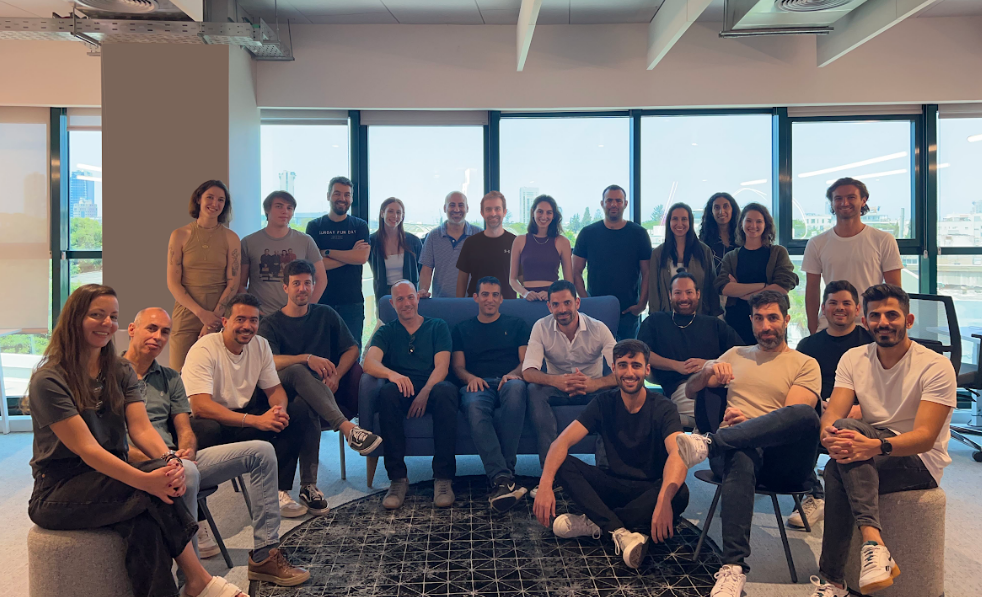
Solnik has offered a small glimpse of what that interdisciplinary effort felt like inside qbiq. In a Thanksgiving post in 2022, he described bringing together advanced AI engineers and architects. They had, he wrote, “almost nothing in common but a vision.” The photograph accompanying the post showed a gift-giving game. Even automated architecture, apparently, required some thoroughly manual team building.
He used the occasion to thank colleagues for learning to work together as demand grew. It is a modest anecdote, but a revealing choice of subject. The founder was celebrating a working relationship between professions. Architecture supplies judgments that must be understood by the technical team; engineering supplies capabilities that must be understood by the architects. A product emerges through that exchange.
There were conversations outside the office, too. In September 2023, Solnik shared a stage at an event on architecture in the age of AI at Tel Aviv’s Liebling Haus, alongside Guy Austern, Anat Talmor and Technion researcher Davide Schaumann. The setting brought his company’s subject into a wider professional discussion. Architecture already had its own questions about computational tools, and qbiq’s chief executive was participating in that conversation while building a business around them.
The image of a unified team matters because the user sees something much tidier: a planning package. The early platform combined layout alternatives with three-dimensional visualizations. Brokers, landlords, architects and prospective occupiers could examine a possible use for a property without each needing to translate the same bare drawing independently.
For Solnik, that translation became a commercial proposition. Different customers had different reasons to want the answer sooner. A landlord could show what a vacancy might become. A tenant could assess whether its requirements fitted. An architect could explore options. The common difficulty was the delay before those conversations had something sufficiently concrete to discuss.
“The technological barriers to what we do are huge.”
Leeor Solnik, 2024
Counting the drawings, one square foot at a time
In September 2023, qbiq announced a $10 million seed round, with investors including JLL Spark, 10D, Ocean Azul, Randomforest and M-FUND. The company reported that it had already delivered more than 150 million square feet of office layouts. Funding would support product development and a stronger US presence. Solnik’s small property question now had an institutional audience.
JLL was particularly consequential because it could use the technology and invest through its venture arm. By March 2025, Solnik said the relationship had produced more than 85 million square feet of layouts and virtual tours, with properties evaluated in over 33 countries. He also described JLL teams helping improve the product through practical feedback.
That relationship offers a concrete view of his approach to growth. A large customer supplies more than orders. Its teams encounter the software in different markets and different types of assignment. Their difficulties become product questions. For a founder selling into an established industry, the people using the tool can also help explain what the next version needs to do.
January 2025 brought a $16 million Series A led by Insight Partners. Liad Agmon, who led the investment, joined the board. qbiq said customers had generated more than 400 million square feet of layouts and visualizations. Solnik recalled that a target of 100 million square feet had once sounded unrealistic; by 2024, the company had reached four times that figure.
September 2026
Square feet give this business a useful measure of activity, though a plan remains a plan. The figure describes work delivered or space planned, depending on the announcement. It does not tell us how much was eventually built. Its relevance to Solnik’s story is repetition: a service conceived around one person’s stalled decision had found many other occasions to be useful.
Giving the architect the next move
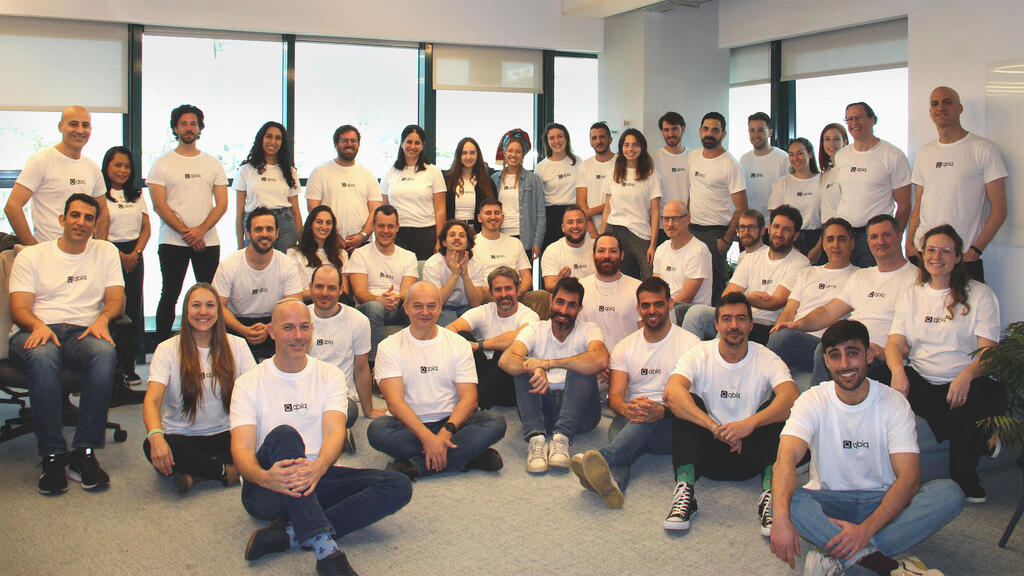
By the end of 2025, Solnik was reporting hundreds of customers, thousands of users and more than half a billion square feet of plans delivered across over 100 countries. His message credited the team and looked ahead to the following year. The numbers showed a broader business; the next product announcement would suggest a change in how people might work with it.
In September 2026, qbiq introduced Agentic SpacePlan in early access. The announced workflow lets architects direct AI on a live floor plan, compare alternatives and preserve the reasoning behind changes. Its Design Threads connect conversations, options and recoverable snapshots. Instead of receiving a package and starting another discussion elsewhere, professionals are meant to continue the discussion within the planning environment.
The distinction matters for the story that began in 2018. An early answer helps someone decide whether to proceed. A working design then accumulates revisions and compromises. A wall moves for a reason; a room changes because a requirement changed. Preserving that history gives the next conversation somewhere to begin. The drawing can carry a memory along with its dimensions.
Solnik has taken that conversation onto industry stages, including the Worktech programme in Lima in 2024 and PropTech Connect’s European speaker programme in 2026. These are rooms where technology has to explain itself to the people who commission, occupy and manage buildings. His subject remains close to the original inconvenience: helping people understand what a space can do before waiting becomes the default decision.
There is a pleasing circularity to the ambition. Solnik began as someone seeking an answer from an architect. He now leads a company building tools that place more options in architects’ hands. The question is still recognisable: will this place work for us? He has spent the intervening years trying to make the answer arrive while there is still time to do something with it.