Imagine ordering a bed. Now imagine ordering 122 of them, each with the right headboard, lamps, tables and delivery window, for a hotel whose opening date refuses to move. The first problem is shopping. The second is choreography. Inhabitr, a company that began by helping people rent furniture for their homes, has built its commercial business around the second problem.
- Inhabitr joins design, sourcing, procurement, financing, shipping and installation for commercial properties.
- Its first business was consumer furniture rental; hotels and other property owners became the larger focus.
- The company reported furnishing 15,000 rooms in 2024 and more than 30,000 units in total.
- Its useful trick is tying a design choice to price, availability and a project calendar.
The customer now is more likely to own a hotel, student residence, apartment building or short-term rental portfolio than a single apartment lease. Inhabitr still offers home rental and purchase. But its pitch to commercial real estate is broader: give one team responsibility for taking a furnishing idea from mood board to installed room. The company calls its catalog and supplier data its Furniture Cloud. It also offers financing, project tracking and specialized tools for hotel specifications.
The trouble with a perfectly good sofa
Founder and CEO Ankur Agrawal began with a recognizable irritation: moving is expensive, and moving a couch is worse. Early customers could rent a predesigned room or assemble one piece by piece. In 2019, living-room packages were reported at $70 to $130 a month, with some sofas at $30 to $150 a month. Those are historical consumer prices, not a quote for today's service. The company raised a $4 million Series A that year, led by Great North Labs, and had furnished more than 2,000 homes across 10 U.S. cities.
The neatness of the website concealed a stubborn physical business. Someone still had to locate the furniture, deliver it, assemble it and collect it when the renter moved again. Agrawal told TechCrunch that scaling operations and training the people who met customers were among the hardest parts. Furniture may arrive through an app, but it leaves in a truck.

The shift toward business customers was already visible by 2021, when Hamilton Ventures invested. The firm's account is refreshingly candid about the investment: furniture is more asset intensive than software, but Inhabitr had begun winning owners and managers while many venture-backed rivals chased affluent apartment renters. A commercial customer has fewer fleeting whims and much bigger orders. A late table in someone's home is annoying; a late table in a hotel renovation can hold up a room that should be earning money.
“Go and try to place an order for 150 beds, 300 end tables, and new furniture suites for three common areas - good luck.”Hamilton Ventures, explaining its investment
The design has to survive contact with inventory
Inhabitr sells a chain of decisions. A hotel owner or developer brings a floor plan, a brand standard or an inspiration image. Designers work up options. The platform matches them to products, specifications, budgets and suppliers. Its team then handles procurement, manufacturing coordination, delivery and installation. Clients can buy, rent or use financing depending on the project. There is no public price list for a 122-room hotel because there is no standard 122-room hotel.
The difficult part is keeping all four answers true at the same time.
That connection is what separates Inhabitr from a furniture catalog and from a conventional design studio. The company's investor says live supplier inventory feeds helped its designers make realistic selections and reduced uncertainty in the supply chain. Inhabitr says its current technology adds generative design, advanced bidding and IoT-enabled shipment tracking. Its Inspire tool lets users upload inspiration, set a budget, visualize a room in 3D and move selected pieces toward an order. Software draws the room; operations make the drawing useful.
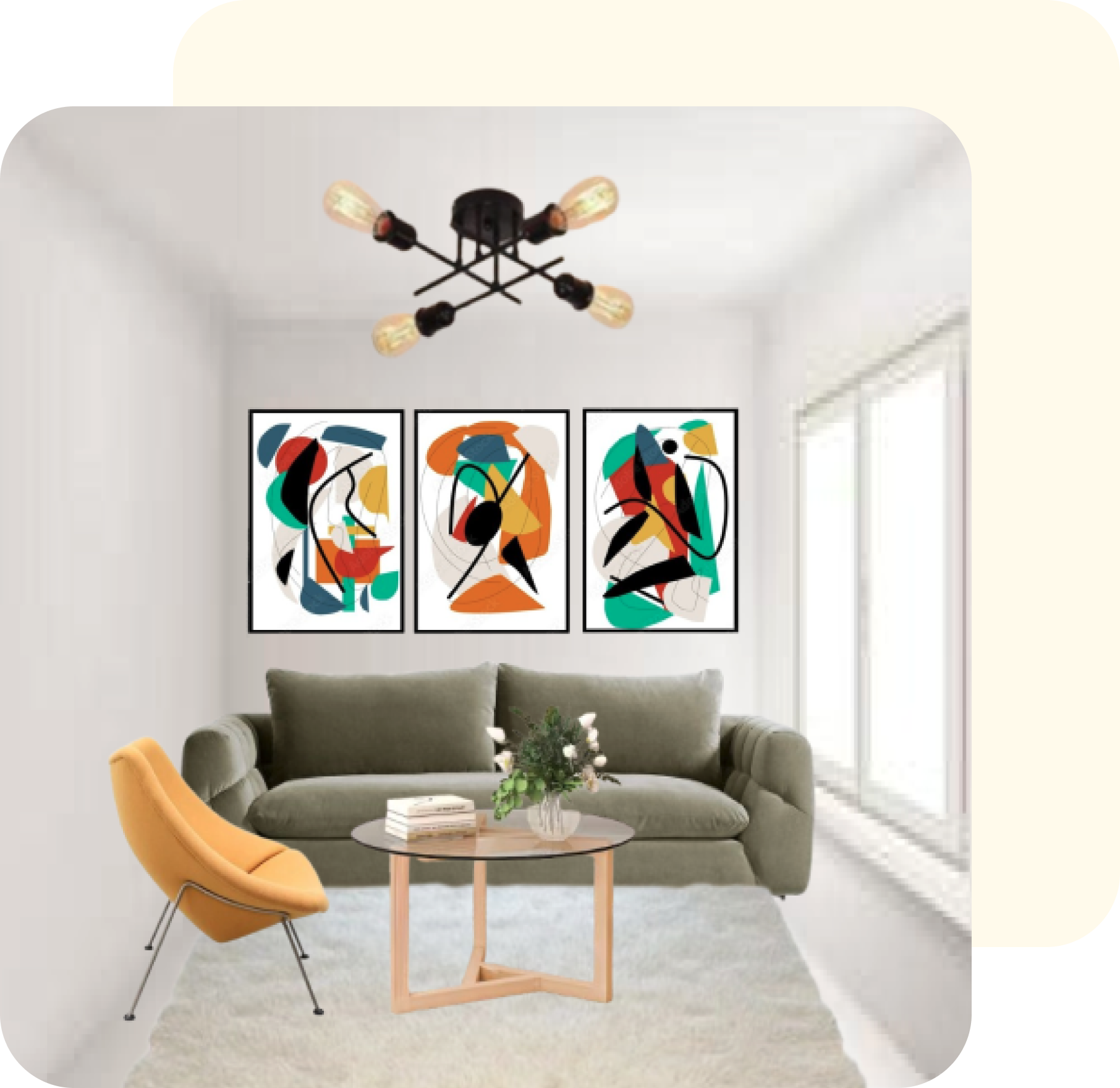
This is a crowded market in pieces: interior designers, purchasing agents, hotel furniture suppliers, distributors, installers and rental companies each own a part of the job. Inhabitr's claim is that joining those parts reduces delays and cost. It advertises savings of up to 30 percent and projects completed in 15 to 150 days, depending on scale. Those figures are company claims, not universal outcomes. They also reveal its selling point: the product is partly certainty about price and time.
A hotel room is a deadline with curtains
Consider the Holiday Inn Express Miami Airport-Blue Lagoon Area. Inhabitr says it supplied and installed furniture for all 122 guest rooms during a conversion completed in under five months; furnishings for common areas were selected and ordered through its Furniture Cloud. That is a more tangible use of AI than a dreamy rendering. The room had to meet a brand, fit a budget and be ready before guests arrived.
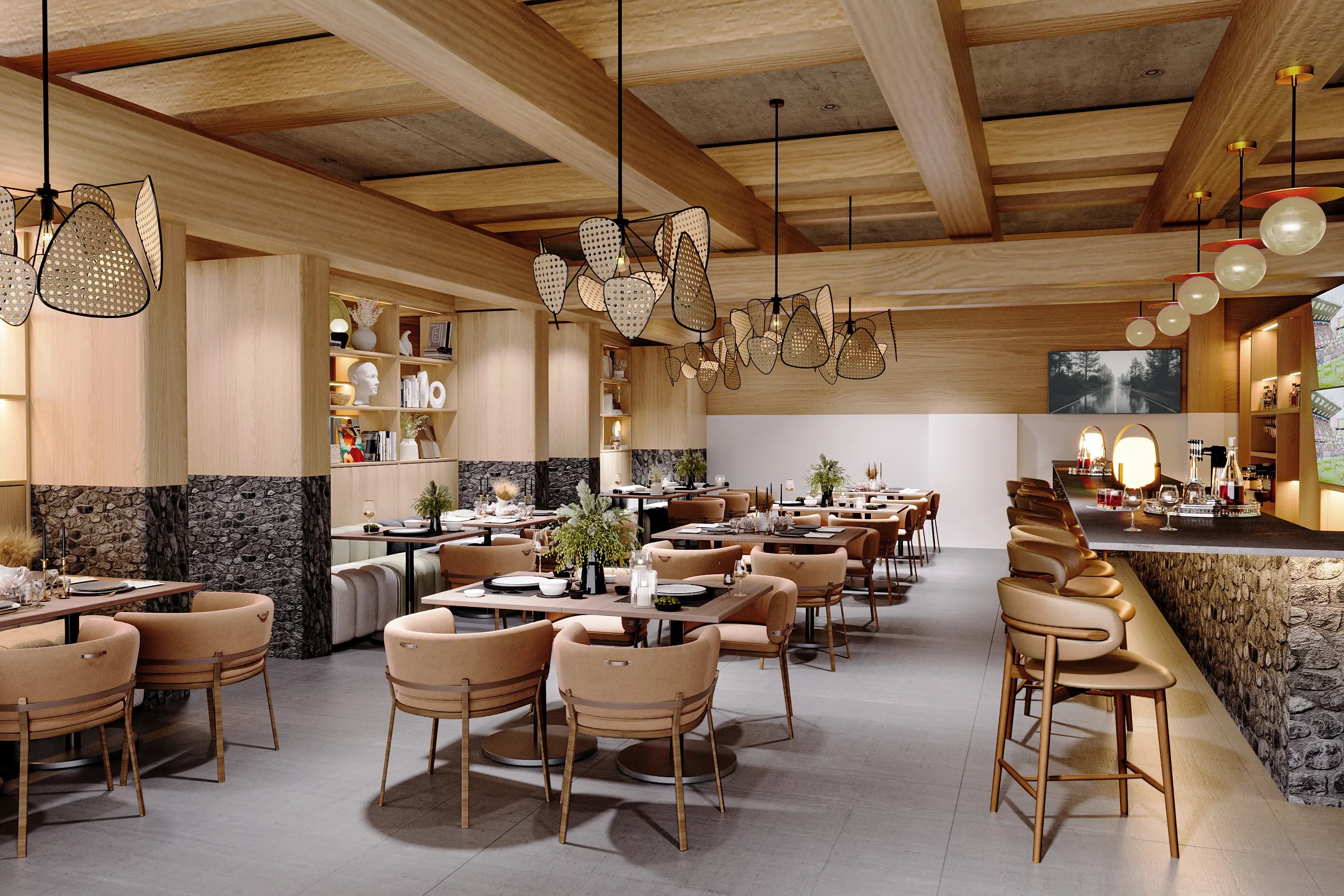
Inhabitr reports more than 1,000 commercial projects and more than 30,000 furnished units. In 2024 alone, it says it furnished 15,000 rooms and doubled revenue year over year. Hospitality projects awarded that year rose more than 600 percent, according to the company, across 20 brands and 14 U.S. states. A $27 million Series B in April 2024, led by Hamilton Ventures, brought reported funding to about $31 million. Deloitte later ranked it No. 179 on the 2025 North America Technology Fast 500, with 455 percent growth across the ranking period.
The work now reaches beyond the United States. Inhabitr opened operations in the UAE and Saudi Arabia and a design studio in Dubai. It partnered with Alsulaiman Group and Flow Progressive Logistics for regional delivery and installation. In 2026 it announced an expanded approved-vendor relationship with IHG Hotels & Resorts covering branded hotels across Europe, the Middle East, Africa and Asia, following an Americas agreement. Approved-vendor status gives hotel owners another route to buy; it does not turn every IHG property into an Inhabitr customer.
The lesson is less glamorous than the lounge
The part worth copying is the ordering of questions. Before proposing a beautiful space, ask which pieces exist, what they cost, who owns each handoff and what happens if a container misses a date. Inhabitr put design and procurement in the same conversation. That is useful even without its software. A small owner can start with a shared specification sheet, a realistic substitution list and one accountable installation schedule.
There are limits. A building with strict custom requirements, unreliable suppliers or a tight local installation window can still defeat a polished interface. “Up to 30 percent” savings are conditional; logistics, tariffs, specification changes and financing can alter the final bill. The company has learned this lesson in public: its early rental business encountered the unromantic difficulties of delivery, pickup and scaling local crews. Its current edge depends on doing those physical jobs well, repeatedly, across markets.
One room can be designed by inspiration. One hundred rooms require a system for exceptions: the missing lamp, the delayed fabric, the substitute chair that still meets the brand standard.
There is also a second life to consider. Inhabitr has promoted pre-owned pieces, refurbishment and furniture circulation as ways to reduce waste. Its newer software work has begun to travel beyond furniture: Tanyx AI describes itself as having grown inside Inhabitr, applying the same connected workflow to budgeting, sourcing and management of broader capital projects. That suggests the enduring idea may be a method, not a sofa: make the physical world legible enough that a design can become an opening date.